The kettle clicked off and I stood in my own kitchen in Wales, holding a mug, not quite sure what to do with the next hour. Or the next month. Three days earlier I had walked into Santiago with a backpack that weighed almost nothing and a head that felt scrubbed clean. Now I was home, and the house was too quiet, and the fridge was too full, and I missed the simple ache of a long day on my feet more than I can sensibly explain.
That feeling has a name. Pilgrims call it the Camino blues, and almost nobody warns you about it before you go. They tell you about blisters and bedbugs and the climb out of St Jean Pied de Port. They forget to mention the strange grief of coming back.
This piece is about that low, and what I have learned about living through it. Not curing it, exactly. More like keeping the best of the road alive once the road runs out.
What are the Camino blues, and why do they hit so hard after you get home?
The Camino blues are the low, flat, restless feeling that arrives after you finish the Camino de Santiago and return to ordinary life. Some people feel sadness. Some feel numb. Some feel a quiet panic that the best weeks of their year are already behind them. It is common, and it is real, and it does not mean anything has gone wrong with you.
For weeks you had one job: walk to the next village, eat, rest, repeat. Every step had a direction. The yellow arrows made the decisions you did not want to make. Then you land back in your kitchen and there are no arrows, only emails, and the contrast is brutal.
I think the reason it feels like loss is that you genuinely have lost something. On the road you lived simply, with everything you owned on your back. You met strangers and ate with them by nightfall. You had a clear rhythm and a clear purpose. Home gives most of that back to you in fragments, scattered across a busy week, and you spend a while grieving the version of yourself who had it all in one tidy package.
If you walked a solo pilgrimage, the dip can land harder. Alone with your own thoughts for a few hundred kilometres, you do a lot of quiet rearranging inside. You come back changed, and then nobody at home can see the change, which is its own small loneliness.
The honest summary: post Camino blues is situational grief, not a character flaw. You are mourning a way of living that suited you, and you are allowed to. If the contrast between trail and home feels especially stark, you may find it steadying to read how others describe the awkward transition from Camino life back to real life, because naming the gap is half the work of crossing it.
Why does real life feel so different after walking solo to Santiago?
Walking alone strips the volume right down. There is no group to perform for, no banter to keep up, just you and the path and the weather. That silence does something. It lets the noise settle until you can hear what you actually think, which is both the gift of the Camino and the reason returning home feels so disorientating.
On the trail, a handful of things changed how I lived, and the absence of them is exactly what aches afterward:
- Simplicity. A few items in a backpack, the same ones each morning, no decisions about stuff.
- Equality. Nobody on the road cares what you do for a living. A retired surgeon and a broke student share a bunkroom and split a tortilla.
- Connection. You eat with people you met four hours ago and tell them things you would not tell old friends.
- Purpose. Walk, eat, sleep, rise, walk again. A clean and uncluttered loop.
Back home, daily life can feel superficial by comparison. Rushed, consumer-driven, fragmented across a dozen open tabs. The Camino had quietly removed materialism and status from my days, and the moment I returned home they came flooding back: the adverts, the comparison, the low hum of wanting things. For a while everything looked a little plastic.
That is the contrast effect doing its work. Nothing about your life has actually got worse. You have simply tasted a different way of living and your eyes have not adjusted back yet. They do adjust. The trick is to keep some of the road's simplicity rather than letting it all dissolve.
How long do the post-Camino blues usually last?
For most pilgrims the sharpest of the blues lifts within a few days to a few weeks. A milder version, the occasional pang of longing when you smell wet earth or hear a church bell, can linger for months. There is no fixed timetable, and comparing your recovery to someone else's is a quick route to feeling worse.
A few things seem to shape how long it takes to settle. I have watched them play out in myself and in the people I walked with:
- How deep the experience went. A reflective solo walk tends to leave a longer wake than a fast, social sprint.
- What you came home to. A calm week eases re-entry; a pile of crises does not.
- Whether you build new habits quickly, or sit still and wait for the feeling to pass on its own.
- Whether you have anyone to talk to who actually understands what you are missing.
The table below is a rough map, not a promise. Everyone's timeline is their own, and a slow adjustment is not a failure.
|
Phase after return home |
What it often feels like |
What tends to help |
|
First week |
Disorientation, flat mood, oddly tired, slightly numb |
Sleep, gentle walking, easy meals, no big decisions |
|
Weeks two to four |
Restlessness, longing, irritation with normal life |
A weekly long walk, talking to a fellow pilgrim, small routines |
|
One to three months |
Occasional waves of nostalgia, but more even keel |
Keeping a few Camino habits, planning a future trip loosely |
|
Beyond three months |
Camino becomes a quiet part of you rather than a wound |
Living the lessons, not just remembering the route |
If the low does not lift at all, if hopelessness settles in, if sleep and appetite collapse and stay collapsed, that is no longer ordinary blues. Please treat it as you would any low mood that will not shift, and talk to your doctor. Post-Camino depression in the clinical sense is rarer, but it is real, and it deserves proper care rather than a brave face.
What does bringing the Camino home actually look like in everyday life?
For a while I tried to fix the blues by scrolling through my own photos at midnight, which helped about as much as you would expect. Looking back was not the answer. Living a little differently was.
The aim is not to recreate the route in your front room. You cannot, and trying just sharpens the longing. The aim is to keep the feel of the Camino: the simplicity, the movement, the attention, the human warmth. Pick the parts you miss most and build small, stubborn habits around those.
A few that stuck for me, woven into a normal daily routine rather than bolted on top of it:
- A simple, quiet morning before the phone comes on. My version of a Camino start.
- Walking the short errands rather than driving them, even in the drizzle, especially in the drizzle.
- Eating plainly more often. Bread, cheese, fruit, a tortilla if I am feeling homesick for Spain.
- Fewer inputs. Less news, less feed, less of the noise the road had spared me.
None of this is dramatic. That is rather the point. The Camino taught me that meaning hides in repetition and small care, not in grand gestures, so the way to keep it is small and repeated too.
How can you simplify your life without going to extremes?
You do not need to give away your possessions and live from a backpack forever. Start with one drawer. Clear it, keep what earns its place, let the rest go. Then maybe a shelf, a wardrobe pared back toward the handful of things you actually wear, a couple of subscriptions you will not miss.
The reframe that helped me most: simplicity is not deprivation, it is freedom. On the road, owning almost nothing felt light, not poor. Carrying that feeling home, one cleared drawer at a time, keeps a thread of the Camino running through ordinary days.
How can hiking and local walking ease the sadness?
Movement was the single most reliable medicine I found. After weeks of walking, my body had learned to expect a long daily effort, and when I stopped, the restlessness had nowhere to go. So I gave it somewhere. I went hiking on the hills near home, the proper Welsh ones with mud and sideways rain and views that come and go with the cloud.
A regular long walk became my local Camino. It does not need a famous route or a foreign country. It needs rhythm and repetition, the same trick that made the original journey work on you in the first place.
Here is roughly how I shaped mine, and you can borrow whatever fits:
- One long walk a week, same sort of day each time, so it becomes a small ritual rather than a chore.
- A light daypack on my back, because the weight on the shoulders is part of the muscle memory.
- One stretch walked in silence, no podcast, just feet and breath and weather.
- A single café or a good rock as my pilgrim stop, a place to sit and do nothing for ten minutes.
- A few lines in a notebook afterward, the way I used to scribble at the end of a stage.
The physical and emotional sides are tangled together here, which is rather the gift of it. The walking steadies your mood, your sleep, your sense of being a body in the world, and somewhere in the rhythm the Camino spirit quietly comes back to you. If you are curious about why a long walk does this to people, it is worth reading about why so many of us find hiking so steadying and quietly addictive; the same forces that hooked you on the Way are still available on a Tuesday afternoon on your local hill.
How do you stay connected to the people you met on the Camino?
The friendships of the road are a strange and lovely thing. You meet someone over a shared bottle of wine in an albergue, walk three days with them, learn the shape of their heartbreak, and then they peel off toward Finisterre and the old end-of-the-world coast and you may never see them again. The closeness is real and the impermanence is real, both at once.
Keeping those bonds alive after you return home takes a little deliberate effort, because the daily walking that made them easy is gone. A few light touches go a long way:
- A group chat that does not try to live in the past, just shares the odd photo or daft memory.
- A message on the date you reached Santiago, a small private anniversary between people who were there.
- An occasional video call, the kind where you both admit, quietly, that you miss it.
It is worth finding pilgrims closer to home too. Many countries have a confraternity or a Camino association that runs local walks and gatherings, where you can sit in a room full of people who understand the longing without you having to explain it. That community brings continuous support also after the return home, which is precisely when most of us need it and least expect it. The point is connection as a way of weaving the Camino into your life, not as a way of hiding from the life you actually have.
What reflections and practices help you integrate what the Camino taught you?
There is a difference between reminiscing and integrating. Reminiscing is scrolling through photos and feeling sad. Integrating is asking what the walk actually showed you and then living a little more in line with it. The first keeps you stuck. The second moves you on while keeping the best of it.
A few quiet questions did more for me than any amount of nostalgia. I came back to them in a notebook over the first month, no rush, no right answers:
- What did I stop caring about on the Camino, and why did letting go feel so good?
- Where on the route did I feel most like myself?
- Which conversations felt real, and what made them real?
Then there are small practices that carry the attention of the road into ordinary tasks. A short patch of silence each morning. Doing the washing-up as if it mattered, rather than racing through it. Three things I am grateful for before sleep, on the bad days especially. None of it is grand. All of it is a form of meditation dressed in everyday clothes, and it keeps the introspection of the walk from evaporating the moment you unpack your backpack.
What if you feel tempted to numb out or overbook yourself?
The opposite trap to sadness is frenzy. Some pilgrims come home and cram the calendar so full they never have to feel the quiet, and the quiet was the whole point. Structure is good. Frantic busyness is just avoidance wearing a productive face.
The test I use is simple: does this activity match what the Camino valued? Time outdoors, real conversations, a bit of service to someone else, a slow meal. Those steady you. A diary packed wall to wall with noise, just to outrun the feeling, tends to make the feeling worse the moment you stop.
How can personal vows and small Camino rules keep you grounded?
In Santiago, sitting in the square with my boots off, I made myself three promises. Not vague resolutions, three specific vows I could actually keep. I wrote them on the back of my pilgrim credencial so I would not be able to pretend, later, that I had never made them.
You can pick your own, of course, but mine fell into three plain categories that might give you a starting point:
- Simplicity: buy less, own less, choose a good thing over three cheap ones.
- Presence: one task at a time, fewer screens, look at the person in front of me.
- Connection: reach out first, share more meals, keep an open door the way an albergue does.
Vows only work if you make them visible and forgive yourself for breaking them. I keep mine pinned where I can see them and run a one-minute check on a Sunday: how did I do, where did I slip. When I slip, and I do, the rule is no shame, just return to the path. That is the whole spirit of the Way anyway. You lose the arrows for a stretch, then you find the next one and carry on.
What can the tidy pride of Spanish villages teach you about a calmer home?
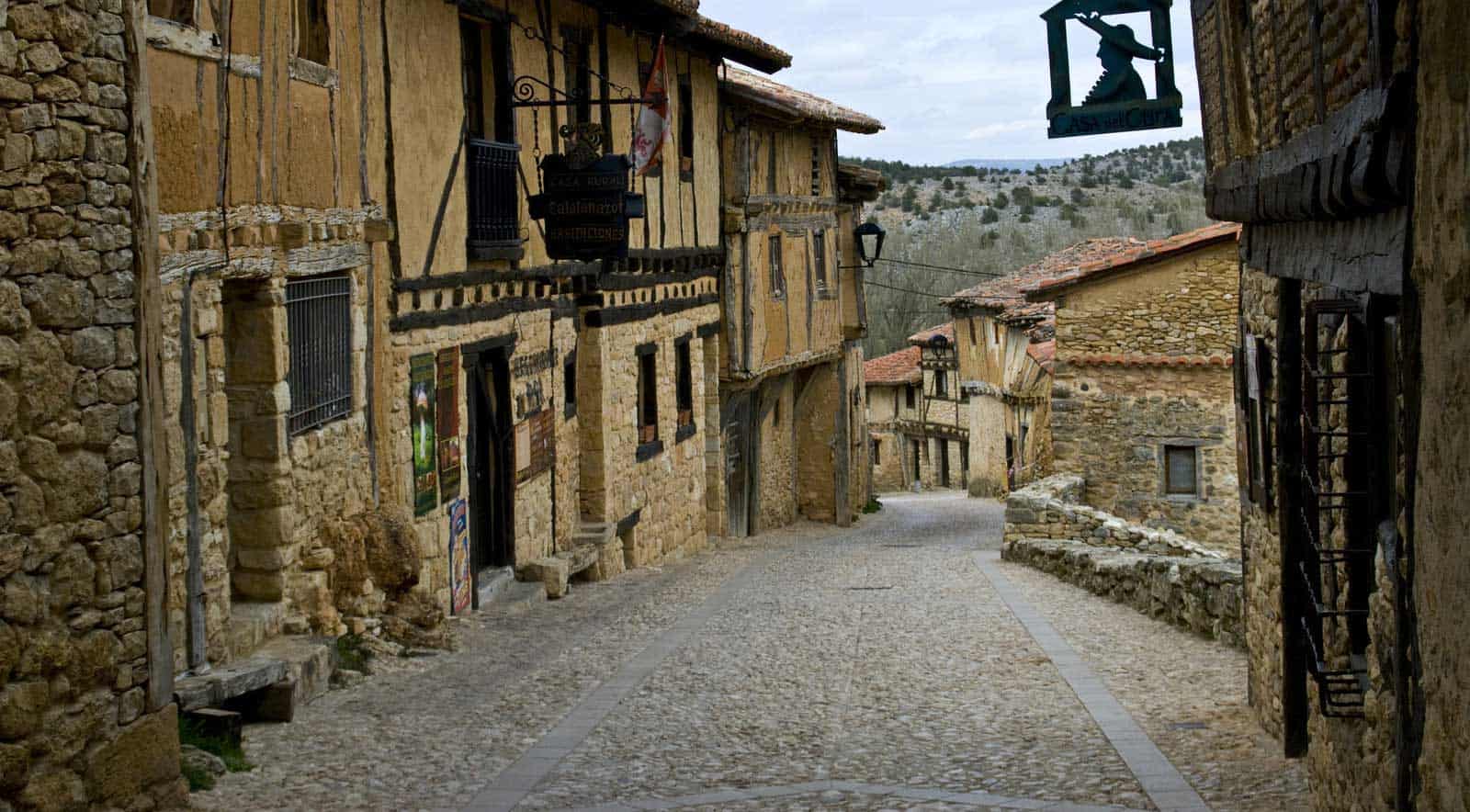
One thing surprised me on the walk and stayed with me: how cared-for the small Spanish villages were. Swept thresholds, scrubbed steps, geraniums on a windowsill in a place with no tourists to impress. It was pride without showing off, a quiet respect for the ordinary spaces people lived in.
I have been trying to bring a little of that home, badly and inconsistently, but trying. A small daily reset of my own space. A house kept clean enough to be welcoming, in the warm and functional spirit of an albergue rather than the cold perfection of a showroom. The point is not tidiness for its own sake; it is that the room you sit in quietly shapes the person you are in it, and a cared-for space supports the calmer self you found on the road.
Is planning another Camino a healthy way to cope with the blues?
Yes, mostly, with one honest caveat. Having a next Camino loosely on the horizon channels the longing into something hopeful rather than letting it curdle into regret. It gives the restlessness a direction, which is exactly what it craves.
The caveat is escapism. If planning the next walk becomes a way of avoiding your relationships, your responsibilities, or a low mood that needs proper attention, then the trip is no longer a joy, it is a hiding place. The Camino is meant to send you back into your life better, not give you somewhere to flee to.
Plenty of options keep the spirit alive without booking a flight. If you have already done a long route like the Frances, a shorter one such as the Camino Portugues or one of the final 100km stretches can scratch the itch in a fortnight. So can a long-distance walk somewhere completely new, a cycle along part of the route, or simply a string of local pilgrimage weekends close to home. Some pilgrims give back instead, volunteering in an albergue or helping a newer walker prepare, and find that service holds the same sense of purpose the road did. If you fancy something other than Spain next time, it is worth browsing a few long-distance walking alternatives to the Camino before you commit.
FAQ: Common Questions About Camino Blues After Returning Home
How long do post-Camino blues usually last?
For most pilgrims the sharp dip eases within a few days to a few weeks, while milder pangs of longing can come and go for months. The depth of your experience, the life you return home to, and how quickly you build new habits all shape the timeline. There is no standard schedule, and a slower adjustment is perfectly normal.
Is post-Camino blues the same as depression?
Usually no. The Camino blues are a form of situational grief: you are mourning a way of living you loved, and the feeling tends to lift as you settle back in. Clinical depression is different, with persistent hopelessness and lasting changes to sleep and appetite. If your low does not shift, or it deepens, treat it seriously and speak to your doctor.
What is the fastest way to feel better in the first week home?
Keep it gentle. Prioritise sleep, take a daily walk, eat and drink properly, and avoid making big life decisions while you are still raw. Talk to someone who understands what you are missing, and write down your three biggest lessons from the walk along with one small change you intend to keep.
What if family or friends do not understand why I am sad after such a good trip?
This is common and it stings. Explain it simply: you are grieving a way of living and adjusting to a shift in how you see yourself, which is hard even after something wonderful. Rather than expecting them to fully grasp it, ask for the specific things you need, a listening ear, a walk together, or a little patience while you find your feet.
How do I keep the Camino spirit alive without living in the past?
Treat the Camino as a practice rather than only a place. Choose one to three anchors and keep them: a weekly long walk, a monthly meet-up with other pilgrims, a daily check-in on the vows you made. Living the lessons keeps the journey present, while endlessly replaying photos only keeps you stuck behind you.




Leave a Reply