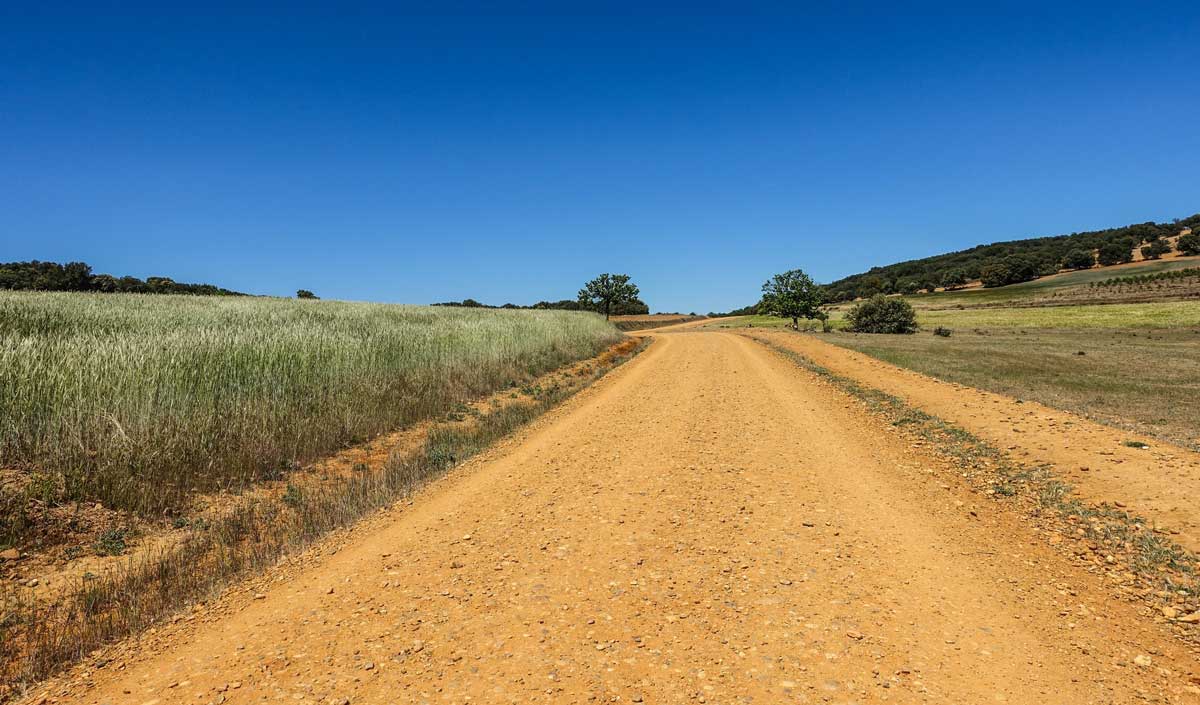
Plan your Camino Francés, day by day
Choose where you start, where you finish (or just how many days you have) and how you like to walk. We split the route into daily stages that end in towns with albergues, and list where you can sleep each night.
The first thing I noticed, stepping out of Saint-Jean-Pied-de-Port on a grey September morning, was the silence. Not actual silence, of course. There were boots on cobblestone, a dog barking somewhere uphill, the zip of someone adjusting their pack. But the silence of having nowhere else to be. That particular quiet stayed with me for 780 kilometres, through the Pyrenees and the Meseta and the rain-soft lanes of Galicia, all the way to Santiago de Compostela. If you’re reading this, you’re probably considering something similar. Good. Let me tell you what I know.
What Is the Camino Francés (French Way), and Why Is It the Most Popular Camino?
The Camino Francés, also known as the French Way, is a long-distance walking route stretching roughly 780 km from Saint-Jean-Pied-de-Port in southern France to the cathedral of Santiago de Compostela in northwest Spain. It is, by a considerable margin, the most popular Camino de Santiago route. According to the Pilgrim’s Office in Santiago, the Camino Frances consistently draws around 55 to 60 percent of all pilgrims who receive the Compostela certificate each year.
Why does this one route dominate? A few reasons, really:
- Infrastructure: The French Way offers the most developed network of albergues, restaurants, pharmacies, and services of any Camino route. You’re rarely more than a few kilometres from a village.
- Cultural heritage: The route was designated a UNESCO World Heritage Site in 1993, and it was named the first European Cultural Route by the Council of Europe in 1987. It later received the Prince of Asturias Award for Concord in 2004.
- Community: Because so many pilgrims walk it, the social atmosphere is unmatched. You will meet people. Some of them will matter to you for a very long time.
- Guidebook and app coverage: More resources exist for the Camino Frances route than any other, making it the easiest to plan.
This guide is for first-time pilgrims, return walkers, and anyone (including those travelling from the US) trying to turn a vague longing into a concrete plan. There’s nothing to sell here. Just what I’ve learned, checked, and found useful.
Where Does the Camino Francés Start and End, and What Are the Most Popular Starting Points?
The classic start is Saint-Jean-Pied-de-Port (often shortened to St Jean or SJPP), a small Basque town in the French foothills of the Pyrenees. From there, you walk west across northern Spain to arrive in Santiago de Compostela, where the tomb of the Apostle Santiago (St James) has drawn pilgrims since the ninth century. But not everyone has five or six weeks to spare, and the route has several popular starting points depending on the time you have.
|
Starting Point |
Distance to Santiago |
Typical Duration |
Best For |
|
Saint-Jean-Pied-de-Port |
~780 km |
30 to 35 days |
Walking the full route, the complete experience |
|
Pamplona |
~710 km |
28 to 33 days |
Skipping the Pyrenees crossing, still nearly full route |
|
Burgos |
~490 km |
20 to 24 days |
Three weeks available, starting mid-route |
|
León |
~305 km |
12 to 16 days |
Two weeks, varied terrain from Meseta to Galicia |
|
Sarria |
~115 km |
5 to 7 days |
Minimum distance to earn the Compostela, one week |
It’s worth knowing that the French Way traces the path where four historical French pilgrimage routes converge into a single road across Spain. Those routes (from Paris, Vézelay, Le Puy, and Arles) funnel through the Pyrenees into Roncesvalles or Somport, then merge near Puente la Reina. So when you cross the Pyrenees, you’re joining a stream that medieval pilgrims joined from all over Europe. There’s something quietly powerful about that convergence.
If you only have seven days, Sarria to Santiago (the last 100 km section of the French Way) is the most walked short route. Two weeks? León to Santiago gives you the drama of the Meseta, the climb over the Montes de León, and Galicia’s green lanes. Four to six weeks? Walk the entire Camino Frances from Saint-Jean-Pied-de-Port to Santiago. You won’t regret it.
What Are the Main Stages (Etapas) and a Practical Example Itinerary for the French Way?
The Camino Francés is traditionally divided into around 33 to 35 stages, though the number varies depending on which guidebook you follow and how far you like to walk each day. Most pilgrims cover between 20 and 28 km per day. Some do more; some, wisely, do less, especially in the first week while their feet are still having opinions about the whole arrangement.
Here’s a route overview broken into the major segments, with the character of each section:
|
Section |
Approximate Distance |
Typical Days |
Character |
|
St Jean Pied de Port to Pamplona |
~65 km |
3 days |
Dramatic Pyrenees crossing via Roncesvalles, steep descent into Navarra |
|
Pamplona to Logroño |
~120 km |
5 to 6 days |
Rolling hills, Puente de la Reina, Estella, transition into wine country |
|
Logroño to Burgos |
~120 km |
5 to 6 days |
Vineyards of La Rioja, Santo Domingo de la Calzada, open plains |
|
Burgos to León |
~180 km |
7 to 9 days |
The Meseta: wide skies, wheat fields, austere beauty, long days |
|
León to Ponferrada |
~125 km |
5 to 6 days |
Astorga, Cruz de Ferro, descent into the Bierzo valley |
|
Ponferrada to Sarria |
~110 km |
4 to 5 days |
Entry into Galicia, green hills, chestnut woods, quieter villages |
|
Sarria to Santiago |
~115 km |
5 to 6 days |
The popular last 100km, busier, eucalyptus lanes, arrival |
A sensible sample itinerary for walking the full route might look like 32 walking days plus 3 to 4 rest days (in Pamplona, Burgos, León, and perhaps Ponferrada or Sarria). That puts you at roughly 35 to 36 days total. Build rest days into your plan from the start. Your body will need them, and so, quietly, will your mind.
Can you walk the Camino Francés in sections over multiple years? Absolutely. Many pilgrims do exactly that, picking up where they left off each time. Your credencial (pilgrim passport) records your journey regardless of how many trips it takes.
What Are the Top Highlights and Must-See Places on the Camino Francés?
I could list the famous sites, and I will. But I want to say something first: the highlights you remember most probably won’t be the ones in the guidebook. They’ll be the cold beer someone bought you in a village whose name you can’t quite recall, or the morning you walked out of fog into sunlight near Astorga and felt, for no particular reason, completely fine.
That said, here are the cultural and city highlights most pilgrims on the Camino reference:
- Pamplona: The old town, the city walls, excellent pintxos bars. If you arrive during San Fermín (early July), expect chaos and revelry in equal measure.
- Logroño: The heart of La Rioja wine country. Calle Laurel is a street of tapas bars where each place specialises in a single dish. Get the mushrooms.
- Burgos: The gothic cathedral is stunning, a UNESCO site in its own right. The city also has a strong pilgrim culture and good gear shops if something needs replacing.
- León: Another extraordinary gothic cathedral, this one famous for its stained glass. The Barrio Húmedo (the “wet quarter”) offers excellent food and drink.
- Ponferrada: The Templar castle sits improbably at the edge of town. The Bierzo region around it produces underrated wines.
- Santiago de Compostela: The cathedral, the Pilgrim’s Mass, the botafumeiro (the giant censer that swings across the transept, though it doesn’t appear at every service). Standing in the Praza do Obradoiro after weeks of walking is something I still can’t fully articulate.
Landscape highlights shift dramatically along the French route. The Pyrenees crossing is raw mountain drama. The Meseta, which many pilgrims dread, offers a stark, meditative beauty, all sky and stubble and distance. Galicia wraps you in green, damp, intimate countryside. And then there are the small moments pilgrims love: the village of Hontanas appearing suddenly in a valley fold, the iron cross at Cruz de Ferro where walkers leave stones carried from home, the sound of church bells in Roncesvalles at dusk.
One practical tip: if a town interests you, plan to arrive early or build in an extra half day. Walking through Burgos at 3pm with tired feet is not the same as spending a morning in the cathedral.
How Difficult Is the Camino Francés, and What Is the Terrain Like?
The Camino Frances is often described as “moderate” in difficulty, and that’s roughly fair, with caveats. It is not a technical mountain trek. But it is an endurance challenge. Walking 20 to 25 km every day for a month, carrying a pack, is harder than most people expect, particularly in the first week.
The terrain breaks down like this:
- Pyrenees (Day 1): The climb from St Jean across the Pyrenees to Roncesvalles is the single most demanding day. Roughly 25 km with about 1,400 metres of ascent. In poor weather, the alternative low route (Route de Napoléon is sometimes closed) via Valcarlos is the safer option.
- Navarra and La Rioja: Rolling terrain, some road walking, vineyard paths. Manageable for most.
- The Meseta (Burgos to León): Flat to gently undulating. Physically easier on the legs, but the exposure to sun and wind, the monotony of long straight paths, and the psychological weight of wide emptiness can be surprisingly taxing.
- León to Ponferrada: Includes the climb over the Montes de León (the second-highest point on the route) and a long descent into the Bierzo.
- Galicia: Constant short climbs and descents. Green, often muddy. The terrain is gentler than the Pyrenees but relentless in its undulations.
Common injuries include blisters (especially in the first ten days), knee pain on descents, tendonitis, and general cumulative fatigue. Prevention basics: break in your boots thoroughly before you go, use good socks (merino wool, not cotton), tape hot spots before they become blisters, and carry anti-inflammatory gel. The Camino is kind to prepared feet and unforgiving to neglected ones.
The French Way suits beginners who have trained, experienced hikers looking for a social pilgrimage, and older walkers who pace themselves sensibly. It is not an easy stroll, but it is achievable for anyone willing to prepare honestly.
When Is the Best Time to Walk the Camino Francés, and How Crowded Does It Get?
The best months to walk the French Way are generally April to June and September to October. These shoulder seasons offer pleasant temperatures (15 to 25°C in most regions), manageable crowds, and available albergue beds.
|
Period |
Weather |
Crowds |
Notes |
|
March to April |
Cool, possible rain and snow in Pyrenees |
Quiet |
Some albergues may still be closed; early spring wildflowers |
|
May to June |
Warm, long days, occasional rain |
Moderate to busy |
Widely considered the ideal window |
|
July to August |
Hot (35°C+ on the Meseta), dry |
Very busy |
Book ahead; start walking by 6am to avoid midday heat |
|
September to October |
Warm to mild, increasing rain in Galicia |
Moderate |
Excellent balance of weather and atmosphere |
|
November to February |
Cold, rain, limited daylight |
Very quiet |
Many services closed; solitary experience |
July and August are the peak months. According to Pilgrim’s Office statistics, these two months alone account for a disproportionate share of annual Compostela recipients. The section from Sarria to Santiago becomes particularly congested, as many pilgrims walk only the last 100 km to earn the certificate. Practical crowd management tips: start your day early, consider walking slightly longer or shorter stages to avoid the most common stopping towns, and walk the shoulder seasons if you can.
What Accommodation, Services, and Infrastructure Can Pilgrims Expect on the French Way?
The Camino Francés has the best infrastructure of any Camino de Santiago route. This is its great practical advantage, especially for first-time pilgrims.
- Albergues (pilgrim hostels): Municipal albergues typically cost €6 to €12 per night for a dormitory bunk. Private albergues range from €10 to €20. Most operate on a first-come, first-served basis (municipal) or accept reservations (private).
- Pensions and hostales: Private rooms generally run €30 to €60 per night. Useful for rest days or when you need a proper sleep.
- Hotels: Available in larger towns like Pamplona, Burgos, León, and Santiago de Compostela, ranging from €50 upward.
Along the French route, you’ll find pharmacies in most towns of any size, gear shops in the larger cities, and a “menú del peregrino” (pilgrim menu) in countless restaurants, typically a three-course meal with wine for €10 to €14. Luggage transfer services are widely available if you’d prefer to walk with a lighter pack; companies will move your bag to your next stop for around €5 to €8 per stage.
In peak season (July and August), booking private albergues a day or two ahead is wise. Municipal albergues generally cannot be reserved, so arriving by early afternoon becomes important. Outside peak months, spontaneous walking without reservations is usually fine.
A word on etiquette: quiet hours in albergues typically start around 10pm. Pack your bag the night before so you’re not rustling through it at 5:30am while others sleep. This is, I promise, the single fastest way to make enemies on the Camino.
How Do Waymarking and Navigation Work on the Camino Francés?
The yellow arrow is your constant companion. Painted on walls, fence posts, rocks, and pavements, these arrows mark the route from Saint-Jean-Pied-de-Port to Santiago de Compostela. You’ll also see scallop shell markers (the symbol of the Santiago pilgrimage) on stone posts and ceramic tiles embedded in walls.
- Following the arrows: For the vast majority of the route, navigation is straightforward. You follow yellow arrows and shell waymarks.
- Where people get confused: Exits from larger cities (Pamplona, Burgos, León) and areas with recent construction or road detours. Mornings with poor visibility can also cause a wrong turn.
- Guidebooks and apps: John Brierley’s guidebook remains popular. Digital options include the Buen Camino app and Gronze.com for stage planning. Use them as a reference, not a crutch. Over-reliance on a phone screen means missing the arrows, which are part of the experience.
- Safety considerations: Some sections involve walking alongside roads, particularly in approaches to towns. Wear visible clothing in low light. On the Meseta, carry at least 1.5 litres of water, as stretches between villages can be 10 to 15 km with no shade or services.
Solo travel on the French Way is common and generally safe. The route is well-populated, and many pilgrims walk alone. Standard precautions apply: let someone know your plans, carry a charged phone, and trust your instincts about people and situations.
What Is the Compostela Certificate, and What Do You Need to Earn It?
The Compostela is the certificate issued by the Pilgrim’s Office in Santiago to those who complete the pilgrimage for religious or spiritual reasons (broadly interpreted). To earn it, you need two things:
- A credencial (pilgrim passport): This document, which you can obtain at your starting point, pilgrim associations, or some churches and albergues along the route, is stamped at each stop. You need at least two stamps per day for the last 100 km.
- Minimum distance: At least 100 km on foot (or 200 km by bicycle). The most popular starting point for the minimum distance is Sarria, approximately 115 km from Santiago, which gives a comfortable margin.
When you arrive in Santiago de Compostela, take your credencial to the Pilgrim’s Office (Oficina del Peregrino), located near the cathedral. Expect a short wait (longer in peak season), a brief interview confirming your motivation, and then the certificate itself, printed with your name in Latin. It is, for many pilgrims, a surprisingly emotional moment.
Common mistakes to avoid: forgetting to get stamps in small villages (some close early), not spacing your stamps adequately across the final 100km from Sarria to Santiago, and damaging your credencial with rain or sweat. A small ziplock bag is worth its negligible weight.
What Is the History of the Camino Francés, and Why Is It Culturally Significant?
The Camino Francés is an ancient pilgrimage route with origins in the ninth century, when the supposed tomb of the Apostle Santiago (Saint James) was discovered in what is now Santiago de Compostela. By the twelfth century, the route was formally documented in the Codex Calixtinus, a medieval manuscript that served as something like the world’s first pilgrim guidebook, complete with route descriptions, advice on water quality, and rather unflattering opinions about the Basques.
The French Way became the main artery of this pilgrimage to Santiago de Compostela because it followed established Roman roads and trade routes across northern Spain, connecting the major French pilgrimage routes to the shrine. At its medieval peak, hundreds of thousands walked it annually. Hospitals, bridges (like the one at Puente la Reina, whose name literally means “Bridge of the Queen”), churches, and entire towns grew up to serve pilgrims.
The route declined over centuries due to wars, plague, and the Reformation, but was revived dramatically in the late twentieth century. The European Cultural Route designation in 1987 and the UNESCO World Heritage recognition in 1993 helped catalyse a modern renaissance. Today, history shows up constantly along the route: Romanesque churches, gothic cathedrals in Burgos and León, medieval bridges, pilgrim hospitals turned into albergues, and the simple scallop shell carved into stone doorways.
What Should You Pack and Prepare for a Successful Camino Francés?
Packing for the Camino is an exercise in honesty about what you actually need versus what makes you feel safe. Most first-time pilgrims pack too much. A good target is a base pack weight (before water and food) of 7 to 8 kg.
- Footwear: Trail shoes or lightweight boots, broken in over at least 100 km before departure. Merino wool socks (two or three pairs). Blister kit: Compeed, medical tape, needle, antiseptic.
- Clothing: Two sets of walking clothes, one set of evening clothes, a warm mid-layer (fleece or merino), a waterproof jacket. Adjust layers by season.
- Rain gear: A poncho that covers your pack, or a waterproof jacket plus pack cover. In Galicia, it will rain. Accept this.
- Sun protection: Hat, sunscreen, sunglasses. On the Meseta, shade is scarce and the sun is relentless.
- Essentials: Headlamp (for early morning albergue departures), water bottle or hydration bladder (1.5L minimum), small first aid kit, earplugs, sleep liner or lightweight sleeping bag.
For training, aim to walk consecutive days in the two to three months before departure. Start with 10 km and build to 20 to 25 km. Include hills and stairs. The most useful training mimics the Camino: sustained, moderate effort over multiple days in a row, carrying a weighted pack.
Practical notes for US-based travellers: most towns along the Camino Frances route accept card payments, but carry some cash (€50 to €100) for small villages and municipal albergues that are cash-only. An eSIM or a local Spanish SIM card will keep you connected. Your US phone will work in Spain on roaming, but data costs add up quickly without a local plan.
The best advice I received before my first Camino was this: plan less, prepare more. Have a rough itinerary but hold it loosely. Your body, the weather, and the people you meet will reshape your plan. Let them.
Frequently Asked Questions: Camino Francés Route (French Way)
How long does it take to walk the full Camino Francés?
Most pilgrims walking the full route from Saint-Jean-Pied-de-Port to Santiago de Compostela take between 30 and 35 walking days, plus 2 to 4 rest days. The total time to walk the Camino Frances depends on your daily distance (typically 20 to 28 km), fitness level, how many rest days you build in, and whether you take any detours. A realistic total is 33 to 38 days.
Is the Camino Francés a good first Camino for Americans?
Yes. The French Way is widely considered the best Camino route for first-time pilgrims, regardless of nationality. Its infrastructure is the most developed, the waymarking is excellent, and the social atmosphere means you’re rarely truly alone unless you want to be. For Americans, the main logistical considerations are getting to Saint-Jean-Pied-de-Port (fly to Biarritz, Pamplona, or Paris, then train or bus) and managing time zones in the first few days. Be aware that July and August are very crowded, and pace yourself in the opening week.
What is the best place to start if I only have one or two weeks?
For one week (5 to 7 walking days), start in Sarria and walk the last 100km from Sarria to Santiago. This is the minimum distance to earn the Compostela certificate. For two weeks, León to Santiago (approximately 305 km) gives you a rich variety of terrain, from the Meseta through the Montes de León, the Bierzo valley around Ponferrada, and into Galicia. If you prefer a shorter two-week walk at a gentler pace, León to Sarria is also a satisfying option.
Do I need to book albergues in advance on the Camino Francés?
In the shoulder seasons (April to June, September to October), most pilgrims walk without advance bookings and find beds without trouble. In July and August, booking private albergues one or two days ahead is strongly recommended, particularly in popular stopping towns and on the Sarria to Santiago section. Municipal albergues generally cannot be reserved. Starting your walking day early and arriving by mid-afternoon helps secure a bed in busy periods.
What are the hardest parts of the Camino Francés?
Physically, the Pyrenees crossing on Day 1 (roughly 1,400m of climbing from St Jean to Roncesvalles) is the most demanding single stage. The Meseta between Burgos and León is physically flat but mentally challenging due to heat exposure, long featureless stretches, and monotony. Cumulative fatigue typically peaks around days 10 to 14, when blisters, joint pain, and the reality of how far remains can feel overwhelming. Simple mitigation: train beforehand, take rest days, manage blisters early, and remember that nearly every pilgrim goes through a rough patch. It passes.



5 responses to “Guide to the Camino Frances Pilgrimage in Spain”
Very helpful thank you. Terry Canada ??.
Thank you .It’s a great indepth info and very useful for me. Much appreciated.
I have been thinking about doing this for a few years and am planning for this July to walk the Frances route with my two teenage boys. There is a lot of great information on your site to guide me along. Thank you!
I have followed this page for some time now, finding information and tips. We are booked to begin in SJPdP on 29th April and are really looking forward to it. Thanks for all the information, it has been a great help.
Heading to St. Jean and set to arrive on 9/3 . Psyched to start this journey and disconnect from humanity and my comfort zone ( but NOT other pilgrims but engage with them) Humanity in the sense the hustle/bustle we live while NOT on the Camino. 🙂