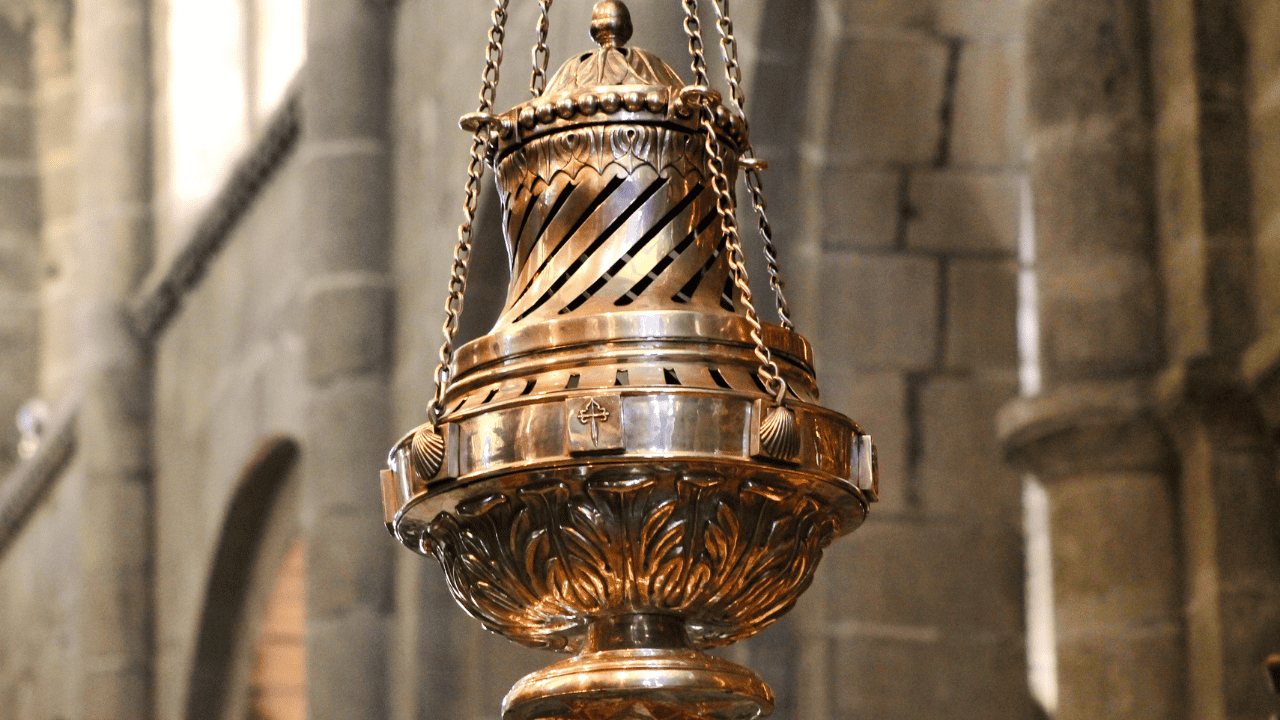
I will be honest with you. I walked into the Cathedral of Santiago de Compostela on a wet Tuesday, boots squelching, fully expecting the great silver censer to come roaring over my head, and it did not. It just hung there, dark and still, high above the altar, like a kettle nobody had thought to put on. The Botafumeiro does not swing every day. That single fact would have saved me a fair bit of disappointment, so let me hand it to you now before you plan your arrival in Santiago around a thing that may not happen on the day you turn up.
This guide covers what the Botafumeiro actually is, why it exists, how it works, and the part most travellers really want: when can you see it swing, and how do you improve your odds. I will keep the facts honest and tell you plainly when something is uncertain rather than guess.
What is the Botafumeiro in the Cathedral of Santiago de Compostela?
The Botafumeiro is the giant censer, or thurible, that hangs in the Cathedral of Santiago de Compostela and swings across the transept during certain liturgies. A censer is simply a vessel for burning incense; this one happens to be enormous. The current Botafumeiro weighs 53 kg and measures 1.50 metres tall, and it is hauled into motion by a system of pulleys from the dome of the cathedral.
The name comes from Galician and means roughly "smoke spreader," which is plain and accurate in the way Galician place names often are. When it moves, it does not drift; it arcs from one side of the cathedral to the other through the great crossing where the nave meets the transept, trailing a cloud of incense smoke behind it. Pilgrims gather in the side naves and crane their necks, and there is a collective intake of breath the first time it climbs.
It matters to travellers because it is one of Santiago's most iconic and most time-specific traditions. You can see the cathedral any day. You cannot see this particular large censer in flight any day, and that scarcity is exactly why people plan around it.
- Type: a large thurible, one of the popular symbols of the cathedral
- Weight: the Botafumeiro weighs 53 kg
- Height: it measures 1.50 metres
- Location in use: the crossing, swinging across the transept beneath the main dome
- Operated by: eight men called tiraboleiros
Why does the Botafumeiro exist? Ritual meaning and the famous pilgrim smell
There are two answers, and both are true, which I rather like. The first is liturgical. Incense has been burned in Christian worship for centuries as a visible sign of prayer rising toward heaven, and the swinging censer is an old expression of that idea written large. In the cathedral's own framing it carries the "good scent of Christ," a phrase drawn from scripture, and its smoke fills the basilica during the most solemn moments of the Eucharist.
The second answer is more earthy, and it is the one every guide repeats because it is irresistible. For centuries, pilgrims arrived in Santiago at the end of a long pilgrimage, having walked the Camino de Santiago for weeks without much chance to wash. They slept crowded together in the cathedral itself. The incense, in this practical reading, helped mask the smell of a great many tired, damp, unwashed bodies. Whether you take that as fact or fond legend, it ties the ritual directly to the human reality of finishing the Camino, and I find it hard to be sniffy about a tradition that began, in part, as crowd control for body odour.
It connects to your own walk too. If you arrive footsore from Sarria or Vigo and slip into a Pilgrim Mass, you are sitting in the same nave where pilgrims have ended their journeys for the best part of a thousand years. The smoke is doing now, ceremonially, what it once did practically. There is something quietly steadying in that, even for the sceptical among us.
How does the Botafumeiro work, and how high and fast does it swing?
The Botafumeiro is operated by eight men called tiraboleiros, traditionally robed in red. They are cathedral staff, not volunteers plucked from the crowd, and they work as a coordinated team. The censer is attached to a thick rope that runs up to a system of pulleys mounted in the dome of the cathedral, and the tiraboleiros pull in rhythm, hauling and releasing so the swing builds with each pass.
Once it gets going, the numbers are genuinely startling. The Botafumeiro is said to reach a height of 20 metres, or 20 meters in the American spelling, at the top of its arc, and to travel at around 60 km/h as it sweeps through the lowest point of the swing. Every meter of that climb adds to the sense that the cathedral has suddenly shrunk around it. Standing beneath that the first time, you feel the air move. The metal glints, the chains creak, and the whole thing has a momentum that makes the cathedral seem suddenly smaller.
For watching, a few practical notes from someone who got the angle wrong the first time:
- The swing runs along the transept, so the best general views are from the side naves looking across that axis, not from far down the central nave behind the altar.
- Arrive early. Seats and good standing spots fill well before Mass begins, especially when many pilgrims are in town.
- The whole sequence is short. It is part of a liturgy, not a standalone show, so do not expect a long performance; focus on the moment rather than counting minutes.
- Follow the ushers. They know where the swing passes and will keep the path beneath it clear for a reason.
How old is the Botafumeiro, and what is its history in Santiago?
The practice of swinging a large censer in this cathedral is genuinely old, reaching back into the medieval period; the Codex Calixtinus, a 12th-century manuscript associated with the Camino, refers to a great thurible used here. So the tradition itself spans many centuries, even if the object you see today does not.
The current Botafumeiro is more recent. It was made in 1851 by José Losada, a silversmith, in brass plated with a thin layer of silver. There is a reason an older one was lost. An earlier silver censer is said to have been carried off when Napoleon's troops were in Spain during the French occupation in the early 19th century, which is the sort of detail that makes the present one feel like a replacement standing in a long line of predecessors rather than an unbroken relic. The cathedral also keeps a second, lighter thurible nicknamed "La Alcachofa," used on some occasions in place of the heavier piece.
I think the history of the Botafumeiro is more honest for having a gap in it. Things get stolen, things get remade, and the ritual carries on regardless. That continuity, the idea that the gesture outlasts the object, is part of what gives it weight.
|
Feature |
Detail |
|
Current censer made |
1851 by José Losada |
|
Weight |
53 kg |
|
Height |
1.50 metres |
|
Peak swing height |
Up to about 20 metres |
|
Peak speed |
Around 60 km/h |
|
Operators |
Eight tiraboleiros |
|
Earlier censer lost |
During the French occupation (Napoleonic era) |
When can I see the Botafumeiro in Santiago de Compostela?
Here is the heart of it. The Botafumeiro is reserved for key liturgical events and is not guaranteed at every Mass. If a tour brochure or an old forum post tells you it swings at every Pilgrim Mass, treat that with caution, because outside of special years it simply does not.
The occasions when it is most reliably used are the major solemnities in the cathedral's calendar. These are the high days, the dates that draw the largest crowds and the fullest liturgy:
- Christmas and Epiphany
- The Feast of Saint James, the patron saint whose shrine the cathedral is built around, on 25 July
- Easter and other principal solemnities through the church year
- Certain major celebrations announced by the cathedral
There is also a way it can appear outside those fixed dates. The Botafumeiro can also be requested for a specific Mass by a group willing to make a donation toward its operation, which means you might catch it on an otherwise ordinary day if a pilgrim group has arranged it. You cannot rely on that, but it does happen, and it is why the censer sometimes flies when the calendar said it would not.
Dates and times shift. The cathedral adjusts its schedule for feast days, restoration work, and special celebrations, so the only sensible approach is to check close to your visit rather than trust a fixed weekly rumour.
What is the Botafumeiro calendar, and where do I confirm the schedule?
Travellers often search for a tidy "Botafumeiro calendar," and I understand the wish, but the honest answer is that there is no permanent public timetable you can bank on months ahead. The cathedral publishes its liturgy schedule and updates it, and that is your single most reliable source. The official cathedral website lists Mass times and notes when the Botafumeiro is expected, and it is the place to look before you commit to flights or a hotel.
Two places to verify, both authoritative and brief to check:
- The Cathedral of Santiago de Compostela official liturgy pages, for Mass times and Botafumeiro notes
- The Pilgrim's Office, also called the Pilgrim's Reception Office or Oficina del Peregrino, for pilgrim-facing updates and FAQs
If you are travelling from the United States, mind the time zone difference when you read those Mass times; Santiago runs on Central European Time, so a midday Mass there is the small hours back home. Reconfirm the week of your visit, not the month before. Schedules drift, and the week-of check is the one that actually protects your plans.
What is a Jubilee Year in Santiago, and why does it matter for seeing the Botafumeiro?
This is the single biggest lever you have, so it is worth understanding properly. A Jubilee Year, also called a Holy Year or Xacobeo, happens whenever the Feast of Saint James on 25 July falls on a Sunday. In those years the cathedral keeps a fuller programme of liturgy, and the Botafumeiro appears far more often, including at Pilgrim Masses, rather than being held back for a handful of solemnities.
If your main goal is to see the censer swing, planning your trip into a Jubilee Year is by some distance the most dependable strategy. The next Holy Year is the Camino Holy Year of 2027, so if you have flexibility, that is the window worth circling. It is worth a read on how these years work and why they cluster oddly in the calendar before you fix your dates.
There is a trade-off, and it would be dishonest not to flag it. Jubilee Years bring crowds. Lodging books out, the cathedral fills, and getting a decent spot for the swing means arriving well before Mass starts. You gain reliability and lose elbow room. For most people chasing the Botafumeiro, that is a fair exchange, but go in knowing you will be sharing the moment with a great many other pilgrims.
|
How you plan |
Chance of seeing it |
What to expect |
|
Ordinary day, ordinary Mass |
Low, unless a group has requested it |
Quieter cathedral, no guarantee |
|
Major feast day (Saint James, Christmas, Epiphany, Easter) |
High |
Busy, full liturgy, arrive early |
|
Jubilee Year, such as 2027 |
Highest, including at Pilgrim Masses |
Very busy, book lodging well ahead |
How can I plan my visit to improve my chances of seeing the Botafumeiro?
The strategy follows from everything above. Build your itinerary around either a major feast day or a Jubilee Year window, and treat any other timing as a pleasant gamble rather than a plan. If you are walking in, time your final stage so you reach Santiago a day or two before the date you are aiming for, which gives you a buffer if your legs slow down on the meseta or the rain settles in over Galicia.
On the ground, a handful of habits make the difference:
- Pick a Mass that falls on or near a likely Botafumeiro date, then arrive a good while before it starts.
- Keep cathedral etiquette: quiet voices, no flash photography, and a willingness to follow the ushers' direction without fuss.
- Expect standing room on the busiest days. Seats go to the early and the patient.
- Do not assume it is on demand. It is woven into the liturgy, so its timing depends on the service, not on the crowd's wishes.
If you are still settling your dates, the broader question of when to come overlaps with weather, crowds, and how busy the route is, and it is worth thinking about the best time to walk the Camino de Santiago alongside the Botafumeiro calendar rather than in isolation. The two decisions pull on each other.
Can the Botafumeiro be booked for a special Mass?
This comes up constantly, usually from groups who have walked together and want to mark the end with the censer in flight. The short version: yes, in a sense, but it is not a ticketed attraction. A group can request that the Botafumeiro be used at a particular Mass, and this is arranged through the cathedral with a donation toward the cost of running it, since hauling 53 kg of metal safely takes a trained team.
What I will not do is quote you a figure. The amount and the exact procedure are set by the cathedral and can change, so any price you read on a third-party page may already be out of date. Confirm the current policy and cost directly with the cathedral's own channels rather than a tour reseller. Availability also depends on the day's schedule, so even a willing donation does not override a liturgy that is already full.
If you are coordinating a group finish, the staff at the Pilgrim's Office in Santiago de Compostela can point you toward the right cathedral contact, and they are used to the question.
Has the Botafumeiro ever had an accident or fallen?
People do hear about this, and it is worth a calm, factual answer rather than a dramatic one. Yes, there are historical accounts of the censer breaking loose during a swing in centuries past, the most often-repeated involving a visit by King Louis XI of France, when the great thurible is said to have flown out through a window. Accounts of these old incidents vary, so I would treat the colourful details as tradition rather than documented fact.
What matters for you today is straightforward. The Botafumeiro is operated by eight trained tiraboleiros under controlled conditions, the rope and pulley system is maintained, and the cathedral manages where the public stands. Follow the ushers, keep clear of the swing path, and you are in no more danger watching it than you are watching any other part of the Mass. The stories are old; the modern handling is careful.
FAQ: Botafumeiro in Santiago de Compostela
Is the Botafumeiro performed every day?
No. It is reserved for key liturgical dates such as the Feast of Saint James, Christmas, Epiphany, and Easter, and it is used much more frequently during Jubilee Years. On an ordinary day it usually only swings if a pilgrim group has requested and funded it, so do not assume you will see it without checking first.
What time is the Botafumeiro swung at the Cathedral of Santiago?
There is no fixed daily time you can rely on, because the Botafumeiro is used during specific liturgies rather than on a clock. When it does feature, it typically comes near the end of the Eucharist within that Mass. Check the official cathedral liturgy schedule close to your visit for the exact Mass and timing.
Do I need a ticket to see the Botafumeiro?
No, there is no separate show ticket. Seeing the Botafumeiro is tied to attending the Mass at which it is used, and entry to Mass is free. Because capacity fills quickly on the busy feast days when it swings, the real cost is your time: arrive early to get a spot with a clear view across the transept.
Who are the tiraboleiros?
The tiraboleiros are the team of eight men, traditionally robed in red, who swing the Botafumeiro. Each tiraboleiro pulls on the rope in coordinated rhythm, hauling against the system of pulleys in the dome until the censer reaches its full arc. They are cathedral staff trained for the task, not volunteers chosen on the day.
What is the difference between the Botafumeiro and a regular censer?
A regular censer, or thurible, is small enough to be carried by hand and is swung gently by a single person during routine services. The Botafumeiro is a large censer on an entirely different scale, weighing 53 kg and flung across the whole cathedral by eight people. The everyday thuribles do the quiet work; the Botafumeiro is the rare, dramatic version reserved for the great days.




Leave a Reply