The first time I needed a pharmacy on the Camino, I limped into a small Galician town with one sock half off, convinced I had ruined the whole walk over a hotspot the size of a euro coin. The pharmacist took one look at my foot, said something kind I did not understand, and handed me a little box of dressings. Five minutes, no appointment, no drama. That is the truth most American pilgrims do not quite believe until they are standing there: medical help on the Camino de Santiago is closer, calmer, and more ordinary than the worry that comes before it.
Still, ordinary is not the same as free, and a Spanish health system is not the same as an American one. This guide walks through what care actually looks like along the route, what your documents do and do not cover, why travel insurance is the norm for U.S. walkers, and how to handle the small injuries that send most people to the pharmacy in the first place.
What medical help and health care can you expect on the Camino de Santiago?
Most of the Camino threads through inhabited country. You walk from village to town to village, and almost every settlement of any size has a pharmacy. Larger towns add a health centre, and the cities you pass through, places like Pamplona, Burgos, and Leon, have full hospitals with imaging and emergency departments. You are rarely as far from help as the empty miles make you feel.
For an American, the friction is not distance, it is the system itself. Payment is often asked up front, the language may be unfamiliar, and the way you access care does not mirror the U.S. model. None of that is a problem if you know the shape of it before you go.
In practice, medical help on the Camino usually looks like one of three things:
- A pharmacy (farmacia) for blisters, pain relief, anti-chafe balm, allergy tablets, and basic supplies. This is where most pilgrim problems start and finish.
- A local health centre or urgent care for infections, fevers, sprains, and anything the pharmacist cannot safely manage.
- A hospital in a larger hub for imaging, fractures, serious illness, or any genuine medical emergency.
The reassuring part is that the overwhelming majority of issues are minor and never get past the pharmacy counter. The honest part is that what you pay, and whether you get reimbursed, depends entirely on your documents and your insurance. A pilgrim with the right card walks out of a Spanish clinic having paid little or nothing. A pilgrim without one pays and claims it back later, if they can.
Do U.S. citizens get free health care in Spain, and what documents do EU and UK pilgrims need?
This is the question I see most often, usually phrased as some version of "can tourists get free healthcare in Spain?" The short answer for most American walkers is no, not by default. The longer answer depends on where you are from, and it is worth understanding the differences so you stop comparing your situation to the European pilgrim in the next bunk.
Here is how it breaks down across the common cases:
|
Who you are |
Document |
What it generally covers |
|
EU resident |
European Health Insurance Card (EHIC, the old E111) |
Necessary and emergency treatment in Spain's public system, on the same terms as a local |
|
UK resident |
Global Health Insurance Card (GHIC) |
Medically necessary state-provided care in Spain, similar in scope to the EHIC |
|
U.S. and other non-EU traveller |
Travel insurance |
Reimbursement of medical costs you pay out of pocket, subject to your policy |
For EU residents, the EHIC covers necessary treatment in the public system, but it is not a substitute for insurance. It will not pay to fly you home, it does not cover private clinics, and it does nothing for a missed flight or a cancelled albergue booking. UK pilgrims use the GHIC in much the same way, applying for it free through the official NHS service rather than any paid lookalike site.
If you are a U.S. citizen, you are typically not eligible for free public coverage in Spain. You should expect to pay at the point of care and recover the cost through travel insurance afterward. That single fact is why travel insurance is standard kit for Americans who walk the Camino, and it is the next thing worth getting right.
What travel insurance should Americans buy for the Camino de Santiago?
I am wary of insurance advice that sounds like a sales pitch, so let me keep this product-neutral. The point of insurance for the Camino is not to cover the predictable cost of a blister patch. It is to cover the rare, expensive things: a serious fall that needs imaging, an infection that needs a clinic and antibiotics, an injury that forces rest days and paid transport, or the very unlikely day you need medical evacuation.
When you are comparing policies, the wording matters more than the brand. Read the policy terms and make sure your policy provides coverage for the realities of a multi-day walk. A few things to check before you buy travel insurance:
- Emergency medical coverage with a sensible limit, and confirmation that the policy includes treatment abroad.
- Medical evacuation and repatriation, the part that gets eye-wateringly expensive without cover.
- Clear "trekking" or "hiking" activity language, so a walking injury is not quietly excluded.
- Cover for pre-existing conditions, including any medical conditions you already manage, and note the waiver window.
- Trip delay and cancellation coverage, for when an injury forces a stop or a medical reason ends the trip early.
- A 24/7 assistance line you can call from Spain, and the documents they will ask you to keep.
An international travel insurance policy that covers medical expenses tends to help in exactly the moments that ruin an uninsured pilgrim's week. Think of the walker who picks up tendonitis near Sarria and needs two rest days plus a taxi to the next town, or someone whose minor cut turns into a spreading redness that needs a doctor. These are not dramatic, but they cost money, and good medical coverage absorbs it.
What insurance will not fix is your own neglect of early warning signs. A policy may still pay for a blister gone septic, but it cannot give you back the days you lost ignoring the pain, nor can it un-pack a too-heavy backpack you assembled the night before your flight. Insurance is a safety net, not a substitute for sensible preparation.
Where do you go for care on the Camino: pharmacy, clinic, or hospital?
Knowing which door to walk through saves time, money, and a fair bit of worry. Most pilgrims overestimate how serious their problem is and underestimate how much a pharmacist can do.
The pharmacy is your first stop
Spanish pharmacies show a green cross, often lit and flashing, and they are easy to spot once your eye is trained for it. Hours vary, but many towns run an after-hours rota so there is usually one farmacia open or on call. A pharmacist can sort out the bulk of pilgrim complaints: blister dressings, antiseptic, anti-chafe balm, over-the-counter pain relief, allergy tablets, and rehydration salts. Ask for the active ingredient rather than an American brand name and you will get further.
Health centres and clinics for the next level up
When something is beyond the pharmacy, the local health centre is where you go. Reach for it when you have a fever, spreading redness around a wound, a suspected infection, severe pain, or you simply cannot put weight on a foot or ankle. Bring your passport, your insurance details, a list of your medications with their generic names, and any allergies written down. If you do not speak Spanish, a translation app and a short printed phrase list will carry you a surprisingly long way.
Hospitals for the serious and the urgent
Hospitals sit in the bigger towns and cities along the route. Head straight there, or call for an ambulance, for the red flags: chest pain, a bad fall, a possible fracture, heavy bleeding, breathing trouble, or any medical emergency where waiting is the wrong choice. Expect triage, expect a possible wait, and expect to handle payment or reimbursement paperwork as a non-resident. Keep every receipt; your insurer will want them.
For any genuine emergency anywhere in Spain, the number is 112. It works from any phone, connects you to ambulance, police, or fire, and operators can often find someone who speaks English. Save it in your phone before you take a single step.
What are the most common medical problems on the Camino, and how do you prevent them?
The injuries that actually befall pilgrims are rarely exotic. They are the slow, grinding consequences of walking 25 kilometers a day on varied terrain with a pack on your back. Many pilgrims meet at least one of these on the Camino Frances or any long route.
- Blisters and hotspots, far and away the most common complaint.
- Tendonitis and overuse injuries, especially in the ankles and shins.
- Shin splints, often from too much, too soon, too fast.
- Sore feet and bruised or blackened toenails on long downhills.
- Bed bug bites picked up in the occasional albergue or hostel.
- Dehydration and heat trouble on exposed stretches like the Meseta in high summer.
Prevention is dull and it works. Begin training early so your legs, feet, and joints are ready, and build the distance gradually rather than testing your fitness on day one. See your own doctor before you travel, particularly if you have chronic conditions or take regular medication. Pack lightly to reduce joint strain, since every kilo you carry is paid for by your knees. Keep eating and drinking through the day, electrolytes and regular calories, not just water. And above all, listen to your body: ordinary soreness fades by morning, while sharp or worsening pain is a message, not a weakness. Pilgrims who treat the first twinge seriously tend to be the ones still walking a week later.
If you want to arrive genuinely ready, our guide on how to get fit for the Camino with a training plan lays out a sensible build-up, and the Camino packing list will help you keep that backpack light enough to spare your joints.
How do you prevent and treat blisters on the Camino, step by step?
If there is one ailment that defines the Camino de Santiago, it is the blister. They form where friction, heat, moisture, and pressure gang up on a single patch of skin, usually a heel, a toe, or the ball of the foot. The good news is that most are preventable, and the ones that do appear are manageable if you act early.
Prevention is a system, not a single trick. A few habits that spare a lot of pilgrims a lot of grief:
- Get your footwear fit right: room at the toes, a locked heel, and try hiking shoes on in the afternoon when feet have swollen.
- Use a sock strategy that works for you, often a thin liner under moisture-wicking socks, with a midday change to dry pairs.
- Lubricate or tape known hotspots before you walk, not after they have already blistered.
- Keep feet as dry as you can, shake out grit at breaks, and let your feet air during a long lunch.
When a blister is forming, the response depends on the stage. A hotspot, that hot rubbing patch, means stop now: tape it, adjust your lacing, and reduce the moisture before skin breaks. An intact blister is best left whole and simply protected, padded so the pressure shifts off it. A torn blister needs cleaning, disinfecting, and a clean dressing to keep infection out.
Two treatments come up again and again among pilgrims: the needle-and-thread method and hydrocolloid patches such as Compeed. For a large, painful, weight-bearing blister, careful drainage can bring real relief. Sterilise the needle, clean the skin, drain in a controlled way, and try to keep the roof of skin intact as a natural dressing. Some walkers thread the blister so it keeps draining, though this raises the infection risk and is not for the squeamish or the careless about hygiene.
Hydrocolloid patches shine on clean, intact blisters and hotspots, cushioning and protecting them as you walk. They can fail too, peeling at the edges in heat and sweat, and they should never go over a blister you suspect is infected. Watch for the warning signs of infection: increasing redness, warmth, swelling, pus, or a fever. Any of those, and it is time to seek help at a health centre rather than tough it out.
For a deeper, foot-specific walkthrough, our guide to blister prevention on the Camino de Santiago covers the whole routine in detail, taping included.
How do you handle tendonitis, shin splints, and sore feet without ending your Camino?
Overuse injuries are sneakier than blisters because they build quietly, then announce themselves on a bad downhill. The skill is telling normal soreness, which eases overnight, from an injury signal, which does not. Pain that changes how you walk is the one to respect.
When something flares on the trail, a few measured steps usually help:
- Slow down and shorten the stage; pride is a poor reason to keep going.
- Adjust your footwear and lacing, and use trekking poles to take load off the legs.
- Use ice and anti-inflammatory measures at day's end, with compression and elevation.
- Plan a rest day, or take transport for a single stage, rather than walking through a worsening injury.
Stop and get evaluated if pain alters your gait, if there is real swelling or numbness, or if you cannot bear weight. None of that is the end of your pilgrimage; it is how you protect the rest of it. Rest days are not failure, they are maintenance, and seniors often plan them in from the start with no loss of pride. As the next stages come, ease the mileage back up gradually, keep the pack light, and let recovery happen at the pace your body sets, not your itinerary.
How do you get prescription medications while walking the Camino?
Medication is the quiet logistical worry that catches people out, and a little preparation before you leave the U.S. solves nearly all of it. Carry enough for the whole trip plus a buffer of several days, keep everything in its original labelled containers, and pack it in your carry-on rather than checked luggage. A written list of your prescriptions, using generic names and exact doses, is worth its weight, and a short doctor's letter helps for anything unusual.
If you run out or lose medication in Spain, start at a pharmacy. Pharmacists can sell many things over the counter, but prescription medicines usually need a local prescription, which means a visit to a Spanish doctor at a health centre. Asking for the active ingredient, the generic name, rather than your familiar American brand, makes that conversation far smoother. For controlled substances or specialised medication, carry extra documentation, never mail medicines internationally, and keep them with you at all times. Sorting this out at home is ten minutes of admin; sorting it out mid-walk is a lost afternoon and a fair bit of stress.
Do you need vaccinations for the Camino de Santiago?
The Camino runs through Spain and, on some routes like the Camino Portugues, through Portugal, both modern European countries with no exotic disease risk for the average walker. There are no Camino-specific vaccinations required. The sensible move is simply to make sure your routine immunisations are current and to ask your own clinician whether anything in your personal health history warrants a top-up. That short pre-trip check-in is also the ideal moment to review your medications and any old injuries before you commit to daily walking.
A simple pre-trip health checklist for the Camino
None of this is complicated, but it is easy to leave undone until the week before you fly, which is the worst possible time. Bringing it together in one place:
|
Task |
Why it matters |
|
Buy trekking-friendly travel insurance |
Covers medical care, evacuation, and trip cancellation that an EHIC or GHIC never will for a U.S. walker |
|
See your clinician before you go |
Refills, a medication list, and an injury-prevention plan for any pre-existing conditions |
|
Build a light foot-care kit |
Tape, antiseptic wipes, dressings, hydrocolloid patches, small scissors, foot cream |
|
Test your blister system on training walks |
Confirms your socks and shoes work before they have to work for 25 kilometers a day |
|
Save key info in your phone |
Allergies, medications, emergency contacts, your insurer's assistance line, and 112 for Spain |
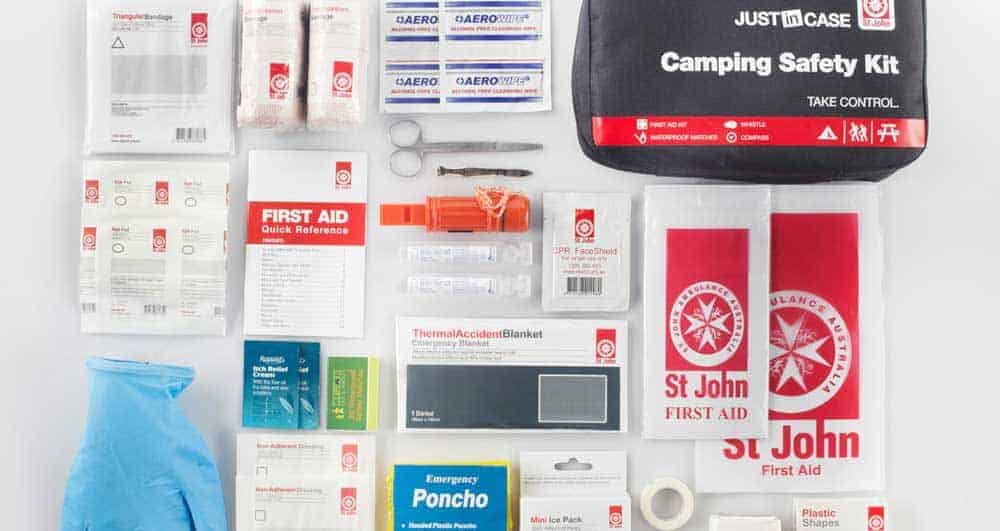
A minimalist first aid kit covers most of what the trail throws at you, and the pharmacy covers the rest. The walkers who successfully completed the Camino without a medical scare are rarely the toughest ones; they are usually the ones who prepared their feet, packed light, and paid attention early. The route is physically demanding but forgiving if you respect it. If you are still deciding which way to go, our guide to the Camino Frances pilgrimage in Spain covers the most popular path and what to expect along the route.
FAQ: Medical help and health care on the Camino de Santiago
Do I need travel insurance for the Camino if I am healthy?
Yes. Travel insurance is not about your current health, it is about the unpredictable, the bad fall or the sudden illness, and about recovering costs you would otherwise pay out of pocket in Spain. For a U.S. pilgrim with no EHIC or GHIC to fall back on, a policy that covers emergency medical care and evacuation is the practical baseline, healthy or not.
Are there hospitals and urgent care options along the Camino Frances?
Yes. The Camino Frances passes through cities such as Pamplona, Burgos, and Leon that have full hospitals, and most towns of any size have a pharmacy and often a health centre. You are rarely far from some level of care, and the pharmacy handles the bulk of everyday pilgrim complaints.
What should I do if my blister looks infected?
Stop self-treating and seek help. Spreading redness, warmth, swelling, pus, or a fever are signs of infection that a hydrocolloid patch cannot fix. Visit a pharmacy first for advice, and go to a local health centre if it is worsening, as you may need antibiotics and a proper clean and dressing.
Can I buy antibiotics or prescription pain medication at a Spanish pharmacy?
Generally no. Spanish pharmacies sell a good range of over-the-counter remedies, but antibiotics and stronger prescription pain medication require a local prescription, which means seeing a Spanish doctor at a health centre. Ask for the generic active ingredient rather than an American brand name to make the visit easier.
What are the emergency numbers in Spain, and when should I use them?
The single number to remember is 112, which reaches ambulance, police, and fire from any phone across Spain, with English-speaking operators often available. Use it for any real emergency: a serious fall, chest pain, heavy bleeding, breathing trouble, or any situation where waiting would be dangerous. Save it before you start walking, and buen camino.




Leave a Reply