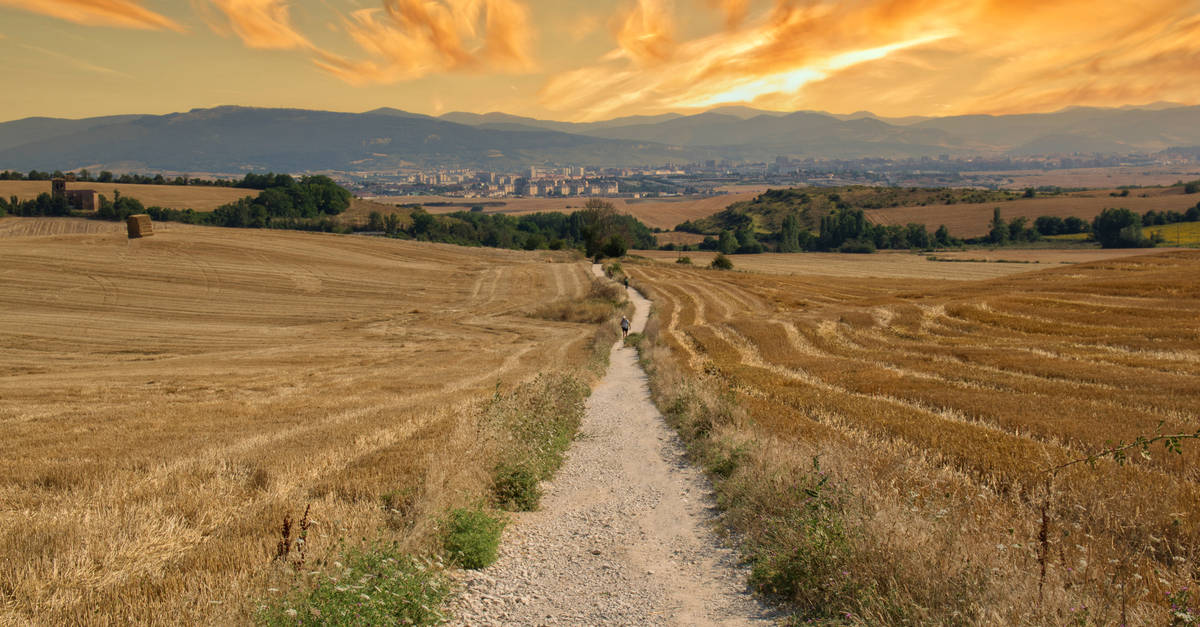
The thing nobody tells you about a typical day on the Camino de Santiago is how little there is to decide. You wake, you walk, you stop when your feet have had enough, you sleep among strangers who will be strangers no longer by week's end. That is roughly it. And somehow that emptied-out simplicity is the whole point, the bit people come home trying to explain at dinner parties and never quite manage.
I have walked enough of the Camino de Santiago now to know there is no single template. A day on the Spanish meseta feels nothing like a damp morning in Galicia. But the shape of it, the rhythm, repeats often enough that a first-timer can plan around it. This is that shape, honestly told, blisters and all.
What does a typical day on the Camino actually feel like?
A typical day on the Camino is repetitive in the best possible way. You are not building a career or answering email. You are getting yourself, on foot, from one small Spanish town to the next, usually somewhere between 20 and 30 km away. That narrowing of life down to a single task is what most pilgrims mean when they talk about freedom in hiking. Fewer choices, smaller needs, a clearer head.
This piece is for anyone, and a lot of you reading are American, weighing up a first Camino and wondering what daily life on it really looks like. Not the cathedral at the end. The ordinary middle. The breakfast a few kilometres in, the heat at noon, the bunk by mid-afternoon.
Here is the rhythm most days settle into, the snapshot before we slow down and walk through each part:
- Early start, often before 7am, sometimes well before dawn
- Breakfast a few kilometres down the trail, rarely before you leave
- Steady walking through the cool morning, slowing as the heat climbs
- A long midday rest somewhere shaded when the sun is fierce
- Arrival at the next albergue by early or mid afternoon
- Shower, laundry, foot care, a pilgrim dinner, then bed by around 9pm
What surprises most people is how quickly this becomes second nature. By day three or four you stop checking your phone for the time and start reading the sun instead. That is the quiet shift. You are on Camino time now.
What time do pilgrims wake up, and why so early?
Most pilgrims are awake around 6am. Some earlier. The reason is partly the heat and partly the albergues themselves, which often want everyone cleared out by 7.30 or 8am so the volunteers, the hospitaleros, can clean before the next wave arrives. You do not get a lie-in in a municipal dormitory. The building empties whether you are ready or not.
Then there are the early risers the rest of us mutter about: the bag rustlers. These are the pilgrims up at 4.30am, packing by headlamp, every plastic stuff-sack and zip amplified to the volume of a small avalanche in a dark room of sleeping bodies. They mean well. They want to beat the heat, claim a bed early in the next town. They are also, briefly, the most resented people on the Camino de Santiago.
Which brings me to the single piece of kit I would never walk without. Earplugs. Bring good ones, bring spares. Between the bag rustlers and the snorers, a dormitory at night sounds like an orchestra tuning up underwater. A light sleeper who forgets earplugs is a light sleeper who walks the next day on three hours' rest, and three hours' rest plus 25 km of trail is its own special misery.
The morning mood, though, redeems all of it. Headlamps bobbing along a track before sunrise, sleepy murmurs of "buen camino" between people who will not even recognise each other in daylight, the cold air, the first birds. These are the calmest hours on the whole route, and worth setting an alarm for.
The first hour: do you really skip coffee and a shower?
Often, yes. This catches new pilgrims off guard. You picture a leisurely breakfast before setting off, and instead you find yourself walking out of the albergue in the dark with nothing in your stomach and yesterday's sweat still on you, because the showers are busy and the building is closing and the café in town does not open until you have already left.
The trick is to stop fighting it. Plan to buy breakfast a few kilometres down the trail, where some small bar in the next village will be firing up the coffee machine for exactly this reason. A café con leche and a croissant standing at a zinc counter at 7.30am, having already walked an hour, is one of the genuine pleasures of the walk. You earned it before you ordered it.
That first hour out of the door has a small, sensible checklist worth running through, especially in the dark:
- Pack quietly and fast the night before, so morning is just rolling the mat and going
- Top up your water and adjust your layers before you are cold and resentful
- Do a quick blister check; tape any hotspot now, not at noon when it is a wound
- Wear a headlamp and something reflective if you are starting before light
The mental shift happens somewhere in that first hour. You stop carrying the morning's small frustrations and start just walking. The body warms, the path reveals itself, and the day's only real job becomes putting one foot ahead of the other.
When and where do pilgrims eat?
Food on the Camino is simple, frequent, and cheap, and it punctuates the walking day more than any clock does. On the popular routes, the Camino frances especially, you are rarely more than a couple of hours from a bar. The longer stretches on the meseta, or quieter caminos like the Primitivo, ask a bit more planning, but the principle holds: eat little and often, and let meals mark the day.
Breakfast, as covered, is usually a stop a few kilometres in. Mid-morning brings the second coffee, sometimes a slab of tortilla, the Spanish omelette of egg and potato that fuels half the pilgrims on the trail. Lunch is rarely a sit-down affair. More often it is a bocadillo, a crusty filled roll, eaten on a wall in the shade, or fruit and nuts pulled from a side pocket while you keep moving.
Here is roughly how the eating shapes a typical day on the trail:
|
Time |
What pilgrims usually eat |
Where |
|
Around 7.30 to 8.30am |
Café con leche, croissant or toast |
First bar a few km from the albergue |
|
Mid-morning |
Second coffee, tortilla, pastry |
Bar in the next town |
|
Around 1 to 3pm |
Bocadillo, fruit, nuts, a cold drink |
On the trail or a shaded square |
|
Evening, around 7.30pm |
Pilgrim menu: soup, a main, wine, dessert |
Albergue or village restaurant |
Hydration matters more than appetite on the hot stretches. Carry more water than you think you need between towns, and learn to spot the cold-drinks fridge in every café, because there is a near-mythical moment, usually around the worst heat of the afternoon, when an ice-cold lemon Aquarius tastes better than anything you have drunk in your life. Pilgrims talk about it like a sacrament. They are only half joking.
How do you pace the walk so it stays free?
The single most common mistake on a first camino is walking somebody else's pace. You fall in beside a chatty Dutchman with legs like a heron, match his stride out of politeness, and by lunchtime your knees are filing a complaint. Walk your own pace. This sounds obvious. It is the hardest discipline on the whole route.
Natural pacing tends to sort itself out within a few days. You learn to start cool and steady, push the early kilometres while the air is kind, and ease off as the heat builds. Some pilgrims take many short breaks; others prefer fewer, longer café stops. Neither is right. The freedom in hiking is precisely that nobody is grading you.
Listen to your body, and learn its early warnings:
- A hotspot on the foot is a blister announcing itself; tape it the moment you feel it
- Aching knees on descents usually mean your poles are too long or your pack too heavy
- Sudden flatness of mood, oddly, is often just low blood sugar; eat something
Then there is the social rhythm, which I have never heard described better than as an accordion. You walk a solitary stretch lost in your own head, then leapfrog the same familiar faces at a café, fall into step for an hour, drift apart again on a hill. Over days this loose, breathing pattern of meeting people and parting and meeting again becomes a kind of Camino family, the people you will hug like old friends in the square at Santiago de Compostela. The psychological freedom comes from this too. Fewer decisions, a clearer mind, and the strange relief of being briefly nobody in particular.
What do you do during the hottest part of the day?
From late spring onward, the midday sun changes everything, especially on the exposed sections like the meseta, where shade is a rumour. The heat is not a backdrop. It dictates the shape of the afternoon. Most experienced pilgrims simply refuse to fight it.
The standard approach is to walk hard in the cool morning and take a proper rest when the sun is at its worst, usually a couple of hours somewhere between 1 and 3pm. Find shade, peel off your boots, eat, doze if you can. This is also why so many people start so absurdly early: arrive at the destination for the day before the furnace hours, and the afternoon becomes recovery rather than endurance.
A few habits make the heat survivable:
- Sun protection that you actually reapply, plus a wide-brimmed hat
- Electrolytes or salty snacks, not just water, on long hot stretches
- Shade breaks taken before you feel you need them, not after
- An honest call on when to slow down rather than push through to prove something
There is no medal for walking through the worst of the heat. The towns are not going anywhere. Slowing down is not weakness here; it is the local wisdom that Spanish villages built the siesta around for very good reasons.
What time do you arrive, and what happens after check-in?
The usual aim is to reach the next albergue by early or mid afternoon, partly so your body has not crashed and partly so you actually get a bed. On the busy stretches, especially the last 100 km from Sarria where short-distance walkers swell the numbers, beds fill fast. Arrive late and you may be walking on to the next town with nothing left in the tank.
The post-arrival routine is its own small ritual, repeated every afternoon until it becomes muscle memory:
- Check in, get your pilgrim passport stamped, claim a bunk
- Shower while there is still hot water, which is never guaranteed
- Wash the day's clothes by hand and fight for a spot on the laundry line
- Tend to your feet: air them, treat blisters, lie down and put your legs up a wall
Foot care is not optional. The pilgrims who finish are usually the ones who treated a hotspot the day it appeared rather than walking on it for a week out of stubbornness. After that, the loveliest part of the day arrives: nothing is required of you except to recover. You sit in a plastic chair in the sun with a cold drink and absolutely nowhere to be.
Planning tomorrow happens here too, but lightly. You glance at the guidebook or a Camino app, weigh the distance and the terrain, maybe text the Camino family in the WhatsApp group to see where they are stopping, and leave it loose. Over-planning a hiking day on the Camino is a way of importing your old life onto a trail designed to strip it away.
What do evenings look like?
Pilgrim dinners tend to start early by Spanish standards, often around 7.30pm, well before locals would dream of eating. Many albergues and village restaurants serve a pilgrim menu: three courses, bread, and a bottle of wine for a modest fixed price, eaten at long shared tables with whoever happens to sit down.
Those shared meals are where the Camino does its quiet social work. People swap route tips, compare blisters like war wounds, laugh too loudly over the wine, and occasionally fall into the kind of honest conversation you only have with people you met that morning and may never see again. Where there is a communal kitchen, a few pilgrims will club together and cook, which is its own small theatre of too many cooks and not enough pans.
Then the night routine, brisk and practical:
- Repack the bag for a quiet, fast morning exit
- Charge the phone and power bank while there is a free socket
- Lay out tomorrow's clothes so dressing in the dark is silent
- Earplugs in, eye mask on, and accept your fate among the snorers
By around 9pm the lights are out and a room full of grown adults is asleep like children. There is something tender about it, all these people who walked all day, lying down together in the dark, ready to do it again tomorrow. That early, willing surrender to sleep might be the most foreign thing of all to a visiting hiker used to late nights and screens.
Does the daily rhythm change by route and season?
It does, and it is worth knowing before you go. The Camino frances has the densest spread of albergues and cafés, so its days flow easily, with food and beds rarely far apart. A walk starting in Porto on the Portuguese Way, or further back in Lisbon, has a different texture again, more towns, more pavement early on, the same broad rhythm underneath.
Quieter routes ask more self-reliance. The Camino del Norte is hilly and stretched out; the Primitivo is harder and emptier; long stretches between services mean you carry more food and start earlier. Season matters just as much. A morning in the Pyrenees in late May is a world away from the same hour in high summer on the meseta.
This table sketches how the typical day shifts across a few of the better-known caminos:
|
Route |
Daily character |
What it means for your day |
|
Camino frances |
Frequent towns, many albergues, busy near Sarria |
Easy food stops, but arrive early for a bed in peak months |
|
Portuguese Way |
Gentler, towns close together, often starting in Porto |
Relaxed pacing, more pavement in the early days |
|
Camino del Norte |
Coastal, hilly, services more spread out |
Earlier starts, carry more food, fewer crowds |
|
Camino Primitivo |
Mountainous, remote, demanding |
Shorter daily km, real planning between towns |
However you cut it, the underlying day stays recognisable. Wake, walk, eat, rest, sleep. The pilgrimage to the bones of Saint James, the apostle whose shrine has drawn walkers to Galicia since the 9th century, still comes down to the same plain acts it always did. There is a guide to the Camino Frances pilgrimage in Spain worth reading if that classic route is the one calling you.
Do you need to train before you go?
Some training helps, but you do not need to be an athlete. The Camino is walked every year by retirees, by people carrying a few extra stone, by the comprehensively unfit who simply slowed down and finished anyway. What wrecks people is not lack of fitness so much as a too-heavy pack and untested boots.
If you have weeks before you leave, the useful preparation is dull and specific: walk for several hours at a stretch, on consecutive days, in the exact boots and pack you will carry. Blisters and aching feet are far easier to solve at home than on a Spanish hillside. For a fuller plan, this guide on getting fit for the Camino lays it out stage by stage, and it is honest about how little gym work actually transfers to a long day on the camino.
The other half of preparation is your feet, which will be the first to mutiny. A little knowledge of taping, sock choice, and hotspots goes a long way; the blister prevention guide is worth an evening before you fly.
FAQ: Common questions about a typical day on the Camino de Santiago
How many miles or kilometres do pilgrims usually walk in a day?
Most pilgrims walk somewhere around 20 to 25 km a day, which is roughly 12 to 16 miles, though this swings widely with fitness, weather, terrain, and where the albergues happen to fall. Early on, many people walk fewer kilometres while their feet toughen up, then settle into a steadier daily distance. There is no required number; the spacing of towns often decides it for you more than ambition does.
Do you have to start walking at 6am every day?
No, though many do, largely to beat the heat and to claim a bed before the popular albergues fill. You can absolutely start later if you are walking shorter stages, booking private rooms ahead, or simply prefer a slower morning. The trade-offs of a late start are walking through the hottest hours and risking a full albergue in peak season, so most pilgrims drift earlier as the walk goes on.
How do you survive an albergue dorm if you are a light sleeper?
Good earplugs and an eye mask are the two cheapest pieces of kit that make the biggest difference, because dorms come with snorers and pre-dawn bag rustlers as standard. A steady evening routine helps: repack before bed, keep a head torch handy, and accept that some noise is simply part of communal pilgrim life. If broken sleep really wears you down, mix in the occasional private room or hostel to recover.
Do you walk alone or with other people during the day?
Both, usually within the same day. The common pattern is solitary stretches where you walk lost in thought, then regrouping at cafés and meeting the same familiar faces again each evening in town. You are free to walk alone whenever you want and equally free to fall in with others; nobody minds either way, and most pilgrims do plenty of both.
Is it hard to find food and water during the walking day?
On busy routes like the Camino frances it is easy, with bars and small shops dotted through most stages so you rarely walk long without a café in reach. Quieter routes and the meseta have longer gaps, so you carry more water and a bocadillo or fruit for the stretch. As a rule, top up water at every chance and never pass the last bar before a long empty section without filling up.
The freedom in walking your own day
What stays with people, long after the blisters heal, is not the distance or the views but the shape of the days themselves. Walking the camino reduces life to something almost embarrassingly simple, and in that simplicity most pilgrims find a freedom they did not know they were missing. No meetings. No deciding what to wear. Just walk, eat, rest, sleep, and the slow accumulation of kilometres toward Santiago de Compostela.
If you are still picturing your own first camino, do not over-engineer it. Choose a route that fits your time and legs, sketch the loosest possible rhythm, and let the trail handle the rest. Maybe try one Camino-style day at home before you go: up early, a long walk, a café breakfast partway, a real rest in the afternoon. It will tell you more than any packing list. And whenever you do set off, from Saint-Jean, from Porto, from Burgos or Sarria, someone walking the other way will catch your eye, lift a hand, and say the two words that carry the whole spirit of the thing. Buen camino.




Leave a Reply