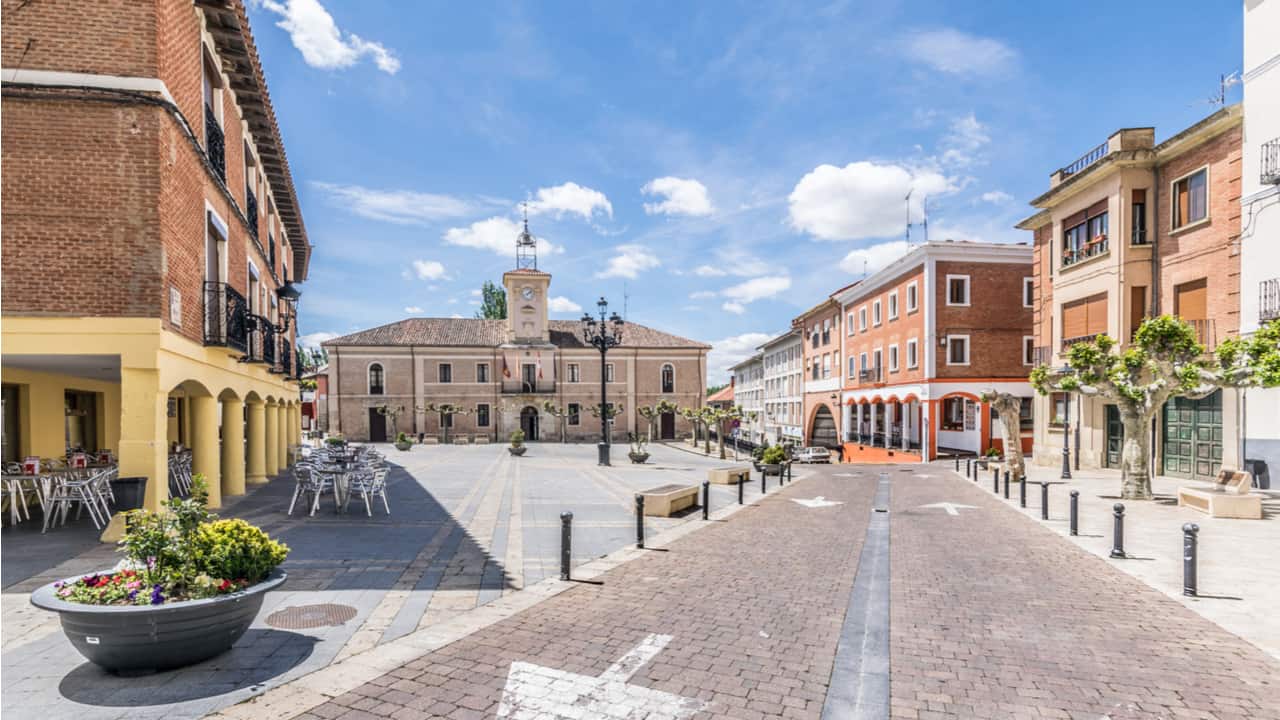
The boots were still damp from the day before, and the meseta stretched out ahead like a sentence that refuses to end. Then, across the Carrión River, a cluster of stone and tile appeared, quiet and unassuming, as if it had been waiting there for a thousand years. Which, of course, it had.
Carrión de los Condes is that kind of place. Not loud. Not flashy. But for pilgrims walking the Camino de Santiago Francés, it is one of those towns that lodges in your memory long after the blisters have healed. Part of it is the history, which runs deep. Part of it is the practical reality: this is the last place to sort yourself out before a long, bankless stretch of the meseta. And part of it, honestly, is the light on those Romanesque carvings in the late afternoon, when the other pilgrims have already moved on and the plaza is yours.
What Makes Carrión de los Condes an Important Stop on the Camino Francés?
Carrión de los Condes sits in the province of Palencia, deep in the Castilla y León region, roughly halfway along the Camino Francés. It falls squarely in the meseta section, that vast central plateau that tests patience and rewards attention in equal measure. Most pilgrims reach Carrión de los Condes after walking from Frómista, a stage of roughly 19 to 20 kilometres, and it marks the end of what many guidebooks call Stage 17 of the French Way.
- Population today: approximately 2,000 residents, a fraction of its medieval peak
- Location: Palencia province, Castilla y León, on the banks of the Carrión River
- Camino context: a key services stop before a long, exposed stretch toward Calzadilla de la Cueza and onward to Sahagún
- Historical significance: at its medieval height, the town had around 10,000 inhabitants and supported up to 14 pilgrim hostels
For pilgrims coming from the United States or anywhere outside Spain, the town can feel surprisingly small. But "small" here does not mean "lacking." All essential pilgrim services are available, and the town punches well above its weight in terms of history, architecture, and atmosphere. It is a place where the Camino's past and present overlap in a way that makes the pilgrimage feel genuinely continuous.
What Is the History of Carrión de los Condes (and Why Do Pilgrims Care)?
History on the Camino is not abstract. It is underfoot. The streets of Carrión de los Condes follow a layout established centuries ago, and the churches you duck into for shade are the same ones that sheltered pilgrims in the 12th century. That matters, even if you are not particularly interested in dates.
|
Period |
What Happened |
What Pilgrims See Today |
|
Roman era |
First settlement established; strategic river crossing |
The bridge and river crossing remain central to the town |
|
Visigothic and Moorish periods |
Town changed hands; fortifications built |
Street layout and defensive positioning still visible |
|
9th to 10th century |
Reconquista; town grows under Christian rule |
Early church foundations; Carrión becomes a seat of local power |
|
Medieval pilgrim era (11th to 14th century) |
Peak population (~10,000); 14 pilgrim hostels; royal and religious patronage |
Romanesque churches, monasteries, innumerable emblazoned houses, and pilgrim infrastructure |
|
Early modern to present |
Gradual decline; loss of population and political significance |
Quiet town with preserved medieval core; three hostels and modern albergues |
The author of the Codex Calixtinus, the medieval pilgrim's guidebook, mentioned Carrión as a prosperous town. The Marquis of Santillana held court here. Various temples and religious houses lined the streets. What remains is less grand but more intimate: a town where you can walk the same stone paths as medieval pilgrims and feel the continuity in your bones.
What Are the Top Things to See in Carrión de los Condes as a Pilgrim?
You do not need a full rest day to see the highlights, though you might want one. Think of this as a choice between a focused one to two hour walk through the old town centre and a more leisurely half day that includes San Zoilo and a long coffee in the plaza mayor. Either way, you will see things worth remembering.
What Should You See at the 12th-Century Church of Santiago?
The Church of Santiago is the one most pilgrims photograph without quite knowing what they are looking at, which is a shame, because the carved archivolt of the entrance is one of the best examples of Romanesque sculpture on the entire Camino de Santiago. Look up. The archivolt features a Pantocrator surrounded by the four Evangelists, with 24 figures of medieval trades arranged around the arch. Blacksmiths, cobblers, musicians, scribes. It is a snapshot of 12th-century working life, frozen in stone.
- What to look for: the archivolt carvings depicting Christ in Majesty and the medieval trades; weathering has softened some detail, so morning or late afternoon light gives the best contrast
- Time needed: 15 to 30 minutes for the exterior; the interior is modest but worth a quiet moment
- Tip: visit early morning before the heat, or late afternoon when the stone catches golden light
This is not a museum. It is a working church on a living pilgrimage route. Stand there long enough and someone will walk past with a backpack and a scallop shell, heading west. That is the whole point.
Why Is the Monastery of San Zoilo a Must-Visit?
The Real Monasterio de San Zoilo sits just outside the old town, across the Carrión River, and it has the quiet gravity of a place that has been prayed in, argued over, and rebuilt for the better part of a millennium. Originally a Benedictine foundation, the monastery of San Zoilo later passed to the Jesuits and has served various purposes since.
The standout feature is the cloister, which contains over 200 Renaissance carved keystones. Each one is different. Faces, foliage, coats of arms, grotesques. You can spend twenty minutes just looking up, turning slowly, letting the detail accumulate. It is the kind of place that rewards patience, which, after days on the meseta, you may finally have in abundance.
- Allow: 30 to 60 minutes for the cloister and grounds
- Atmosphere: peaceful, reflective; a genuine break from walking
- Access: part of the monastery complex now operates as a hotel, but the cloister is generally accessible to visitors; check locally for current hours
What's the Story Behind Santa María del Camino and the Legend of the 100 Virgins?
Santa María del Camino is the other major church in town, and its name tells you exactly where it sits: on the Camino route itself. The building dates to the 12th century, with later modifications, and it holds a place in local storytelling that goes deeper than architecture.
The legend of the 100 virgins is tied to this site. According to local tradition, during the period of Moorish rule, the town was required to pay an annual tribute of 100 young women. The story holds that divine intervention, in the form of bulls (yes, bulls), ended the practice. It is legend, not history, and the details shift depending on who tells it. But it remains part of local identity, woven into feast days and the town's self-understanding. Approach it with curiosity and cultural respect. It is both a story and a sacred space.
- What to see: the Romanesque south portal; the interior is simple and atmospheric
- Time needed: 15 to 20 minutes
- Context: the legend is referenced in local signage and sometimes in pilgrim guidebooks
Between these three sites, and the Royal Monastery of Santa Clara (a working convent of Poor Clares, sometimes offering hospitality), the neoclassical church of San Gregorio, and the various hermitages on the outskirts, Carrión de los Condes offers more historical and cultural substance than many pilgrims expect from a small Castilian town.
What Services Can Pilgrims Expect in Carrión de los Condes Today?
Despite its modest size, Carrión de los Condes offers all essential services for pilgrims. This is not a village where you need to worry about finding food or a pharmacy. It is a proper town, just a quiet one.
|
Service |
Availability |
Notes for Pilgrims |
|
Food (bars, restaurants) |
Multiple options; pilgrim menus common |
Pilgrim menus (menú del peregrino) typically 10 to 13 euros; expect three courses plus bread and wine |
|
Grocery/supermarket |
Small shops available |
Good for trail snacks, fruit, bread; limited selection compared to Burgos or larger cities |
|
Pharmacy |
Yes |
Blister supplies (Compeed or equivalent), ibuprofen, basic medical needs |
|
Laundry |
Some albergues offer washing facilities; no dedicated laundromat |
Ask at check-in; hand-washing and line-drying is the norm |
|
ATM/Bank |
Yes, in town |
Critical: this is the last reliable ATM access for roughly two days |
|
Gear replacement |
Very limited |
Basic items only; for boots or poles, plan ahead or order to a larger town |
A planning note for pilgrims from the United States: Spanish meal times will catch you out if you are not prepared. Lunch is typically 1:30 to 3:30 PM, and dinner rarely starts before 8:00 or 8:30 PM. Bars open earlier for coffee and a snack (a tortilla pintxo at 7:00 AM is one of the small sacraments of el Camino), but a sit-down meal follows Spanish hours. Plan accordingly, especially if you are used to eating dinner at six.
Where Can You Stay in Carrión de los Condes (Albergues and Other Lodging)?
Carrión de los Condes once supported 14 pilgrim hostels. Today, the number is far smaller, but the options cover the range of pilgrim needs. The town has three main hostel or albergue options, supplemented by a handful of hostals, hotels, and casa rural properties.
- Municipal and parochial albergues: budget-friendly, communal dormitories. Expect bunk beds, shared bathrooms, and a lights-out policy. The Convent of Santa Clara sometimes offers pilgrim hospitality in a donation-based or set-fee arrangement. These are quiet, reflective spaces with early curfews.
- Private albergues: slightly more comfort, sometimes with smaller rooms or better kitchen facilities. Casa Ivar is one example that appears in pilgrim forums. Prices typically range from 10 to 15 euros per bed.
- Hostals and hotels: for pilgrims who want a private room, a hot shower with good pressure, and a door that locks. Expect 35 to 70 euros per night for a double room, depending on season.
|
Lodging Type |
Typical Cost |
Reservation Needed? |
Best For |
|
Municipal/parochial albergue |
5 to 10 euros (donation-based or set fee) |
Usually walk-in; first come, first served |
Budget pilgrims; those seeking community |
|
Private albergue |
10 to 15 euros per bed |
Walk-in possible; booking recommended in peak season (June to September) |
Slightly more comfort; smaller dorms |
|
Hostal/hotel |
35 to 70 euros per room |
Book ahead in summer |
Privacy; rest day recovery; couples |
What matters most after walking the meseta? Sleep, food access, and quiet. Carrión delivers on all three. Check-in at most albergues opens between 1:00 and 2:00 PM. Arriving earlier means waiting, possibly in the shade of the Church of Santiago, which is not the worst fate. Pilgrim etiquette applies everywhere: quiet after 10:00 PM, no rustling through your pack at 5:00 AM (use the corridor), and if you snore, own it with grace.
How Do You Walk the Stage Into and Out of Carrión (Routes, Terrain, and What to Expect)?
Two stages define the Carrión experience: the walk in, and the walk out. Both are meseta walking, which means flat, open, and exposed. Beautiful in its austerity, punishing in the heat.
Frómista to Carrión de los Condes (Stage 17)
This stage runs approximately 19 to 20 kilometres, depending on your exact route through the Camino Francés. The terrain is flat, the path is well-waymarked with yellow arrows, and the landscape is open farmland. You will pass through small villages, including Villalcázar de Sirga (worth a stop for its 13th-century church) and Población de Campos.
- Terrain: flat; compacted earth and gravel paths, some stretches alongside roads
- Difficulty: moderate; the distance is manageable, but sun and wind exposure can be relentless
- Water and food: carry at least one litre from Frómista; bars in intermediate villages are seasonal and may close without warning
- Suggested start time: 6:30 to 7:00 AM in summer to avoid the worst heat
Carrión de los Condes to Terradillos de los Templarios (and Onward to Sahagún)
This is the stage that separates the prepared from the wishful. From Carrión de los Condes to Calzadilla de la Cueza is roughly 17 kilometres with almost nothing in between. No village, no bar, no shade. Just the path, the sky, and whatever you brought with you. From Calzadilla, it is another 9 kilometres or so to Terradillos de los Templarios, named for the Knights Templar who once held the area.
- Terrain: flat, open, exposed; the iconic meseta stretch
- Water: carry at least 1.5 to 2 litres from Carrión; there is nothing reliable for the first 17 kilometres
- Food: pack breakfast and snacks; the first bar is in Calzadilla de la Cueza
- Navigation: well-marked with yellow arrows; GPS tracks available from apps like Wise Pilgrim or Buen Camino
- Start time: early, before dawn in summer; this is not a stage to begin at 9:00 AM in July
The meseta has a reputation for being boring. I would push back on that. It is challenging, certainly, and the monotony can be confronting. But there is a stripped-down quality to walking those open stretches, just you and the horizon, that creates space for the kind of thinking you came here to do. Whether you wanted to or not.
What Is the Most Important Practical Warning When Leaving Carrión (Money and Banking)?
This is the section I wish someone had underlined for me in red. Read it twice.
There is no reliable bank or ATM access for approximately two days after leaving Carrión de los Condes. The villages between here and Sahagún are small, and while a bar in Calzadilla de la Cueza might take a card, many smaller establishments along this stretch operate on cash only.
- Before you leave Carrión: withdraw enough cash for two full days of walking
- Budget estimate for two days: 40 to 80 euros, depending on your lodging and eating habits (albergue beds at 8 to 15 euros per night, meals at 10 to 15 euros each, plus snacks and water)
- Card acceptance: unreliable in small villages; do not assume you can pay by card everywhere
- Backup strategies: split your cash between your wallet and a secondary location in your pack; keep a small emergency reserve; notify your bank of travel in Spain before you leave home
This is not a crisis if you plan for it. It is only a problem if you do not. The wise pilgrim walks out of Carrión with a full water bottle, a packed breakfast, and enough euros to last until Sahagún. Be that pilgrim.
FAQ: What Do Pilgrims Ask Most About Carrión de los Condes on the Camino Francés?
Is Carrión de los Condes a good place for a rest day on the Camino?
It depends on what you need. For history lovers, the churches, the monastery of San Zoilo, and the museum of sacred art make a compelling case for staying. For those who need physical recovery after the meseta stages, the town's quiet pace, available pharmacy, and decent food options make it a sensible choice. If you prefer to rest in a larger town with more nightlife or variety, you may want to push on to Sahagún or even León. But Carrión rewards those who slow down.
How much time do I need to see the main landmarks?
A focused walk covering the Church of Santiago, Santa María del Camino, and the plaza mayor takes one to two hours. Adding the Real Monasterio de San Zoilo and its cloister extends that to a half day, especially if you linger. You should linger.
Are there enough places to eat and shop for essentials?
Yes. Carrión de los Condes has bars, restaurants serving pilgrim menus, a small supermarket, and a pharmacy. All essential services for pilgrims are available. Remember that Spanish meal times apply: lunch from 1:30 PM, dinner from 8:00 PM onward. Bars open early for coffee and light bites.
Do I need cash in Carrión de los Condes (and after)?
You need cash after Carrión de los Condes. The town itself has an ATM and banks, but once you leave, there is no reliable bank access for roughly two days. Withdraw enough for lodging, meals, and incidentals before you depart. Budget 40 to 80 euros depending on your habits.
Is Carrión de los Condes crowded during peak Camino season?
In June, July, and August, the town sees its highest pilgrim traffic, and albergue beds can fill by early afternoon. Booking a private albergue or hostal in advance is wise during these months. Outside peak season (April, May, September, October), walk-in availability is usually fine. The town never feels overwhelmed; it simply gets busier, and the communal albergues fill faster.
Your Next Steps for Walking Through Carrión de los Condes
If you are planning your Camino Francés stages and want to make the most of Carrión de los Condes, here is a simple checklist to carry with you:
- Visit the Church of Santiago for the Romanesque archivolt carvings (morning or late afternoon light)
- Walk across the river to the Real Monasterio de San Zoilo and spend time in the cloister
- Step into Santa María del Camino and ask about the legend of the 100 virgins
- Stock up on water, snacks, and blister supplies at the pharmacy and supermarket
- Withdraw cash for two full days: you will not find another ATM until Sahagún
- Set your alarm early for the walk to Calzadilla de la Cueza, there is no shade and no services for 17 kilometres
Explore the next stage guide for the walk from Carrión de los Condes to Terradillos de los Templarios, and check route distances and stop options before you set out. If you are still in the planning phase of your pilgrimage, look into packing guides, budgeting tips, and reservation advice tailored for pilgrims travelling from the United States. The Camino does not ask you to be perfect. It asks you to be ready.
Carrión de los Condes is a town that asks very little of you. A few hours, some attention, a willingness to look up at carved stone and feel, however briefly, the weight of all the feet that came before yours. That is enough. That is, in fact, quite a lot.


