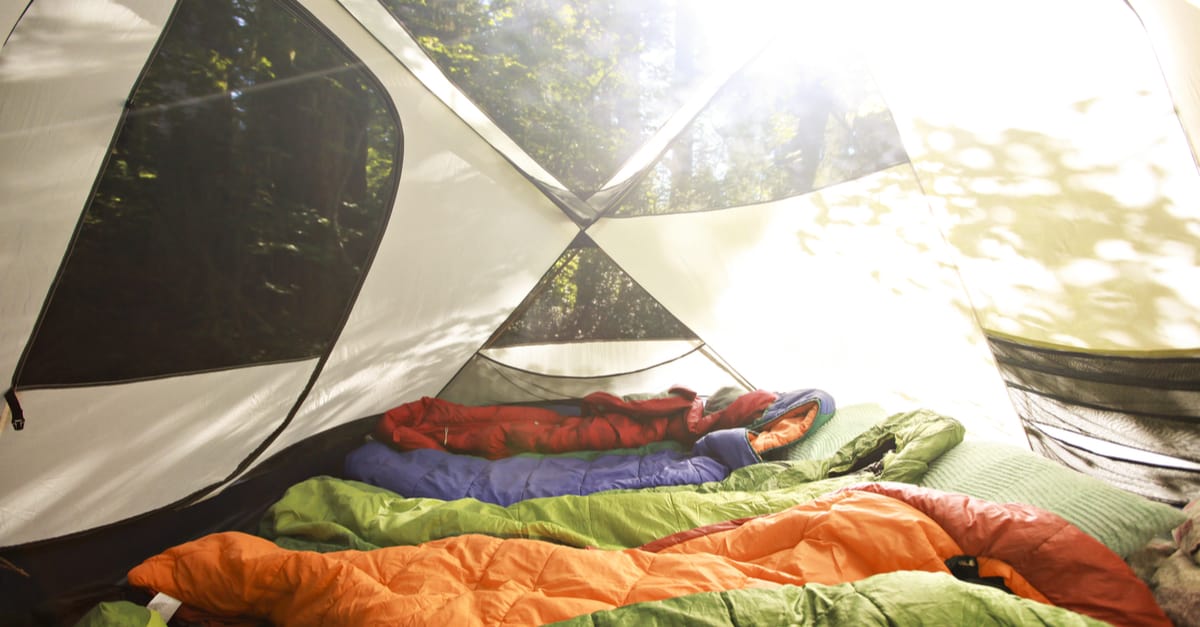
I remember standing in my hallway the night before flying out of JFK, staring at a sleeping bag and a silk liner side by side on the floor. The sleeping bag weighed about 600 grams. The liner, maybe 120. Both would fit in my pack. But only one of them would earn its place over 800 kilometres of walking, and I genuinely didn't know which.
If you're reading this from the US and trying to figure out the best sleeping bag for the Camino de Santiago, you're probably in that same hallway right now, figuratively speaking. So let me walk you through what actually matters, what I got wrong, and what I'd do differently.
What Sleeping Conditions Should You Expect on the Camino de Santiago?
Most pilgrims walking the Camino sleep in albergues, which are pilgrim hostels with bunk beds in shared dormitory rooms. Some are municipal (cheap, basic, first-come-first-served), some are private (a few euros more, often with online booking). Conditions vary enormously. A well-funded albergue in a larger town like Burgos might have heating, clean mattresses, and provided blankets. A tiny municipal in rural Galicia might offer a bare mattress in an unheated stone building.
|
Factor |
What to Expect |
|
Bed setup |
Bunk beds, sometimes with mattress pads or foam. Pillow quality varies wildly; many pilgrims carry a pillowcase. |
|
Blankets/sheets |
Many albergues now offer blankets or duvets, but it is not universal. Municipal albergues are less reliable on this front. |
|
Heating |
Larger or newer hostels often have heating. Older rural albergues may not, especially outside peak season. |
|
Temperature range |
Summer dorms can be stuffy and hot. Shoulder season nights (March, April, October) can drop to 5 to 12 degrees Celsius indoors in unheated rooms. |
|
Hygiene |
Provided bedding quality varies. Sweaty nights, crowded rooms, and occasional bed bugs are recurring concerns in Camino communities. |
The route matters too. The Camino Francés crosses the Pyrenees and the high Meseta, where it can be genuinely cold at night even in May. Other Caminos, like the Portuguese Coastal route in summer, rarely dip below comfortable sleeping temperatures. Your personal tolerance is the final variable. Some pilgrims sleep cold; others radiate heat like a wood stove.
Do You Really Need to Bring a Sleeping Bag on the Camino, or Is a Liner Enough?
This is the question that fills Camino forums and Reddit threads every spring. The honest answer is that many pilgrims who walk the Camino in June, July, or August manage perfectly well with a sleeping bag liner alone, particularly on the Francés where albergues offer blankets more often than not. A liner gives you a clean barrier between yourself and whatever bedding is provided, and it weighs almost nothing.
But "many" is not "all." And the distinction matters at 2 AM in an unheated room in the mountains above Roncesvalles.
- A liner alone works well when: you're walking in summer, you sleep warm, you plan to stay in well-equipped albergues or private accommodation, and you want the lightest possible sleep system.
- A sleeping bag earns its weight when: you're walking in early spring (March or April) or late September onward, you sleep cold, you're staying in municipals with unpredictable blanket provision, or you want the security of guaranteed warmth on a cold night.
- A lightweight sleeping bag plus a liner covers nearly every scenario and is the most flexible approach for shoulder season walking.
Quick Decision Checklist: Bag vs Liner
|
Your Situation |
Recommendation |
|
Summer (June to August), sleep warm |
Liner alone, possibly a sleep sack for modesty and hygiene |
|
Summer, sleep cold |
Super light summer bag (comfort rating around 15°C) or liner with thermal properties |
|
Shoulder season (March to May, September to October) |
Lightweight sleeping bag (comfort rating 5 to 12°C) plus a liner |
|
Winter or high-altitude sections |
Warmer bag (comfort rating around 0 to 5°C); consider a light down bag for packability |
What Temperature Rating Should a Camino Sleeping Bag Have?
Here's where marketing gets in the way. Sleeping bag temperature ratings often list an "extreme" survival number that looks impressive on the label but tells you nothing about comfort. What you want is the comfort rating, sometimes called the comfort temperature, which is the temperature at which an average person (usually calibrated to a woman or cold sleeper) can sleep comfortably. The EN 13537 / ISO 23537 standard is the testing protocol to look for, and most reputable US brands now use it.
- Summer Camino: A liner or a very light bag with a comfort rating around 12 to 15 degrees Celsius is usually more than enough. Many pilgrims find even this too warm in July.
- Spring or autumn Camino: Aim for a comfort rating of 5 to 10°C. This covers unheated albergues, cold nights in the Meseta, and the occasional chilly room in Galicia without being overkill.
- Cold sleepers: Add 5 degrees to whatever you think you need. Seriously. If you sleep cold at home under two blankets, you will sleep cold in a dorm. Layering helps (see below), but starting with a slightly warmer bag saves misery.
Remember that albergue heating and blankets change the equation substantially. You are sleeping indoors, not camping. Your sleeping bag is supplementing whatever the albergue provides, not replacing a tent and ground pad. This means you can usually get away with a lighter bag than you'd choose for backpacking.
Mummy Sleeping Bag or Rectangular Bag: What Works Best for Pilgrims?
The mummy bag is the default recommendation for any walking pilgrimage, and for good reason. It packs smaller, weighs less for the same warmth, and fits efficiently in a pack you're carrying on your back every single day. When your world shrinks to what you can comfortably carry for 25 kilometres, a few hundred grams and a couple of litres of pack space matter enormously.
That said, mummy bags have a particular talent for making you feel like a human burrito. If you're a restless sleeper, or if you tend to overheat, the snug fit can be maddening.
- Mummy bag: Best warmth-to-weight ratio, packs smallest, ideal if you sleep still and don't mind the fit. Look for a model with a full-length zipper for venting on warm nights.
- Rectangular bag: Roomier, more comfortable for side sleepers, easier to open flat and use as a blanket or duvet. Heavier and bulkier, which adds up over weeks of walking.
- Semi-rectangular or "hybrid" bags: A genuine compromise. More shoulder and hip room than a mummy, but still lighter and more packable than a full rectangle. Worth considering if comfort is a priority but you're watching pack weight.
One approach that works surprisingly well in warm weather: bring a lightweight mummy bag and simply unzip it fully. Drape it over yourself like a quilt. You get airflow on hot nights and can cinch it up if temperatures drop. Some pilgrims now carry a dedicated camping quilt for this reason, though these are less common on the Camino than in ultralight backpacking circles. Brands like Enlightened Equipment make quilts that work well for this purpose if you're already familiar with that approach.
Down or Synthetic Insulation: Which Is Best for Camino Pilgrims?
I've carried both on different walks, and the honest answer is that either works. The question is which trade-offs matter more to you.
|
Factor |
Down |
Synthetic |
|
Weight (for same warmth) |
Lighter |
Heavier |
|
Packed size |
Compresses much smaller |
Bulkier |
|
Performance when damp |
Loses insulation; slow to dry |
Retains warmth better when wet |
|
Durability |
Long-lasting with care |
Insulation degrades faster over time |
|
Cost |
Higher |
Lower; widely available at stores like Decathlon in Spain |
|
Washability |
Requires careful washing and drying |
Machine-washable, simpler to care for |
For pilgrims flying from the US, pack size matters more than you might expect. A light down bag compresses to the size of a water bottle; a synthetic bag of the same warmth might take up twice the space in your luggage. On the Camino itself, sweaty nights and limited drying time are real-world factors. You won't be washing your sleeping bag often (if at all), but you might stuff it into your pack slightly damp after a humid night. Synthetic handles that better.
If you're optimising for the lightest, most packable sleep system and you'll be sleeping indoors in albergues, a light down bag is hard to beat. If you're worried about moisture, want something cheaper, or plan to wash your bag mid-pilgrimage, synthetic may be the safer choice.
How Do You Balance Warmth, Weight, and Pack Space for the Camino?
The single most common regret I hear from returning pilgrims is carrying too much weight. Not too little. Too much. A bulky sleeping bag that you wrestle into your pack every morning, that pushes everything else out of alignment, that adds 800 grams you feel in your knees by Burgos. The goal is a sleep system light enough to forget you're carrying it.
- Target weight: For a summer sleeping bag, aim for 300 to 500 grams. For shoulder season, 500 to 800 grams is reasonable. Anything over a kilogram for the Camino is worth questioning.
- Packed volume: A good Camino sleeping bag should compress to roughly 3 to 5 litres. If it's taking up a quarter of your pack, it's too bulky.
- Compression sack vs. loose packing: A compression sack saves space but can create a hard lump in your pack. Some pilgrims prefer stuffing the bag loosely into the bottom of their pack, where it fills gaps and acts as a cushion for other gear.
- Keep it dry: Line your pack with a trash compactor bag or pack liner. A wet sleeping bag, especially down, is worse than no sleeping bag at all.
The layering approach deserves its own mention. Rather than bringing a warmer (and therefore heavier) bag to cover every scenario, many experienced pilgrims bring a lightweight sleeping bag and supplement it on cold nights by sleeping in a base layer, wearing a warm hat and socks, and pulling their puffy jacket over their torso. This works remarkably well and keeps your pack lighter on the warm days, which will outnumber the cold ones on most Camino routes.
Are Bed Bugs a Real Concern, and Do Treated Liners Help?
Yes, bed bugs exist on the Camino. No, they are not inevitable. The risk varies by year, by albergue, and by sheer luck. Camino forums mention outbreaks periodically, and certain albergues develop reputations (which then get addressed). It is a genuine concern but not a reason to lose sleep before you even start walking. Ironic, that.
- Permethrin-treated liners and sleep sacks: These are marketed as a deterrent. Permethrin is an insecticide that can be applied to fabric and does repel or kill insects on contact. A treated liner adds a layer of protection, though it is not a guarantee.
- Prevention habits that matter more: Inspect mattress seams before settling in. Keep your pack off the bed and on a luggage rack or hung from a hook. Don't place clothing or gear directly on bedding. If an albergue looks genuinely sketchy, trust your instinct and move on.
- Hygiene benefits even without pests: A liner gives you a washable barrier between your skin and provided blankets or mattresses. After a long, sweaty day of walking, this is simply good practice. You can wash a liner in a sink; you cannot easily wash an albergue blanket.
What Sleep System Worked in Hot Weather: Personal Experience on the Camino
I walked across France and into Spain in late May and June, which meant high temperatures during the day and warm (sometimes stuffy) nights in crowded dorms. Here's what I learned the uncomfortable way.
I started with a mummy bag rated to about 10°C comfort. By the third night, I was unzipping it completely and draping it over my legs like a thin duvet, sweating into the hood I wasn't using. It packed down small and weighed very little, but the shape was wrong for the conditions. I was sleeping indoors, in a room with twenty other warm bodies, and the mummy bag's efficiency at trapping heat was exactly the wrong feature.
Midway through, I switched to using a silk liner alone for most nights, keeping the bag stuffed at the bottom of my pack for emergencies. The liner weighed next to nothing, dried in an hour after hand-washing, and gave me a clean layer between myself and whatever the albergue provided. On two notably cool nights in the mountains, I pulled the sleeping bag back out and was glad I had it. The rest of the time, the liner was enough.
- If you run hot: Prioritise a venting-friendly setup. A bag liner alone, or a sleeping bag with a full-length two-way zipper you can open completely, will serve you better than a high-warmth bag you end up fighting.
- If you're genuinely unsure: Bring the lightest sleeping bag that covers a cold-night scenario (comfort rating around 10 to 12°C), plus a silk liner. Use the liner alone on warm nights. Add the bag when needed. This is the most versatile approach and the one I'd recommend to any first-time Camino pilgrim travelling from the US.
- Down vs synthetic in practice: My down bag packed beautifully and weighed almost nothing. But on humid nights it absorbed moisture and took longer to air out the next morning. A synthetic bag would have handled that better, though at the cost of more bulk in my pack. Neither choice is wrong. Both have trade-offs you'll feel.
The takeaway that stays with me: the best sleep system for the Camino is the one that lets you sleep well enough to walk well the next day. That sounds obvious, but it's easy to optimise for weight or warmth and forget that what you really need, after 30 kilometres on your feet, is simply to close your eyes and rest.
FAQ: Camino Sleeping Bag Questions Pilgrims Always Ask
What's the best sleeping bag weight for the Camino de Santiago?
For summer walking, aim for a bag between 300 and 500 grams, or skip the bag entirely and carry a liner weighing 100 to 200 grams. For spring or autumn, 500 to 800 grams is a practical range. Anything over a kilogram is worth reconsidering unless you're walking in winter or at high altitude. The weight you carry affects your knees, feet, and enjoyment every single day, so lighter genuinely is better here.
Can I buy or rent a sleeping bag in Spain instead of bringing one from the US?
Yes. Decathlon stores are widespread in Spain and sell budget-friendly sleeping bags and liners suitable for the Camino. You can find a basic lightweight sleeping bag for 20 to 40 euros. This approach works well if you want to save luggage space on your flight and don't need a high-performance bag. Some outfitters in Saint-Jean-Pied-de-Port and Sarria also sell basic gear. Renting is less common but occasionally possible through Camino-specific services.
Do albergues provide blankets and sheets on the Camino?
Many albergues now provide blankets, and some offer sheets or disposable pillowcases. This has become more common in recent years, particularly in private albergues and larger municipal facilities. However, it is not universal. Smaller, older municipals in rural areas may provide only a bare mattress. Even when blankets are available, a liner is still useful as a hygienic barrier, especially during a long pilgrimage where you're sleeping in a different bed every night.
What's the best sleeping bag liner for the Camino de Santiago?
Silk liners are the most popular choice among experienced Camino pilgrims. They are ultralight (typically 100 to 150 grams), compact, quick-drying, and comfortable against skin. Microfibre liners are cheaper and slightly more durable but heavier. Cotton liners are comfortable but heavy and slow to dry, so they are generally not recommended for the Camino. If bed bugs are a concern, permethrin-treated liners or sleep sacks are available from brands like Sea to Summit and Cocoon. A treated silk liner gives you the best balance of weight, comfort, and protection.
What should I do if I'm walking the Camino in March or April?
Early spring on the Camino is unpredictable. Nights can drop to 5°C or lower in unheated rooms, particularly in the Meseta and at higher elevations. Bring a real sleeping bag, not just a liner. A lightweight sleeping bag with a comfort rating of 5 to 8°C will cover most scenarios without being excessively heavy. Pair it with a liner for extra warmth and hygiene. Plan to layer your sleeping clothes: a thermal base layer, warm socks, and a hat make a noticeable difference. Check whether albergues on your route are open, as some municipals close outside peak season, which may push you toward private accommodation options like casa rurals or hostels that provide their own bedding.
Choosing Your Camino Sleep System: Next Steps
If you're still unsure what to pack, here's a simple way to narrow it down. Ask yourself four questions:
- What month are you walking? June through August leans toward liner-only or the lightest possible bag. March, April, October, and later need a proper sleeping bag.
- Do you sleep warm or cold? Be honest. If you're the person who sleeps under two duvets at home with the window closed, plan for warmth on the Camino too.
- Where will you stay? Mostly albergues? A mix of albergues and private rooms? Occasionally outdoors? Private accommodation usually provides full bedding, which reduces what you need to carry.
- How much pack weight can you handle? If your total pack goal is under 7 kilograms, every gram of sleep system competes with clothing, water, and first aid supplies.
Use those answers against the tables and guidance above, and you'll arrive at a setup that's right for your specific walk. If you want a tailored recommendation based on your route, your dates, and your sleep habits, leave a comment with those details and I'm happy to help you think it through.
The Camino will strip away most of what you thought you needed. But a good night's sleep? That's the one thing worth getting right before you start walking.




Leave a Reply