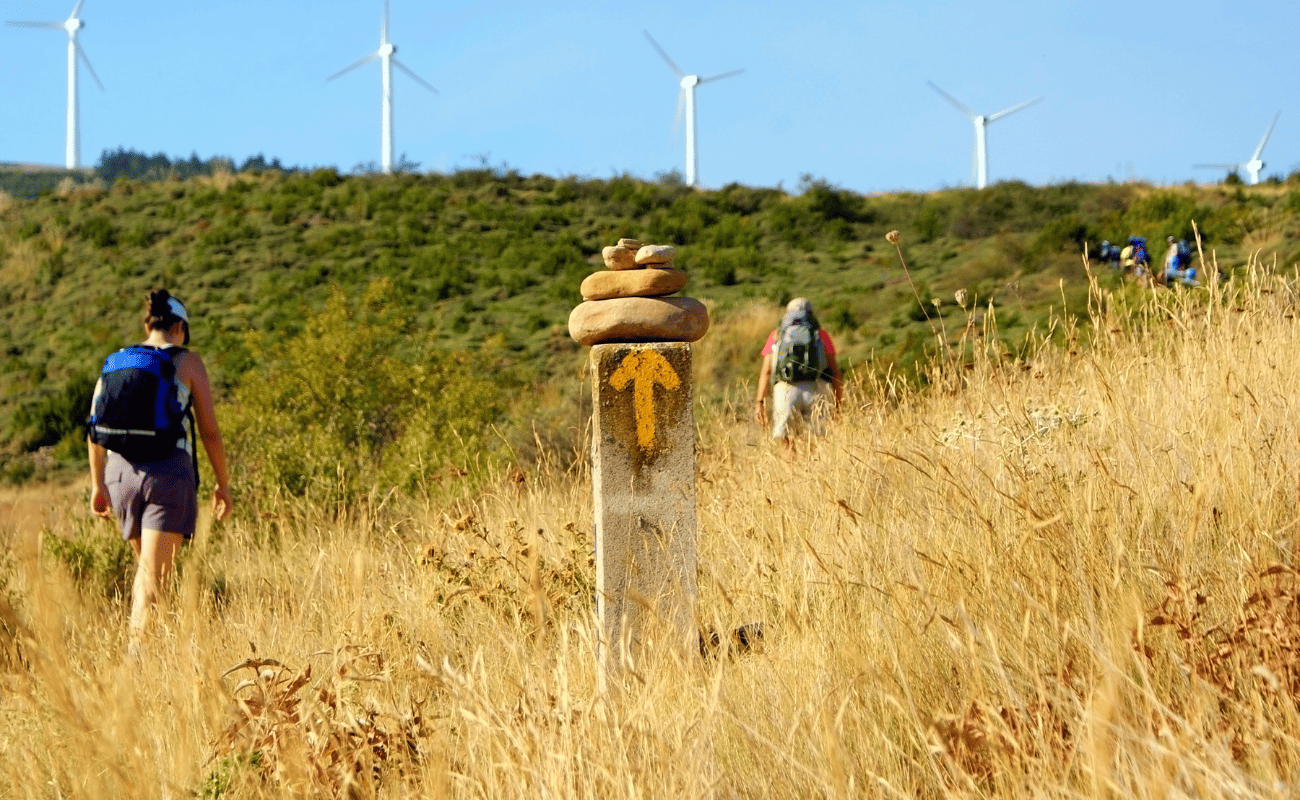
I remember standing at the foot of the Pyrenees on my first Camino, watching a French grandmother with a tiny rucksack stride past me as though the mountain were a minor inconvenience. Meanwhile, I was bent double, sucking air like a landed trout, questioning every life choice that had brought me to this particular hillside. It was Day 1. I had roughly 779 kilometres still to walk.
That experience taught me something I now pass on to everyone who asks about the Camino de Santiago: the fitter you are before you start, the more you actually enjoy it. Not just survive it. Enjoy it. There is a considerable difference between the two, and that difference lives entirely in your preparation.
This guide is the training plan I wish someone had handed me before my first pilgrimage. It covers everything from base-building walks to blister prevention, hill technique to mental resilience, spread across a sensible phased programme that works whether you are already fairly active or starting from the sofa. No heroics required. Just consistency, a decent pair of shoes, and the willingness to get a bit damp on training walks.
What Does “Getting Fit for the Camino” Actually Mean?

When people say they want to train for the Camino, they usually picture themselves jogging around the block a few times. But walking the Camino de Santiago is a very specific kind of physical challenge, and it deserves specific preparation.
Most pilgrims on the Camino Frances walk between 20 and 30 kilometres per day, for anything from four to six weeks straight. That is roughly 780 kilometres from St Jean Pied de Port to Santiago de Compostela, on mixed terrain that includes paved roads, rocky trails, muddy farm tracks, and the occasional scramble up something unexpectedly steep. And you are doing all of this while carrying a backpack.
The core fitness demands break down into four areas:
- Endurance: Walking for 5 to 8 hours a day, then getting up and doing it again tomorrow, and the day after that, and the day after that
- Leg strength: Particularly in your quads, calves, and glutes, which absorb enormous force on descents and power you up climbs
- Joint resilience: Your knees, ankles, and hips need to handle repetitive impact across long distances and uneven ground
- Pack comfort: Carrying even a light backpack for hours changes your posture, balance, and energy expenditure
None of this requires you to be an athlete. It requires you to be specifically prepared for sustained, loaded walking on consecutive days. That is what Camino training actually means.
Do You Need to Train If You Are Already Active?

This is the question that catches people out. Being “fit” in a general sense and being fit enough to walk the Camino are not quite the same thing. I have seen marathon runners struggle with blisters by Day 3, and I have seen retirees who walk their dogs daily breeze through without complaint.
The honest answer depends on what kind of active you already are. If you regularly walk 10 to 15 kilometres at a stretch, on varied terrain, a few times a week, you have a solid foundation and may only need 4 to 6 weeks of targeted preparation. If your fitness comes from the gym, cycling, or swimming, you are cardiovascularly fit but your feet, ankles, and walking-specific muscles may not be ready for the repetitive demands of the Camino.
Your route choice also matters significantly. The Camino Frances includes the Pyrenees crossing on Day 1, with roughly 1,400 metres of elevation gain. That is a baptism of fire for undertrained legs. Flatter routes like the Camino Portugues along the coast are more forgiving, but still involve 20-plus kilometre walking days back to back.
Quick self-checks for readiness:
- Can you walk 20km in one go without significant pain or exhaustion?
- Can you walk 15km two days in a row and feel functional on Day 3?
- Can you do both of the above while carrying 7 to 8kg on your back?
- Have you walked in your actual Camino shoes for at least 100km?
If you answered yes to all four, you are probably fit enough to walk the Camino with reasonable confidence. If any of those made you wince, keep reading.
How Long Should You Train (and When to Start)?

The single most common mistake I see in Camino preparation is starting too late. People book flights, buy gear, read blogs about albergues and pintxos, and then remember three weeks before departure that they should probably do some walking. Three weeks is not enough for most people. It is barely enough to break in a pair of shoes.
Here is a realistic timeline based on your current fitness level:
|
Starting Point |
Training Duration |
When to Start |
|
Already walking regularly (10km+ several times a week) |
4 to 6 weeks |
1.5 months before departure |
|
Moderately active (gym, cycling, casual walking) |
8 to 12 weeks |
3 months before departure |
|
Beginner or returning from inactivity |
12 to 16+ weeks |
4 to 5 months in advance |
The guiding principle throughout is progressive overload: increase your weekly walking volume by no more than 10 to 20 per cent at a time. Your cardiovascular system adapts quickly. Your tendons, ligaments, and joints do not. Pushing too hard too fast is how you end up with shin splints or Achilles tendinitis before you have even set foot in Spain.
Build in recovery weeks every third or fourth week, where you reduce volume by about 30 per cent. This is not laziness. This is when your body actually consolidates its gains. Think of it as letting the concrete set before you build the next floor.
The Best Camino Training Plan (Phased Programme)

What follows is a structured training plan that takes you from wherever you are to Camino-ready over roughly 14 weeks. If you are already active, you can compress or skip the early phases. If you are a beginner, follow it from the start and give yourself the full duration. The plan assumes you can dedicate 4 to 5 days per week to training, with some flexibility built in for real life.
Weeks 1 to 4: Base Building
The goal here is simple: establish a walking habit and build a foundation. Nothing fancy. Nothing painful. Just get your body accustomed to regular movement.
Walking:
- 3 to 4 walks per week at a conversational pace (you should be able to talk comfortably)
- Start with whatever distance feels manageable: 3km, 5km, 8km. There is no wrong starting point
- Add 10 to 20 per cent to your longest walk each week
- One longer walk per week (your “long walk day”), the others shorter
Strength:
- 2 sessions per week, 20 to 30 minutes each
- Focus on: squats, lunges, calf raises, step-ups, glute bridges
- No need for a gym. Bodyweight exercises and a staircase are plenty
Mobility:
- Daily stretching: calves, hip flexors, hamstrings, quads (5 to 10 minutes)
- Foam rolling if you have one, particularly for IT bands and calves
By the end of Week 4, you should be comfortably walking 10 to 12 kilometres on your long walk day. If that feels ambitious, stay at this phase for an extra week or two. There is no rush. The Camino will wait.
Weeks 5 to 9: Build Volume and Resilience
Now you start to make things more Camino-specific. The walks get longer, the terrain gets more interesting, and you introduce the concept that separates Camino training from ordinary walking: back-to-back days.
Walking:
- Increase your long walk to 15 to 20 kilometres by Week 9
- Introduce hills and stairs into at least two walks per week
- Start back-to-back walking on weekends: a longer walk on Saturday (15km+) followed by a moderate walk on Sunday (10 to 12km)
- Walking every day is not necessary, but aim for at least 4 days per week
Strength:
- Continue 2 sessions per week
- Add single-leg exercises: single-leg squats, single-leg deadlifts, Bulgarian split squats
- Include core work: planks, dead bugs, bird dogs. Your core stabilises your spine under a backpack
The back-to-back days are crucial. On the Camino, you do not get to take a rest day every time your legs feel tired. Your body needs to learn what it feels like to start walking on legs that are already fatigued from yesterday. It is uncomfortable at first. Then it becomes normal. Then, remarkably, it becomes something you barely notice.
Weeks 10 to 13: Specific Camino Prep
This is where training starts to feel like a rehearsal rather than exercise. You are simulating the Camino experience as closely as your local geography allows.
Walking:
- 2-day “mini Camino” weekends: walk 18 to 25 kilometres on Saturday, then 15 to 20 kilometres on Sunday
- Start carrying your actual backpack with real weight (start at 4 to 5kg, build to your target pack weight of 7 to 8kg)
- Walk on mixed surfaces: pavement, gravel, trails, grass. Training on varied ground prepares your feet far better than a treadmill
- Practice your actual walking pace. Most pilgrims average about 4 to 4.5 km/h on the Camino
Fuelling practice:
- Eat and drink during your long walks as you would on the Camino
- Test your snacks, your water carrying system, your electrolyte strategy
- Learn how your body responds to walking after a café con leche and a tortilla for breakfast
By the end of this phase, you should be able to walk 20 kilometres on consecutive days while carrying a backpack, without anything more dramatic than mild tiredness. If you can do that, you are fit enough to walk the Camino Frances with confidence.
Week 14 and Beyond: Peak and Taper
If you have extra time before departure, use one more week as your peak training block. This is your highest-volume week: your longest back-to-back walks, your full pack weight, your most challenging terrain. Think of it as your final exam.
Then, 7 to 14 days before you leave, taper. Reduce your walking volume by 30 to 50 per cent. Keep the frequency (still walk most days) but cut the distance and intensity. Your body needs to arrive in St Jean Pied de Port rested and recovered, not still healing from last weekend’s monster walk.
Use the taper period for a final gear dress rehearsal. Walk 10 to 12 kilometres in your exact Camino setup: the shoes you will wear, the socks, the pack loaded with everything you are taking, the layers you plan to use. If anything rubs, pinches, or irritates, you still have time to fix it.
Training with Hills, a Pack, and Dress Rehearsal Walks

Three elements separate good Camino training from generic walking practice: hills, weight, and dress rehearsals. Each deserves specific attention.
Hill technique: Going uphill on the Camino is tiring but rarely dangerous. The trick is pacing. Shorten your stride, slow down, and find a rhythm you can sustain. If you are gasping, you are going too fast. Lean slightly forward and let your glutes do the heavy lifting.
Downhill is where the damage happens. Descents hammer your quads and knees with forces far greater than flat walking. Lean slightly forward (not backward, which is instinctive but wrong), keep your knees soft, and take shorter steps. Trekking poles reduce knee impact by up to 25 per cent on descents, and I would consider them essential for anyone over 40 or with a history of knee trouble.
Pack weight progression: Do not strap on 8 kilograms and head out on Week 1. Start carrying a light pack (3 to 4kg) around Weeks 6 to 8 of training. Add a kilogram every week or two until you reach your target. Recommended pack weight for the Camino is 10 per cent of your body weight or less, with most experienced pilgrims aiming for 7 to 8 kilograms total including the pack itself.
Dress rehearsal walks: At least twice before departure, do a full-kit walk of 15 to 20 kilometres. Wear everything. Carry everything. Walk on similar terrain to what you will encounter. These walks are not about fitness. They are about finding problems while you can still solve them. A hotspot on your heel at kilometre 8 is useful information. The same hotspot on Day 2 of the Camino Frances is the beginning of a blister that could shadow your entire pilgrimage.
Gear That Helps Training

I am not going to give you an exhaustive gear list here. There are hundreds of those online, and most of them will try to sell you things you do not need. Instead, here are the items that directly affect your training and your comfort on the Camino.
Shoes: Trail Runners vs Boots
The great Camino footwear debate has largely been settled: most experienced pilgrims now wear trail runners rather than heavy hiking boots. Trail runners are lighter, dry faster, and cause fewer blisters. They also require less breaking in. That said, if you have weak ankles or prefer the support of a boot, wear whatever keeps you walking.
Whatever you choose, break in your shoes properly. Walk at least 100 kilometres in them before you leave. This is not a suggestion. This is the single most important piece of Camino preparation advice I can give you. New shoes on the Camino are a recipe for misery.
Socks and Blister Strategy
Blisters are the most common injury on the Camino, and they are almost entirely preventable with the right preparation. Wear moisture-wicking socks (merino wool or synthetic blends). Never cotton. Some pilgrims swear by a thin liner sock underneath a thicker outer sock. Others prefer a single quality hiking sock. Test both approaches during training and use whatever works for your feet.
Carry a small blister kit: Compeed plasters, zinc oxide tape, a needle, and antiseptic. Apply Compeed at the first sign of a hotspot, not after the blister has formed. Prevention is everything.
Trekking Poles
If you plan to use trekking poles on the Camino (and I recommend them strongly), train with them. They change your walking rhythm, engage your upper body, and protect your knees on downhill sections. But they feel awkward at first, and you need to develop the coordination before you need it on a steep Pyrenean descent in the rain.
Pack Fit
Your backpack should sit on your hips, not your shoulders. The hip belt carries roughly 70 to 80 per cent of the weight. If you are training with a pack and your shoulders ache, either the pack does not fit you properly or the hip belt is not adjusted correctly. Get this sorted before you leave. Most outdoor shops will help you fit a pack for free.
Reducing Exhaustion on the Camino: Food, Water, Pacing, and Recovery

Getting fit for the Camino is half the equation. The other half is managing your energy and recovery once you are actually walking. Plenty of fit people grind themselves into the ground in the first week because they pace badly, eat poorly, or ignore early warning signs from their bodies.
Sustainable Pace and Strategic Breaks
Walk at a pace you can maintain all day, not the pace you can manage for the first hour. Most pilgrims settle into 4 to 4.5 kilometres per hour on flat terrain, slower on hills. Take a short break (5 to 10 minutes) every 90 minutes or so. Sit down, take off your pack, drink some water, eat a snack. This is not wasted time. It is an investment in finishing the day without collapsing.
Start early. Most experienced pilgrims are walking by 7 or 7:30 in the morning. This gives you the coolest hours for your biggest effort and means you can take a proper lunch break in the middle of the day without stressing about arrival times.
Nutrition During Walking Days
The Camino is not the place for calorie restriction. You are burning 3,000 to 4,000 calories per day, and your body needs fuel to keep moving and to recover overnight. Eat a proper breakfast before you start walking. Carry snacks that combine carbohydrates and protein: nuts, dried fruit, energy bars, cheese, chocolate. Eat something every couple of hours rather than waiting until you are starving.
Spanish bar culture is your friend here. Most villages along the Camino Frances have at least one bar where you can get a bocadillo (baguette sandwich) and a coffee. These mid-morning stops become the highlight of many pilgrims’ days, and rightly so.
Hydration and Electrolytes
Aim to drink 2 to 3 litres of water per day while walking, more in summer heat. Do not wait until you feel thirsty to drink; by that point you are already dehydrated. Carry at least a litre on you at all times, and refill at every fountain and village you pass through.
If you are walking in warm weather (June through September), add electrolyte tablets or powder to your water at least once a day. You lose significant sodium and potassium through sweat, and plain water alone will not replace them. Signs of electrolyte depletion include muscle cramps, fatigue, headaches, and an overwhelming desire to lie face-down in a field. Hydrate properly and you can avoid all of this.
Stretching and Recovery
Spend 10 to 15 minutes stretching when you finish each walking day. Focus on the areas that take the most punishment:
- Calves: Wall stretches, step drops. Your calves work relentlessly on the Camino, particularly on descents
- Hip flexors: Kneeling lunge stretches. Hours of walking tightens these considerably
- Hamstrings: Standing or seated forward folds. Keep these supple and your lower back will thank you
- Quads: Standing quad stretch, holding your foot behind you. Essential after hilly days
If you can, elevate your legs for 10 to 15 minutes after arriving at your albergue. Lie on your bunk with your feet up the wall. It looks ridiculous. It works brilliantly.
Managing Niggles Early
Every pilgrim gets niggles. A sore knee, a tight Achilles, a hotspot on the ball of the foot. The difference between a niggle and a serious problem is how quickly you respond. Tape that hotspot immediately. Ice that knee at the next town. Take an anti-inflammatory if something is swelling. Rest a day if you need to; the Camino will still be there tomorrow.
The pilgrims who end up in trouble are invariably the ones who ignored a small problem for three days until it became a big one. Your body is giving you information. Listen to it.
Mental Preparation

I have left this section near the end, but in some ways it matters more than any training plan. The Camino is a physical challenge, certainly. But it is also a mental one, particularly in the middle weeks when the novelty has worn off, your body hurts, and Santiago de Compostela still feels impossibly far away.
Here is what I wish someone had told me before my first Camino experience.
Expect discomfort. You will have days when your feet hurt, the weather is foul, and the path is dull. This is normal. It does not mean you are failing or that something has gone wrong. The Camino is not a holiday. It is a pilgrimage, and pilgrimage has always involved a measure of suffering. The trick is to keep walking anyway, knowing that the discomfort is temporary and the sense of accomplishment is permanent.
Walk in bad weather during training. This sounds unpleasant, and it is. But the Camino does not pause for rain. If you have only ever trained in sunshine, your first wet day on the meseta will feel like a personal attack from the weather gods. Train in rain, in wind, in cold. Learn what your waterproofs can and cannot do. Discover which layers work when you are damp. Arriving in Spain already comfortable with discomfort is a genuine advantage.
Handle setbacks and missed weeks with grace. Life will interfere with your training. You will get a cold, have a busy week at work, twist an ankle in the garden. This does not ruin your preparation for the Camino. Miss a week, then pick up where you left off. Consistency over the full training period matters far more than any individual session. The pilgrim who trained imperfectly for twelve weeks is in vastly better shape than the one who trained intensely for three.
Practice being alone with your thoughts. Leave the headphones at home for some of your training walks. The Camino offers long hours of walking with nothing but your own mind for company. For some people, this is the most challenging part of the entire journey. Getting comfortable with silence and your own internal monologue during training makes those long meseta days a meditation rather than an ordeal.
Frequently Asked Questions
How fit do you need to be to walk the Camino de Santiago?
You do not need to be exceptionally fit, but you do need to be specifically prepared. The minimum standard is being able to walk 20 kilometres on consecutive days while carrying a 7 to 8 kilogram backpack without significant pain. If you can do that comfortably, you are fit enough to walk most Camino routes. Most people who commit to 8 to 12 weeks of progressive training can reach this level regardless of their starting fitness.
Can I train for the Camino on a treadmill?
A treadmill is better than nothing, but it is a poor substitute for outdoor walking. Treadmills provide a perfectly smooth, predictable surface, which does little to prepare your feet and ankles for the uneven terrain of the Camino. They also lack hills (unless you manually adjust the incline) and weather. If a treadmill is your only option during the week, use it, but make sure your weekend long walks are outdoors on mixed surfaces.
What are the most common injuries on the Camino and how do I prevent them?
Blisters are the most frequent problem by a considerable margin, followed by tendinitis (particularly Achilles tendinitis and shin splints) and knee pain on descents. Blisters are prevented by wearing broken-in shoes, moisture-wicking socks, and addressing hotspots immediately. Tendinitis is usually caused by doing too much too soon; progressive training and proper stretching are your best defence. Knee pain on downhill sections can be reduced by using trekking poles, strengthening your quads, and practising good downhill technique during training.
How heavy should my backpack be for the Camino?
The widely accepted guideline is that your pack should weigh no more than 10 per cent of your body weight, including the pack itself. Most experienced pilgrims aim for a total of 7 to 8 kilograms. Lighter is always better. Every extra kilogram compounds over 780 kilometres and 30-plus walking days. If you are struggling to get below 8 kilograms, lay everything out and ask yourself honestly whether you need each item. You almost certainly do not need three shirts, a hardback book, or “just in case” items that address unlikely scenarios.
Should I start walking months in advance or is a few weeks enough?
Start as early as you reasonably can. For most people, 8 to 12 weeks is the sweet spot: enough time to build genuine fitness without losing motivation. If you are already an active walker, 4 to 6 weeks of targeted preparation may suffice. If you are starting from a low fitness level, give yourself 12 to 16 weeks or more. The key principle is progressive overload; your body needs time to adapt, and that adaptation cannot be rushed without risking injury. Months in advance is always better than weeks, and weeks is always better than nothing.
Final Thoughts

The Camino de Santiago has a way of working out for people who show up prepared to walk. Not perfectly trained, not necessarily fit by any conventional athletic standard, just prepared. Prepared means you have put in the kilometres beforehand. It means your shoes are old friends rather than new acquaintances. It means you know what your body does when it is tired, and you know that tired is not the same as broken.
I have walked the Camino more than once now, and the thing that strikes me every time is how much more I notice when my body is not in crisis. When your feet are not screaming and your knees are not aching, you can actually look up. You see the light changing over the meseta. You hear the bells in a village church. You taste the wine at dinner and feel the particular contentment that comes from having walked 25 kilometres under your own power to reach it.
That is what training gives you. Not the ability to walk the Camino. Almost anyone can do that. Training gives you the ability to be present for it. And presence, in the end, is the whole point of a pilgrimage.
Start your training today. Your future self, somewhere on a dusty path in northern Spain, will be quietly grateful that you did.



32 responses to “How to Get Fit for the Camino de Santiago (Training Plan)”
Was happy to see this 12 course to prepare for walking a pilgrimage.
I walked half of the 88 temples of the Japanese Buddhist pilgrimage in two trips (total 1200km—will continue the other half of the pilgrimage this fall. Then am hoping to walk the Camino.)
The physical routine above is actually quite close to what I did to prepare for the Japanese pilgrimage, except I did it for four months. However, I had a third activiiy that helped me immensely. Swam about five hours a week and beside swimming did extensive leg exercises in the water. Am in my 70’s-but can walk eight hours a day with a lunch and short coffee breaks because of this preparation (despite this pilgrimage is very mountainous).
I am from Chicago. I walked the camino Frances in July/August 2017 I started In Burgos and walked 505 km in 21 days. I was 69 years old, I wore excellent boots that I broke in 3 months prior. I didn’t do a lot of preparation, however I officiate baseball and football. My backpack weighed 18 lbs but after day 4 I reduced the weight to 12lbs. I slept well, ate well and kept up with the young 25-40 yr olds who become my CAMINO family. I hope to walk the entire 800 km some day in the future.
I like your ideas. I want to do the Camino de Santiago this fall (Frances). Have been stymied due to Covid 19. This will be my first long walk and I will be 62 years old. I love that you are in your 70’s and going so strong. I want that to be me!
Thanks, Elizabeth Mitchell
Hi Charlotte:
I realize it is a long time since your post, but I’m writing because I’m interested in the OHenro pilgrimage in Japan–although not the whole thing. Is there a section of it you would particularly recommend?
I walked the Camino Frances in 2017, and last fall a chunk of the Portuguese Camino. I am also in my 70s.
Best, Tricia
Also, thanks, Leslie, for the good advice about training, and also a ton of other things
Walked the Camino Frances twice in my late 60’s, Camino portugese at 70, Camino Norte at 72. Carried 15 to 17 kilos each time
Training? Twice a week I walked 8 miles carrying 35 lb of sand in my pack on flat ground. Do not believe you can train for the hills. First day out of SJPDP is all up hill and is a LONG day. But by the time I hit O Cebreio, I was able to walk up hill with out taking a break.
Norte was TOUGH–lot of STEEP hillsides to climb and if you saw a windmill , you coukld be almost sure you would soon be climbing up hill to it.
Weight of pack does not bother me as I carry a heavy chainsaw into the woods and carry my fire wood out of the woods, but I do not consider that to be training as I am not really walking far with the saw or wood.
Heaviest packs I saw were 30 kilos of Kosher food and Kosher cooking utensils carried by Israeli and 25 kilos of dog food carried by a Swedish woman for her two mutts–who each carried nothing.
Camino Portugese and Camino Frances are not that hard—if you can walk across a WalMart parking lot carrying a case of beer then you can walk those two Caminos—but Norte is another story!
Great information…thanks for sharing your experience. I am planning my first trip June of 2021. Hopefully, this pandemic will be behind us and we are able to travel again. I had to laugh at your example of walking across the Walmart parking lot. 1. I am planning to walk the Camino Portugese. 2. Does walking across a Walmart parking lot with a case of cheap wine help in training? LOL
Thanks for this. Really useful. Always good to have info re training from other hikers.?
Thanks for this helpful advice and information regarding training. The comments are also helpful. Good to have this as a training schedule to follow and work with.
My daughter and I walked the Camino Portuguese beginning at Porto in 2018. We walked the Coastal route 280km. Confirmed in Santiago Stamp Office. I was 75yrs old then.we did it in 11 days. WE r from Australia
I always tell people that if Neal Armstrong could walk to the moon, you can walk the Camino! By the way, if you add up the elevations for each stage of the Frances, you will climb higher than Mount Everest!
Thanks so much for your messages and help. Feeling anxious, planning my first Camino this August, but am wondering if I should head off in July as it seems August will be super busy?…
I’m a 54 yr old woman travelling alone for the first time since my last adventure with a backpack 32yrs ago!
It sounds like a wonderful pilgrim community so am comforted by that, but anxious non the less.
It is slightly hotter in July. I wouldn’t worry too much this year about the way being too busy in Aug. Traffic is picking up but it will still be down quite a bit on previous years and that should make it easy to find places to stay.
Thanks Leslie,
Was beginning to panic as a lot are saying you must book ahead and to be honest I just won’t know what distances I will be able to manage until I begin, and I really don’t want to rush this.
Thank you ?
Never booked ahead! Always found some place to stay even if I had to sleep on the floor. My wife did the Frances camping in fields because she had no money. So broke that when she found a zucchini, she ate it for three days.
And definitely walk to Finisterre!
Thanks Al,
Humbled by your wife’s experience.
Good to know I will always be able to find a bed somewhere.
Hi Emily, how did your camino go????
Hi Emily,
Walking the Camino is something I’ve wanted to do for a long time and I’m planning on making it happen this year.
Was reading through the posts and the details you’ve shared are similar to mine, so I would love to hear how your trip went, any suggestions or lessons learned?
Cheers, Leslie
I’m with you. I’m going to do this alone as well and will be 62 at the time of my start – planning around 9/1/22. I am a little nervous but excited as well.
Elizabeth, My wife and I are planning a walk in mid-Spetember, maybe we’ll run into each other. 🙂 Wish you the best. And thank you Leslie and Anna for this detailed guide. I found it very useful in my planning. Thank you.
Thanks for your comments… I am curious to best trail running shoe to get for this walk… Salomon V8 etc. shoes seem to have issues per comments by people who have used them on the Salomon website… What would you recommend? I don’t want to do boots but rather Trail running shoes…
The problem with hiking shoes is that there are so many different brands. I use a few and my wife due to her thinner feet uses different brands. I do think that boots are too much for the Camino outside of winter. If I can get one Camino out of a pair of hiking shoes, I am happy with that – but, that should be no problem.
The recommendation that I give to people who ask me about training for the Camino is to make sure that you do plenty of uphill and downhill training. I had done a fair amount of walking prior to doing the Camino, but where I live it is mostly flat. I handled going uphill pretty well. But what caused me issues for the first week+ was going downhill. Leaving St. Jean Pied-de-Port I handled the uphill fine. But going downhill to Roncesvalles taught me about the legs using different muscles for going downhill compared to going uphill. By the time we got down into Roncesvalles I could not bend my knees at all or I was falling to the ground. Luckily the next few days had limited steep and lengthy downhills and after about a week I was in much better downhill condition.
Exactly what happened to me. I was seventy years old when I walked. We winter in Arizona and I got to the point where I could walk twenty five kilometres easily but did not account for the daft that I was preparing myself ona flat route. It is true that the first day is the hardest and the first day fron St Jean almost did me in. That is best though because once you do thefurts day you know that you can do the rest. Remember that you have ten hours to walk five hours. ??
Bryan M, just curious about when you walked the Camino Francis? And thanks for the info about downhill training. If you walked recently, I am curious about the state of cleanliness in some of the places to stay. A lot of things we are reading are from ten or more years ago and I would really like more current information about the conditions in places of lodging? Thanks for your help.
CloAnne,
Sorry but I just found your post today. We walked the Camino from August 31 until October 12 from St. John Pied de Port to Santiago do Compostella and then on to Finnesterra in 2017. Our website for keeping family and friends updated on what we were experiencing is pilgrims4blog.wordpress.com
I walked the Camino in 2018, started the 29th August. Walked from St Jean to Burgos, took a bus to Leon, then walked from Leon to Santiago. Arrived in Santiago the 26th of September. That was 28 days walking 618 km and I was 76 at that time. Trained 5 months , use to walk uphill and downhill, that has helped to get my knees strong and never suffered downhill. Hope to do the Portuguese Camino from Lisbon later this year, which was supposed to happen in 2020, but because of covid had to be postponed. ( the airline has postponed my flight ticket until November 2022 ). Salomon shoes fitted me best and had a good pair of walking sticks. 2018 was very busy but I always managed to find good albergues to stay at. It was one of my best experiences ever.
I would so like to walk the Camino but feel quite anxious to go alone and would like to opt for luggage transfer. I was 70 in January and feel it would be a massive achievement if I could do it and see that plenty of people are of a similar age – reading above.
I started on your plan today and I think my motivation will last longer than other attempts to train because it sounds sensible and manageable. Mainly….it IS a plan, not a hope.
I always travel on my own so no worries there but was a little concerned because I will be 82 when I do it…..not trying to compete with all we oldies! Planning on August which is the hottest month in Spain I understand. Has the Frances route much shelter as in trees etc?
What sort of countryside are you walking through?
Anna and Leslie I am so grateful for all your Plans and hints. Reading comments and discussions on FB can be confusing. This is so much better because we know more about you and where you are coming from.
There are days when it can be very hot without shade, so make sure you have a wide-brim hat. There are some mountains, but nothing too difficult, most of the paths are easy enough to walk on.
It seems summer is the busiest time on the Camino. If i have no time restraints but want to be with other pilgrims, what is the best time of the year for great weather?
May or September. I think they are the best months on the Camino.
Just starting to research walking the Portuguese Camino with my niece and her husband. Not sure if we will go in May or September 2023 yet. I won’t have the time off work to start in Lisbon, but Porto should be ok for about 10-12 days – I think! This my 65th bday prezzie to myself ☺️ I live in Jackson Hole, Wyoming and I walk and hike a lot at elevation – 6200 feet above sea level. But not long ones with a pack so the training schedule will help a lot. Any tips, info about Portuguese routes, getting to Portugal from the US, etc?