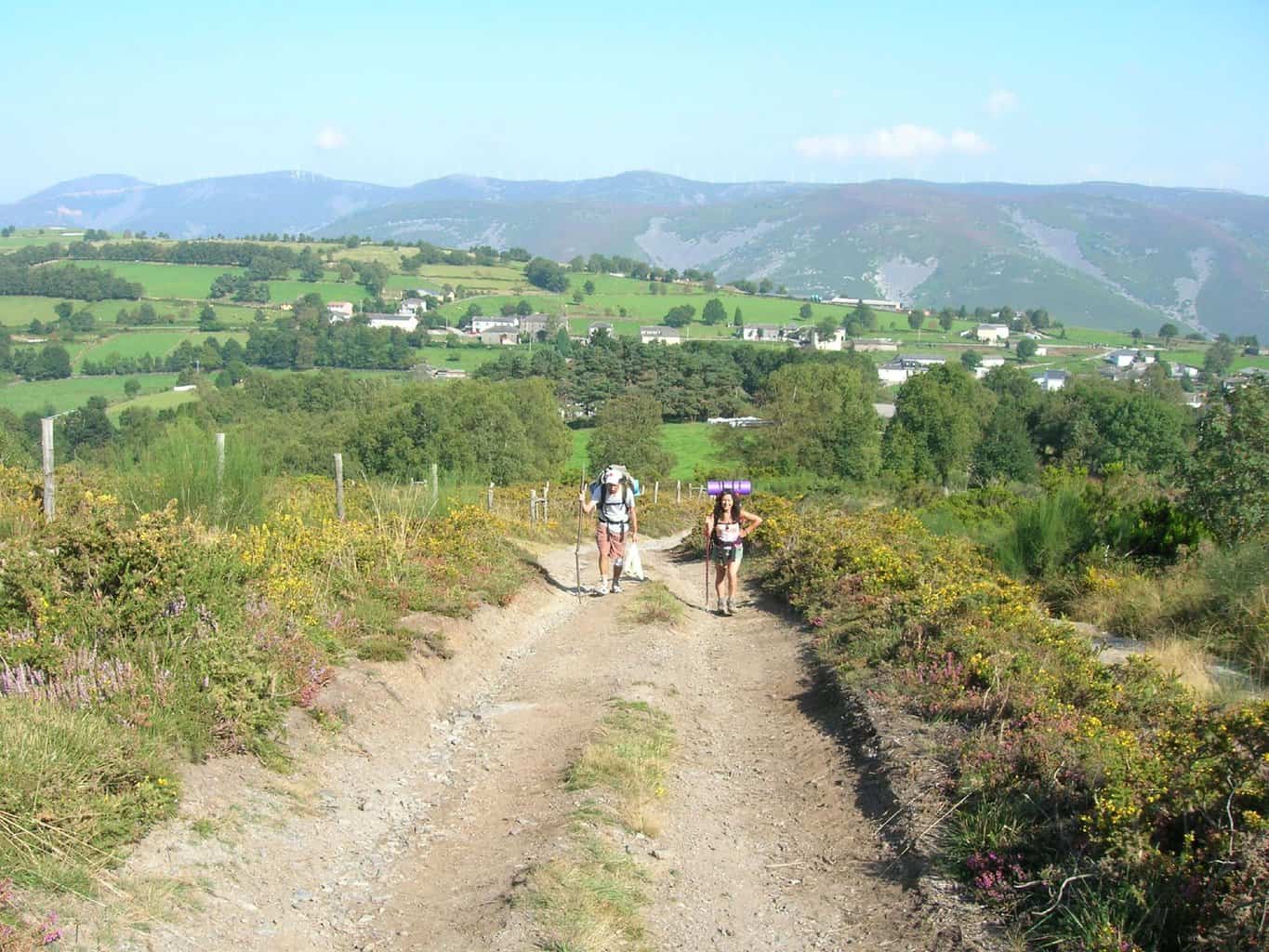
There is something stubbornly appealing about walking the oldest road. Not the most popular, not the most convenient, not the one with the best signage or the most cafés per kilometre. The oldest. The one a king walked in the ninth century because he had heard rumours of bones in a field, and that was enough.
The Camino Primitivo is that road. It begins in Oviedo, climbs into the Cantabrian Mountains, crosses high passes where cloud sits like wet wool on the granite, and eventually descends into Galicia before joining the busier Camino Francés at Melide for the final stretch into Santiago de Compostela. It is roughly 320 kilometres long. It will take you through some of the most quietly stunning landscape in northern Spain. It will also, at various points, make your knees ache, your waterproofs earn their keep, and your sense of humour essential.
This guide covers everything you need to walk it well.
What Is the Camino Primitivo, and Why Is It Called the Original Way?

In the early ninth century, word reached King Alfonso II of Asturias that the remains of the Apostle Saint James had been discovered in a remote corner of Galicia. Alfonso, ruling from his capital in Oviedo, did what any self-respecting medieval monarch would do upon hearing such news. He walked there. His route, threading west and south through the mountains of Asturias and into the green hills of Galicia, became the first recorded pilgrimage to Santiago de Compostela. The Camino Primitivo. The Original Way.
It predates the Camino Francés by at least a century. Long before the great pilgrim highways were established across the Pyrenees and the meseta, this rough mountain track was already carrying the faithful, the curious, and presumably the footsore towards the cathedral at the end of the world.
Today the Primitivo remains one of the less-travelled Camino routes, though its popularity has grown steadily. It accounts for perhaps five or six percent of all pilgrims arriving in Santiago, a fraction of the Francés numbers. Those who walk it tend to be experienced hikers or second-time pilgrims looking for something quieter, wilder, more demanding. The infrastructure is thinner. The mountains are real mountains. The solitude, on certain stages, is almost total.
Which is precisely the point, for many.
Camino Primitivo Route Overview

The Primitivo begins at the Cathedral of San Salvador in Oviedo and ends, as all Caminos do, at the Cathedral of Santiago de Compostela. The total distance is approximately 320 kilometres, though this varies slightly depending on route variants and how you measure the final shared section with the Francés.
The route divides neatly into three phases:
- Asturias (Oviedo to Grandas de Salime): The mountain stages. Steady climbing through green valleys, over high passes, past slate villages. This is the most physically demanding section and the most remote.
- Eastern Galicia (A Fonsagrada to Lugo): A transitional stretch. Still hilly, still quiet, but gradually softening as you descend towards the Galician interior. The arrival into Lugo, with its intact Roman walls, is a genuine highlight.
- Western Galicia (Lugo to Melide to Santiago): The route joins the Camino Francés at Melide, approximately 55 kilometres from Santiago. The final days are busier, flatter, and feel like a different walk entirely.
Key waypoints along the route:
|
Waypoint |
Approximate Distance from Oviedo |
Notes |
|
Oviedo |
0 km |
Start point; cathedral, old town |
|
Grado |
26 km |
First major town after Oviedo |
|
Salas |
47 km |
Medieval town, castle |
|
Tineo |
66 km |
Hilltop town, good services |
|
Pola de Allande |
84 km |
Small mountain town |
|
A Mesa (Hospitales route) |
~105 km |
Highest point, ~1,340 m |
|
Grandas de Salime |
~118 km |
Reservoir, ethnographic museum |
|
A Fonsagrada |
~140 km |
Gateway to Galicia |
|
Lugo |
~230 km |
Roman walls, cathedral |
|
Melide |
~265 km |
Joins the Camino Francés |
|
Santiago de Compostela |
~320 km |
Journey’s end |
The distances above are approximate. Every guidebook disagrees slightly. The Camino has a way of being longer than you expected.
Stage-by-Stage Breakdown

The Primitivo is typically walked in 12 to 14 stages, though this depends entirely on your pace, fitness, and willingness to push through longer days. Below is a common staging, though many walkers adjust based on accommodation availability and how their legs are holding up.
|
Stage |
From |
To |
Distance (approx.) |
Difficulty |
Key Notes |
|
1 |
Oviedo |
Grado |
26 km |
Moderate |
Suburban exit, then rolling farmland |
|
2 |
Grado |
Salas |
21 km |
Moderate |
Gentle climb, medieval architecture |
|
3 |
Salas |
Tineo |
19 km |
Moderate-Hard |
Steady ascent to hilltop town |
|
4 |
Tineo |
Pola de Allande |
18 km |
Hard |
Mountain terrain begins in earnest |
|
5 |
Pola de Allande |
Berducedo |
18 km |
Hard |
Remote, exposed upland |
|
6 |
Berducedo |
Grandas de Salime |
20 km |
Very Hard |
A Mesa crossing (~1,340 m); the big one |
|
7 |
Grandas de Salime |
A Fonsagrada |
26 km |
Hard |
Long stage, crosses into Galicia |
|
8 |
A Fonsagrada |
O Cádavo |
24 km |
Moderate-Hard |
Forested paths, quieter terrain |
|
9 |
O Cádavo |
Lugo |
30 km |
Moderate |
Long but less steep; Roman walls at the end |
|
10 |
Lugo |
San Romao da Retorta |
20 km |
Moderate |
Gentle Galician countryside |
|
11 |
San Romao da Retorta |
Melide |
25 km |
Easy-Moderate |
Joins the Francés |
|
12-14 |
Melide |
Santiago |
~55 km |
Easy-Moderate |
Shared with the Francés; busier |
Notes on the Most Distinctive Stages
The A Mesa Crossing (Stage 6: Berducedo to Grandas de Salime)
This is the stage people talk about. The route climbs to roughly 1,340 metres at the Puerto del Palo, crossing the high plateau known as the Hospitales route, named for the medieval pilgrim hospitals that once dotted this barren ridge. There is nothing up there now except grass, wind, cattle grids, and sky. On a clear day you can see half of Asturias spread beneath you, range after blue range fading to the coast. On a bad day, which is frankly more common, you see approximately three metres of cloud in every direction and navigate by waymarks and faith.
The exposure is real. There is no shelter, no water, no village for hours. If the weather turns, it turns on you completely. Some walkers describe it as the highlight of the entire Camino. Others describe it with words I cannot print here. Both groups are correct.
There is an alternative lower route via the road that avoids the high ground. In genuinely foul weather or low visibility, take it. The mountain will still be there next time.
Grandas de Salime (Stage 7)
After the intensity of the A Mesa stage, Grandas de Salime feels like a reward. The town sits above an enormous reservoir, the turquoise water held back by a vast hydroelectric dam. The ethnographic museum here is unexpectedly good, a detailed portrait of rural Asturian life that is disappearing within living memory. Slate roofs. Wooden hórreos raised on stone legs to keep the rats from the grain. The smell of woodsmoke and damp stone.
The stage from Grandas to A Fonsagrada is long and crosses from Asturias into Galicia. The landscape shifts subtly. More eucalyptus. More green, if that were possible.
The Descent into Lugo (Stage 9)
After days in the mountains, the approach to Lugo feels almost ceremonial. The terrain flattens. The path widens. And then, somewhat improbably, you arrive at a city still encircled by its Roman walls, built in the third century and never breached. You can walk the full two-kilometre circuit along the top, looking down at the cathedral on one side and modern Spain on the other. After a week of seeing nobody but cows and the occasional German hiker, the bustling tapas bars of Lugo feel like a different planet.
How Difficult Is the Camino Primitivo?

Honestly? It is hard. Not impossibly hard, not Everest-base-camp hard, but substantially more demanding than the Camino Francés, which is the route most people use as their reference point.
The numbers tell part of the story. The total elevation gain across the full Primitivo is roughly 7,000 to 8,000 metres, considerably more than the Francés despite being a shorter route overall. The terrain is consistently hilly, with several stages involving long sustained climbs on rocky paths. The A Mesa stage alone involves around 800 metres of ascent and is fully exposed to whatever the Cantabrian weather decides to deliver.
But numbers only tell part of it. The difficulty is also logistical. Services are sparser, especially in the Asturian mountain stages. You may walk 15 or 20 kilometres between places where you can buy water or food. Waymarking, while generally adequate, is less thorough than on the Francés. Route-finding in poor visibility on the high stages requires basic navigation skills or at least a reliable GPS app.
What fitness level do you need?
You should be comfortable walking 20 to 30 kilometres a day on hilly terrain with a pack. If you can happily manage a full day’s hill walk in, say, the Lake District or Snowdonia, you will manage the Primitivo. If your longest recent walk is to the car park, consider building up with some training beforehand. Several months of regular hill walking, with your loaded pack, will make the difference between suffering and enjoyment.
Compared to other routes:
- Harder than: Camino Francés, Camino Portugués, Via de la Plata (mostly)
- Comparable to: Camino del Norte (coastal stages), Camino Inglés (shorter but similar terrain)
- Easier than: Some of the mountain variants on the Norte, or winter crossings of the Pyrenees
The Primitivo is not trying to hurt you. But it does expect you to show up prepared.
Best Time to Walk the Camino Primitivo

Timing matters more on the Primitivo than on most Camino routes, because the mountain stages add a weather variable that flatter routes simply do not have.
The short answer: May to October, with June and September being the sweet spot.
The longer answer:
|
Period |
Conditions |
Recommendation |
|
November to March |
Cold, wet, potentially snowy on high ground. Some albergues closed. A Mesa may be impassable. |
Not recommended unless very experienced |
|
April |
Warming up, but still unpredictable. Rain likely. Some services opening. |
Possible but risky for mountain stages |
|
May |
Pleasant temperatures, wildflowers, longer days. Some rain. Quieter than summer. |
Good |
|
June |
Warm, drier (relatively), long daylight. Services fully open. Not yet crowded. |
Excellent |
|
July to August |
Warmest and driest, but busier. Heat can be an issue on exposed stages. |
Good, but book ahead |
|
September |
Cooling slightly, still dry-ish. Pilgrim numbers dropping. Lovely light. |
Excellent |
|
October |
Shorter days, more rain returning. Autumn colours. Some services closing. |
Good for experienced walkers |
A word about Asturias and rain: it rains. This is not a dry route. Asturias is one of the wettest regions in Spain, and the mountains catch weather that the central plateau never sees. Waterproofs are not optional kit. They are load-bearing equipment. Even in July you may have days where the cloud never lifts and the drizzle never stops. There is a local word, “orbayu,” for the fine persistent mist that is not quite rain but soaks you just as effectively. You will learn it.
Accommodation and Services

This is where the Primitivo parts company with the Francés most sharply. On the Francés, you are rarely more than a few kilometres from an albergue, a bar, a shop, a pharmacy. On the Primitivo, especially in the Asturian stages, you may walk half a day without passing anything at all.
Albergues:
Municipal and private albergues exist in most stage towns, but the density is much lower than on the Francés. Expect:
- Oviedo to Tineo: Reasonable coverage. Most stage towns have at least one albergue.
- Tineo to A Fonsagrada: Sparser. Fewer options between stage endpoints. A few albergues in very small villages, but they may have limited beds.
- A Fonsagrada to Lugo: Improving. More Galician infrastructure.
- Lugo to Santiago (via Melide): Shared with the Francés. Plentiful options.
Costs:
- Municipal albergues: typically 6 to 12 euros per night
- Private albergues: 12 to 20 euros
- Pensiones and small hotels: 30 to 60 euros for a private room
- Meals: a pilgrim menu (menú del día) usually runs 10 to 14 euros
Should you book ahead?
In July and August, yes, for the smaller mountain albergues. Outside peak season, you can usually walk in, but it is wise to have a backup plan for the remote stages. A few phone numbers saved, a willingness to walk an extra few kilometres, a basic emergency shelter if you are crossing A Mesa. The Primitivo rewards the prepared and gently punishes the cavalier.
Supplies:
Carry enough food and water for each stage. In the mountain sections, there may be no shop or fountain for 20 kilometres or more. Two litres of water capacity is a reasonable minimum; on hot days, consider more.
What to See and Experience

The Primitivo is not a museum walk. It does not parade its attractions. But what it offers is often more affecting for being encountered rather than visited.
Oviedo
Start here properly. Spend a day before you walk. The Cathedral of San Salvador, with its Cámara Santa, is a UNESCO World Heritage Site and contains pre-Romanesque treasures that predate the pilgrimage itself. The old town is compact, handsome, full of cider bars where they pour from a height to aerate the drink. There is a pilgrim mass in the cathedral most evenings. Whether or not you are religious, sitting in the cool stone quiet before the walking begins has a settling quality.
The Slate Villages of Asturias
Between Tineo and Grandas de Salime, the villages are built almost entirely of slate. Dark grey walls, dark grey roofs, dark grey barns. In rain they look impossibly sombre. In sunshine, which does happen, the stone glitters with mica. The hórreos, raised granaries balanced on stone pillars, are everywhere, a building type that has barely changed in centuries.
The Grandas de Salime Reservoir
An enormous body of turquoise water held in a steep valley. You see it first from above, and the colour seems wrong for northern Spain, more Mediterranean than Cantabrian. The dam itself is a piece of mid-twentieth-century engineering that reshaped the entire valley. The ethnographic museum in town gives context to the communities displaced when the waters rose.
Lugo’s Roman Walls
Lugo is the only city in the world whose Roman walls survive intact around the entire perimeter. They are 10 to 15 metres high, over two kilometres long, studded with 85 towers, and you can walk the full circuit on top. Below, the old town has a cathedral, a decent tapas scene, and the slightly dazed quality of a place that has been continuously inhabited for two thousand years and is not especially bothered about it.
The Quiet Forests of Galicia
After Lugo, the path enters a different register. Oak and chestnut woods. Sunken lanes between high stone walls. The sound of water always somewhere nearby. It is gentler country, but the quiet has a particular Galician quality, as if the landscape is keeping its own counsel. You may walk for an hour hearing nothing but your own footsteps and birdsong.
Packing for the Camino Primitivo

The basic Camino packing list applies, but the Primitivo demands a few specific adjustments. The mountains are not negotiable, and neither is the weather.
Essentials beyond the standard list:
- Waterproof jacket and trousers: Not a light shell. A proper waterproof. You will wear it, possibly for days.
- Extra warm layer: A fleece or light down jacket for the mountain stages. Above 1,000 metres, temperatures can drop sharply even in summer.
- Trekking poles: Strongly recommended. The descents are steep, the ascents long, and your knees will thank you from about day three onwards.
- Water capacity: Carry at least two litres. There are long gaps between fountains in the mountain stages.
- Headtorch: Useful if you start early to tackle long stages, and essential if you find yourself benighted on A Mesa.
- Basic first aid and blister kit: Standard Camino advice, but the rocky terrain accelerates foot problems.
- Offline maps or GPS app: Waymarking is generally good but not infallible. In fog on the high stages, a GPS track is genuinely useful.
- Gaiters (optional): If walking in spring or autumn, the paths can be muddy enough to justify them.
What to leave behind:
Anything heavy that you will not use. The climbs punish excess weight more than on flatter routes. If you would not carry it up Snowdon, do not carry it to Santiago.
A reasonable pack weight for the Primitivo is 7 to 9 kilograms including water and food, excluding body weight. Lighter is better. Your future self, labouring up the path to A Mesa, will be grateful for every gram you left at home.
Combining the Camino Primitivo with Other Routes

The Primitivo does not exist in isolation. It connects to the wider Camino network in several useful ways.
Primitivo plus Francés (the most common combination)
The Primitivo joins the Camino Francés at Melide, roughly 55 kilometres from Santiago. From Melide onwards you walk the same path as the Francés pilgrims, through Arzúa and O Pedrouzo to Santiago. This final section is busier, flatter, and has a celebratory atmosphere that contrasts sharply with the mountain solitude of the preceding weeks.
For the Compostela certificate, you need to have walked at least the last 100 kilometres on foot. The Primitivo comfortably exceeds this at any starting point.
Camino del Norte to Primitivo (the Interior variant)
Some walkers begin on the Camino del Norte along the coast and then turn inland to join the Primitivo. The most common connection point is at Villaviciosa or the area around Oviedo, where the Norte and the Primitivo effectively share a starting point. This allows you to combine coastal walking with mountain walking in a single longer pilgrimage.
The San Salvador Connection
There is also a short route called the Camino de San Salvador running from León (on the Francés) north to Oviedo, covering about 120 kilometres over the Cantabrian range. Walking this before the Primitivo creates a satisfying loop: Francés to Oviedo, then Primitivo back to join the Francés at Melide. It is a logistically elegant itinerary, if your legs can handle the cumulative elevation.
Variant routes on the Primitivo itself:
The main variant is on the A Mesa stage, where you can choose between the high Hospitales route over the exposed ridge or the lower route via the road through La Pola de Allande. The high route is more dramatic but weather-dependent. Most walkers attempt it in good conditions and take the low route otherwise. There is no shame in the low route. The mountain does not care about your ego.
Frequently Asked Questions
How long does the Camino Primitivo take?
Most walkers complete it in 12 to 16 days, depending on fitness, pace, and rest days. A comfortable pace for moderately fit walkers is 13 to 14 walking days, plus one or two rest days in Lugo or Oviedo. Faster walkers sometimes do it in 11 or 12 days, but the mountain stages are tiring enough that building in some buffer is wise.
Is the Camino Primitivo harder than the Camino Francés?
Yes, considerably. The elevation gain is greater, the terrain rougher, the services sparser, and the weather less predictable. The Francés has long flat sections across the meseta; the Primitivo has very few flat sections at all. That said, the Primitivo is not extreme. It is a challenging long-distance walk, not a mountaineering expedition. Reasonable fitness and proper gear are sufficient.
Can beginners walk the Camino Primitivo?
They can, but it should not be their first choice if they have no hill-walking experience. A beginner who trains seriously for several months, builds up to carrying a pack over hilly terrain for 25 kilometres, and prepares mentally for variable weather will manage. A beginner who decides on a whim in June and has not walked further than the high street since February will struggle. The Francés or the Portugués are gentler introductions to Camino walking, and there is no rule that says you cannot come back for the Primitivo once you have some miles on your boots.
What is the highest point on the Camino Primitivo?
The highest point is on the Hospitales route crossing A Mesa, at approximately 1,340 metres above sea level. This is reached on the stage between Berducedo and Grandas de Salime. It is the highest point on any of the main Camino routes to Santiago, which goes some way to explaining why it feels the way it does.
Does the Camino Primitivo qualify for the Compostela?
Yes. The Primitivo is a fully recognised Camino route, and walking it qualifies you for the Compostela certificate in Santiago, provided you have walked at least the last 100 kilometres (or cycled the last 200 kilometres) and can show a stamped credential. Given that even starting from Lugo gives you roughly 100 kilometres, and most walkers start from Oviedo at 320 kilometres, this requirement is easily met. You will need to get your credential stamped at least twice per day for the final 100 kilometres.
The Primitivo is not the easiest way to Santiago. It is not the most convenient, the most social, or the most forgiving. But it is the oldest, and there is something in that. Walking the route a king walked twelve centuries ago, through mountains that have not changed, under rain that has not stopped, past stone that was old when he passed it. You arrive in Santiago tired, probably damp, almost certainly lighter in more ways than one.
Whether that matters to you is something only the walking will tell.


