What is Hontanas on the Camino Francés, and why do pilgrims stop here?
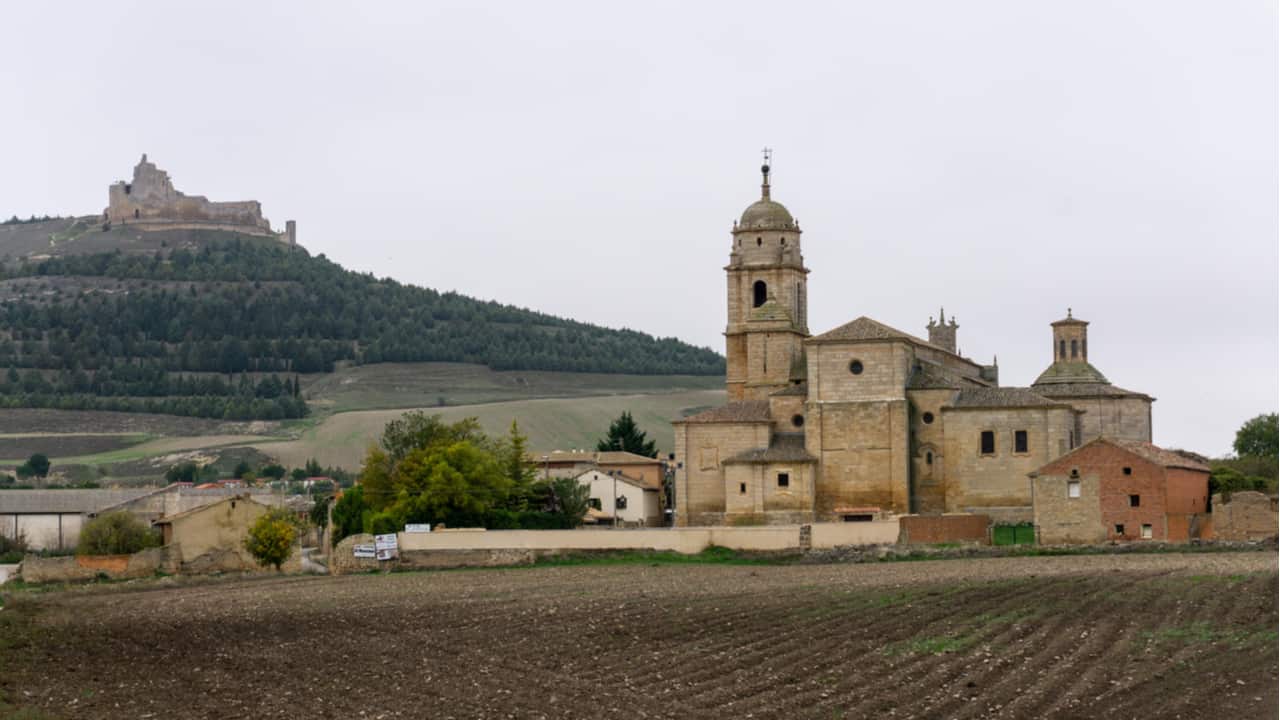
I nearly walked past it. That's the thing about Hontanas. You've been trudging across the Meseta for hours, the plains stretching to every horizon like a slightly rumpled bedsheet, and then the earth just drops away and there it is: a huddle of stone buildings in a shallow valley, with a church tower poking up as if checking whether you're still coming.
Hontanas is a tiny village of roughly 68 people in the province of Burgos, sitting on the Camino Francés about 29 kilometres west of Burgos city. For pilgrims walking the Camino de Santiago, it often marks the end of one of the longer and more demanding stages across the open plains. In 1999, the village received designation as an Asset of Cultural Interest (Bien de Interés Cultural), which means the medieval street layout, stone architecture, and ancient character of the place are officially protected. Walk in and you'll feel it. Nothing here has been polished for tourists. The buildings are weathered, the café hours are short, and the welcome is quiet but genuine.
For those planning from the United States or anywhere else abroad, understanding where Hontanas fits in your itinerary matters. It is not a big village with abundant services. It is a small, atmospheric stop that rewards you for the effort of getting there, and it breaks up what would otherwise be an even longer slog across the Meseta.
- Population: Approximately 68 residents
- Region: Province of Burgos, Castilla y León
- Camino stage: Typically reached from Burgos or Hornillos del Camino
- Cultural status: Asset of Cultural Interest since 1999
- Camino role: Key overnight stop for pilgrims splitting the Meseta into manageable days
Where is Hontanas located, and what does the approach feel like?
Hontanas sits in a gentle valley along the Meseta, that vast central plateau of Spain that either breaks your spirit or quietly mends it, depending on the day. The village is tucked low enough that you don't see it until you're practically upon it. After kilometres of flat, exposed terrain, the path dips and the rooftops appear below you. It's a small thrill, genuinely. You think there's nothing for miles, and then there's a village with soup and a bed.
The name itself likely derives from the Latin fontana, meaning "fountain" or "spring," which fits. Water sources and springs have drawn people to this valley for centuries. As you enter, you'll pass compact stone houses lining a single main street. The church tower is your landmark. Everything a pilgrim needs, the albergue options, the café, the fountain, clusters within a few minutes' walk.
|
Landmark |
Where to find it |
|
Church of the Immaculate Conception |
Centre of the village, visible on approach |
|
Fountain of the Star (Fuente de la Estrella) |
Along the main route through the village |
|
Albergues and lodging |
Along or just off the main street |
|
Café/bar |
Near the centre; limited hours |
What is the walk like to Hontanas, and what should you know about distance, climbs, and water?
Here's where honesty matters more than encouragement. The stage from Burgos to Hontanas is long. Depending on your exact starting point, you're looking at approximately 31 to 35 kilometres across open plains. Some pilgrims break this by stopping at Hornillos del Camino or Rabé de las Calzadas first, which is sensible and nothing to feel sheepish about. Others, usually the younger ones or those with something to prove (I was briefly both), push through in a single day.
The early part of the walk involves a steep climb out of Burgos, which uses up energy you'll wish you had later. After that, the terrain flattens into classic Meseta: wide, exposed, and relentless in summer. The beauty is real, if austere. Wheat fields, enormous skies, a silence so complete you can hear your own breathing. But the practical challenges are equally real.
Water and supply planning for the stage
This is the section I wish someone had underlined for me in red ink. The first roughly 11 kilometres from Hornillos del Camino to Hontanas have very limited water stops. The small hermitage of San Bol, partway along, sometimes offers water from a pilgrim fountain, but availability can vary depending on season and maintenance. Do not rely on it as your only source.
- Carry at least 1.5 to 2 litres of water when leaving your last reliable stop
- Heat exposure is severe in summer (June through September), with temperatures regularly above 35°C on the Meseta
- Wind can be fierce and dehydrating, even on cooler days; a wind layer helps conserve energy
- Electrolyte tablets or sachets are worth their negligible weight
- Sun protection is non-negotiable: hat, sunscreen, and sunglasses at minimum
I'll say it plainly: running out of water on the Meseta in July is not a minor inconvenience. It's a medical risk. Plan for more than you think you need.
How do you prepare for a long Meseta stage to Hontanas?
The strategy is unglamorous but effective. Start early, ideally before sunrise if you're walking in summer. Keep a steady pace and resist the urge to race through the first hours. Your feet and knees will thank you around kilometre 25. Plan your breaks before you start walking, not when you're already desperate for one.
- Water: 1.5 to 2 litres minimum, with a plan to refill if any source is available
- Food: energy bars, nuts, dried fruit, or a sandwich prepared the night before
- Sun gear: wide-brimmed hat, SPF 50 sunscreen, lip balm with UV protection
- Wind/rain layer: a lightweight jacket that packs small
- Foot care: check for hot spots at every rest stop; carry blister plasters and tape
- Early start: aim to be walking by 6:30 or 7:00 in warm months
What are the must-see landmarks in Hontanas?
Hontanas is small. Wonderfully, unapologetically small. You can see everything in under an hour if you're in a hurry, though the point of stopping here is precisely not to be in a hurry. Two landmarks stand out, and both are within a few minutes' walk of wherever you've dropped your pack.
What is the Church of the Immaculate Conception in Hontanas like?
The Church of the Immaculate Conception (Iglesia de la Inmaculada Concepción) is the heart of Hontanas and its most significant building. Its origins date to the 14th century, when it was built in a Gothic style that matched the stone-and-sky austerity of the surrounding landscape. Over subsequent centuries, the church was remodelled, and the exterior you see today is largely neoclassical. The tower rises above the village roofline and serves as the first thing you spot on approach.
Inside is where the history thickens. The baroque altarpiece dominates the interior, gilded and ornate in that specifically Spanish way that feels both excessive and entirely sincere. But the real treasure, the thing that stopped me mid-step, is the 13th century Romanesque processional copper cross. It's a medieval artefact of genuine significance, still housed in this tiny village church. You can stand in front of it and feel the weight of the centuries of pilgrimage that have passed through this valley.
- Architectural style: Gothic origins (14th century), later neoclassical remodelling
- Key interior highlights: Baroque altarpiece and 13th century Romanesque processional copper cross
- Visiting tips: The church may have limited opening hours. Be quiet and respectful. A small donation to the collection box is appreciated and helps with upkeep
What is the Fountain of the Star (Fuente de la Estrella), and why is it notable?
The Fuente de la Estrella sits along the route through Hontanas, a carved stone fountain bearing a six-pointed star relief. It's one of those Camino details that rewards the pilgrims who are paying attention. The star carries symbolic weight on the pilgrimage route; early medieval pilgrims followed the Milky Way (the "Field of Stars," Campus Stellae, from which Compostela may take its name) westward toward Santiago. Finding a star carved into a fountain in a hidden valley feels like a quiet confirmation that you're on the right path.
A practical note: whether the fountain provides reliably drinkable water can vary by season and maintenance. Check locally or with your albergue host before filling bottles here. At minimum, it's a meaningful pause point and a good photograph, the kind of image that means nothing to someone scrolling past and everything to the pilgrim who was there.
Where can you sleep in Hontanas (albergues and other accommodations)?
Accommodation in Hontanas is pilgrim-focused, as you'd expect in a village this size. You won't find a hotel chain or a resort pool (though I've heard rumours of one albergue with a small pool, a Meseta miracle). What you will find is a handful of options that cater specifically to walkers on the Camino.
|
Accommodation type |
What to expect |
Typical cost (2024/2025) |
|
Municipal/donativo albergue |
Basic dormitory beds, shared bathrooms, communal kitchen; donation-based or low fixed price |
€5 to €10 (donation) or fixed fee |
|
Private albergue |
Dormitory or semi-private rooms, may include dinner/breakfast, laundry facilities |
€10 to €20 per bed |
|
Hostal/pension (private room) |
Private or semi-private rooms; more comfort, less communal atmosphere |
€30 to €55 per room |
In peak season (May through September), beds fill quickly, particularly after a long stage when everyone arrives tired and at roughly the same time. Arriving by early afternoon improves your chances. Some private albergues accept reservations, which is worth considering if you're walking in summer. Others operate on a first-come, first-served basis.
- Carry your pilgrim credential (credencial del peregrino) as most albergues require it for admission
- Passport or ID is needed for registration at all accommodation types in Spain
- Amenities vary: look for places offering Wi-Fi, laundry, a kitchen, and bike storage if relevant
- Book ahead in peak months if the option is available; walk-ins work in shoulder season but carry risk in July and August
One more thing. After 30-plus kilometres, the bed quality matters less than you think. What matters is that it exists, that you can take your boots off, and that someone might be heating up a pot of lentil soup in the kitchen.
What services are available in Hontanas for pilgrims (food, supplies, and recovery)?
Manage your expectations here, gently. Hontanas is a small village with limited services. There is typically a café or bar that serves simple pilgrim meals, including the ubiquitous menú del peregrino (a set meal of two or three courses with bread and wine, usually priced between €10 and €14). Hours can be irregular, particularly outside peak season. Some albergues offer communal dinners, which are often the best meals you'll have on the Camino, not because of the cooking but because of who's at the table.
- Food: Café/bar for meals and drinks; some albergues serve dinner and breakfast
- Basic supplies: Very limited. Carry what you need (blister care, snacks, toiletries) from your last town with a shop, likely Burgos or a stop en route
- Pharmacy: None in the village. Stock up in Burgos before this stage
- ATM: Unlikely. Carry enough cash for at least one overnight and meals
Recovery after a long Meseta stage
After walking nearly 35 kilometres, your body has requests. Listen to them. The ritual I settled into on the Meseta went something like this: boots off, socks peeled away with something between relief and horror, feet inspected for blisters. Then water, as much as I could manage. Then a stretch against a wall or doorframe. Then lying down with my feet elevated against my pack, feeling the blood drain from my toes like sand through an hourglass.
- Hydrate aggressively: water, electrolytes, and a recovery drink if you have one
- Salt intake: your body has lost more than you think, especially in heat
- Inspect feet carefully for blisters, hot spots, and toenail issues
- Stretch calves, hamstrings, and hip flexors before they stiffen overnight
- Plan tomorrow's stage tonight: know your distance, water stops, and target arrival
How do you plan the next stage after Hontanas on the Camino Francés?
The day after Hontanas typically continues westward across the Meseta toward Castrojeriz and beyond, with the terrain remaining flat and exposed for much of the walk. Castrojeriz sits roughly 10 kilometres from Hontanas, making it a reasonable short stage if you need a recovery day, or a stepping stone to a longer push further west.
|
Next stop options |
Distance from Hontanas |
Character |
|
Castrojeriz |
~10 km |
Larger town with more services, medieval ruins, multiple albergues |
|
Itero de la Vega |
~20 km |
Small village, river crossing, quieter stop |
|
Boadilla del Camino |
~28 km |
Attractive village with a well-regarded private albergue |
Hontanas works beautifully as a strategic overnight. If you've walked from Burgos or Hornillos del Camino, stopping here breaks up what would otherwise be an exhausting multi-day stretch across the plains. It also lets you start the next day's walk rested, which matters on the Meseta more than on any other section of the route. The cumulative effect of long, hot, waterless stages is what wears pilgrims down. There is no prize for arriving in Santiago with destroyed knees and a face like a weathered boot.
The Camino Francés stretches approximately 780 kilometres from Saint-Jean-Pied-de-Port to Santiago de Compostela. Every strategic stop matters. Hontanas is one of the good ones.
FAQ: What do pilgrims ask about Hontanas on the Camino Francés?
Is Hontanas worth stopping in, or should I push to the next town?
For most pilgrims, yes, it's worth stopping. The stage to reach Hontanas is typically 20 to 35 kilometres depending on your start point, much of it across exposed Meseta with limited water. The village offers accommodation, food, and two genuinely interesting historical sights (the church and the Fountain of the Star). Pushing further to Castrojeriz adds another 10 kilometres to an already demanding day. Unless you're very fit and well-supplied, Hontanas is a sensible and rewarding overnight.
How much water should I carry for the stretch with limited stops before Hontanas?
Carry at least 1.5 to 2 litres when leaving Hornillos del Camino. The roughly 11 kilometre stretch has very few reliable water sources. San Bol may have a fountain, but availability varies. In summer heat, consider carrying closer to 2.5 litres and supplementing with electrolytes. It is far better to carry slightly too much water than slightly too little.
What are the key things to see in Hontanas if I'm only there briefly?
Visit the Church of the Immaculate Conception to see the baroque altarpiece and the remarkable 13th century Romanesque processional copper cross. Then find the Fountain of the Star (Fuente de la Estrella) with its carved six-pointed star relief. Both are within minutes of each other along the main route through the village.
Is the Church of the Immaculate Conception Gothic or neoclassical?
Both. The church was originally built in the 14th century in a Gothic style. It was later remodelled, and the exterior you see today is largely neoclassical. Inside, you'll find a baroque altarpiece and a 13th century Romanesque processional cross, so the building holds layers of architectural and artistic history spanning several centuries.
What kind of accommodation can I expect in a village this small?
Hontanas typically offers a mix of municipal or donativo albergues and private albergues or small hostals. Dormitory beds in albergues generally cost between €5 and €20 per night, while private rooms range from roughly €30 to €55. In peak season (May to September), beds fill by early afternoon, so arrive as early as you can or book ahead where possible. Always carry your pilgrim credential and passport for check-in.


