The thing nobody tells you about arriving in Santiago de Compostela is that it can feel oddly unfinished. You stand in the Praza do Obradoiro, pack still on your back, and the cathedral looms and the bagpipes wail, and other pilgrims are crying, and you think: is that it? After weeks of walking, the sudden stop can feel like someone yanked the needle off a record mid-song. Which is perhaps why, for centuries, pilgrims have kept walking. Three or four more days, west through rural Galicia, all the way to where the land simply runs out of road and tips into the Atlantic.
That place is Finisterre. And it might be where your Camino truly ends.
Why Do Camino Pilgrims Go to Finisterre After Reaching Santiago de Compostela?
Santiago de Compostela is the official destination of the Camino de Santiago, the great pilgrimage route that has drawn walkers across Spain for over a thousand years. You collect your Compostela certificate at the Pilgrim's Office, attend the pilgrim mass if you choose, and that is the formal end of the journey. But the formal end and the felt end are not always the same thing.
Finisterre, known in Galician as Fisterra, sits roughly 90 km further west on Galicia's Costa da Morte, the "Coast of Death," named for its history of shipwrecks along the dramatic Atlantic coastline. The town of Finisterre clings to a peninsula that juts into the ocean, and at its tip, Cape Finisterre marks what the Romans believed was the edge of the known world. For many pilgrims, walking from Santiago to Finisterre provides something the cathedral square cannot: a gradual decompression, a slow unwinding, a place to sit with what just happened before re-entering ordinary life.
- It offers emotional closure that a sudden stop in Santiago often doesn't
- The walk itself is beautiful, quieter, and contemplative compared to the main Camino routes
- It connects you to pre-Christian pilgrimage traditions far older than the cathedral
- It is entirely optional, not a Camino requirement, but a beloved continuation of the camino journey
If you are planning from the US, know that this extension is common, well-waymarked, and very doable. You don't need special gear or extra training beyond what your main Camino already gave you. You just need a few extra days and a willingness to keep going.
What Does "Finis Terrae" Mean, and What Is the History and Legend Behind Finisterre?
The name comes from the Latin "Finis Terrae," literally "End of the Earth." To the Romans, this stretch of Galician coast was the western boundary of the known world. Beyond it, nothing but ocean and the terrifying unknown. Imagine standing on those cliff edges before anyone knew the Americas existed, watching the sun sink into water that apparently went on forever. It must have felt like the threshold of something divine, or something deadly, or both.
The Costa da Morte earned its name honestly. Treacherous currents, sudden fog, and jagged rocks have sunk ships for centuries. Local legend holds that the Ara Solis, a Roman altar to the sun, once stood near the cape, a place of pagan worship long before Christianity arrived. Some stories link Finisterre to the journey of Saint James's body by boat from the Holy Land to Galicia, weaving the site into the same narrative that gave us the Camino de Santiago itself.
|
Legend or Tradition |
What It Involves |
|
Ara Solis (Altar to the Sun) |
Believed to be a Roman altar for sun worship near the cape, predating Christianity |
|
Costa da Morte ("Coast of Death") |
Named for centuries of shipwrecks along this treacherous Atlantic coast |
|
End of the known world |
Romans considered this the westernmost point of the habitable earth |
|
Burning of pilgrim clothing |
A modern tradition symbolising spiritual rebirth (now discouraged for fire safety) |
These layers of myth and history give Finisterre a weight that a casual visitor might miss. But if you arrive on foot, after weeks on the Camino, the legends feel less like stories and more like the air pressure changing.
How Do You Get from Santiago to Finisterre, and What Route Options Should You Consider?
The classic approach is to walk the Camino Finisterre, a well-marked pilgrimage route that starts in Santiago de Compostela and heads west through the Galician countryside toward the coast. It is one of the camino routes that actually begins where most others end. Most pilgrims choose to walk the camino finisterre as a direct extension of the Camino Francés, the Portuguese Camino, or whichever route brought them to Santiago.
You have several route options to consider:
- Walk Santiago to Finisterre (the most common choice): Roughly 90 km over 4 to 5 walking days. This is the straightforward route to Finisterre, following yellow arrows and scallop shells just as you did along the camino.
- Walk Santiago to Finisterre, then continue to Muxía: Adds approximately 30 km and 1 to 2 extra days. Muxía is a quieter coastal town with its own spiritual significance, home to the Santuario da Virxe da Barca in Muxía, a church perched dramatically above the Atlantic.
- Walk Santiago to Muxía first, then south to Finisterre: A less common but valid itinerary for those who want to walk from Santiago to Fisterra via the northern route. Slightly longer overall.
- Take a bus or taxi from Santiago to Finisterre: The Monbus bus company runs daily services from Santiago to Finisterre (roughly 3 to 4 hours, around 15 euros). This makes sense if you are dealing with injury, limited time, or sheer exhaustion after completing the camino.
There is no shame in the bus. Plenty of pilgrims who walk the entire Camino Francés, all 780 km from Saint-Jean-Pied-de-Port, arrive in Santiago with knees that are politely requesting a conversation about retirement. A bus ride to the coast still gets you to the cape, still lets you watch the sunset, still gives you that closing chapter.
What Are the Most Popular Stage Breakdowns from Santiago to Finisterre?
The Camino Finisterre route passes through small Galician villages, eucalyptus forests, and increasingly coastal terrain as you approach the Atlantic. Here is a sample stage plan that many pilgrims walking the camino finisterre adapt to their own pace:
|
Stage |
From / To |
Approximate Distance |
Notes |
|
1 |
Santiago de Compostela to Negreira |
21 km |
A manageable start; Negreira has several albergues and restaurants |
|
2 |
Negreira to Olveiroa |
33 km |
The longest day for most; consider splitting at Santa Mariña or Hospital if fatigued |
|
3 |
Olveiroa to Cee |
21 km |
First glimpses of the sea; Cee is a proper town with good services |
|
4 |
Cee to Finisterre |
15 km |
A beautiful final walk along the coast; relatively short and scenic |
The stage from Negreira to Olveiroa is a long walking day, roughly 33 km, and comes when your legs are already carrying weeks of mileage. Many pilgrims choose to split it by stopping in the hamlet of Santa Mariña or Hospital, turning the itinerary into five days rather than four. After walking the entire camino, there is real wisdom in choosing shorter stages. Your blisters have earned a vote.
If you plan to add Muxía after Finisterre, budget an additional day or two. The walk from Finisterre to Muxía is approximately 30 km, or you can take a bus between the two towns for a few euros.
What Is the Camino to Finisterre Like (Scenery, Terrain, Difficulty, and Crowds)?
After the social intensity of arriving in Santiago, the Camino Finisterre feels like stepping into a different register entirely. Fewer pilgrims walk this route, so the pace slows. Conversations deepen or fall away. You notice more: the particular green of Galician moss, the smell of woodsmoke from a stone farmhouse, the way the light changes as you approach the coast.
- Scenery: Rural Galicia at its most intimate. Ancient stone villages, hórreos (raised granaries), eucalyptus and pine forests, and then, as you near Cee to Finisterre, the landscape opens suddenly to reveal the Atlantic Ocean. The final kilometers along the coastal route are genuinely stunning.
- Terrain: Rolling hills, mixed surfaces including dirt tracks, paved roads, and forest paths. There are some climbs and descents, but nothing as demanding as the Pyrenees or the Cruz de Ferro. The difficulty is moderate, compounded mainly by cumulative fatigue from your main Camino.
- Crowds: Significantly quieter than the Sarria to Santiago stretch or any section of the Camino Francés. You might share an albergue dormitory with ten people rather than forty. This quieter atmosphere is one of the main reasons pilgrims choose to walk this extension of the camino.
The Camino Finisterre offers something the busier routes cannot: the feeling of the crowd thinning out until it is just you, the path, and the sound of the ocean getting closer. If the main Camino was a choir, this is the single voice that lingers after the last note.
When Is the Best Time to Go to Finisterre, and What Should You Pack for the Final Stretch?
Galicia's Atlantic coast is beautiful and temperamental. Even in July and August, fog can roll in without warning, and rain is a possibility any month of the year. This is not Mediterranean Spain. This is green, damp, wind-bitten country that earns its lushness honestly.
|
Season |
Weather |
Crowd Level |
Notes |
|
May to June |
Mild, occasional rain, long daylight hours |
Moderate |
Excellent time; wildflowers, comfortable temperatures |
|
July to August |
Warmest, but fog and rain still possible |
Busiest |
Book ahead in Finisterre town; sunsets are late |
|
September to October |
Cooling, increased rain, shorter days |
Quieter |
Lovely light; fewer pilgrims, more reflective atmosphere |
|
November to April |
Cold, wet, windy, shorter daylight |
Very quiet |
Possible but challenging; some albergues may close |
For packing, you likely already have everything you need from your main Camino. But a few items deserve extra attention for the coastal stretch:
- Rain gear: A proper waterproof jacket and pack cover. Non-negotiable on the Atlantic coast, even in summer.
- Layering pieces: Wind off the ocean can be sharp. A fleece or merino mid-layer makes cliff-top stops comfortable rather than miserable.
- Foot care essentials: Your feet have been working for weeks. Fresh blister plasters, Compeed, medical tape, and dry socks are more important now than at any earlier point on the camino.
- Reflective gear or a headlamp: If you are walking early or late to catch sunset at the cape, some road sections near Finisterre have limited lighting.
- A light towel and swimsuit: Some pilgrims wade into the Atlantic at the end. It is cold. It is worth it.
For US-based travellers in particular: do not trust the weather forecast from two days out. Galician weather changes its mind more often than a pilgrim deciding what to eat for dinner.
What Should You Do Once You Arrive in Finisterre Town?
After days of walking, the town of Finisterre feels like exhaling. It is small, genuine, and oriented around its harbour. Fishing boats bob in the water. The smell of grilled octopus drifts from a couple of waterfront restaurants. Nobody is in a rush. Including, finally, you.
Finisterre offers a gentle rhythm for a rest day or an overnight stay before heading to the cape:
- Harbour and seafront: Walk the waterfront, watch the fishing boats come in, sit on a bench with a coffee and do absolutely nothing productive.
- Galician seafood: Pulpo a feira (Galician-style octopus), percebes (goose barnacles), and fresh fish are simple, extraordinary, and reasonably priced. Most pilgrim-friendly restaurants serve a menú del día for 10 to 14 euros.
- Iglesia de Santa María das Areas: A 12th-century church worth a quiet visit, with a figure of the Santo Cristo de Fisterra that draws local devotion.
For lodging, Finisterre has a municipal albergue (typically 8 to 10 euros per bed), several private albergues, and a range of guesthouses and small hotels from 35 to 80 euros per night. In peak summer months, booking ahead is wise, especially if you want a private room. In shoulder season, walk-ins are usually fine.
Consider staying two nights if your schedule allows. One night to collapse into bed after arriving on foot, and one to time your visit to Cape Finisterre for sunset without rushing.
How Do You Visit Cape Finisterre and the Lighthouse, and What Pilgrim Traditions Happen There?
Cape Finisterre is roughly 4 km from the town centre, a walk of about an hour along the road that climbs toward the peninsula's tip. You can also take a taxi for a few euros if your legs have filed a formal complaint. The road winds upward through scrubby coastal landscape, and then the Finisterre lighthouse appears, perched on the cliff edge like it has been waiting for you.
The Finisterre lighthouse was built in 1853 and stands approximately 138 meters above sea level. It is one of the most photographed spots on any camino route, and for good reason. The Atlantic stretches out in every direction, enormous and indifferent and beautiful.
Near the lighthouse, you will find the bronze boot sculpture, a waymarker honouring the pilgrims who walk to the end of the route. It has become a popular photo spot, so expect a small queue during busy periods. Be patient. Everyone earned their turn.
The pilgrim traditions at the cape are where things get interesting:
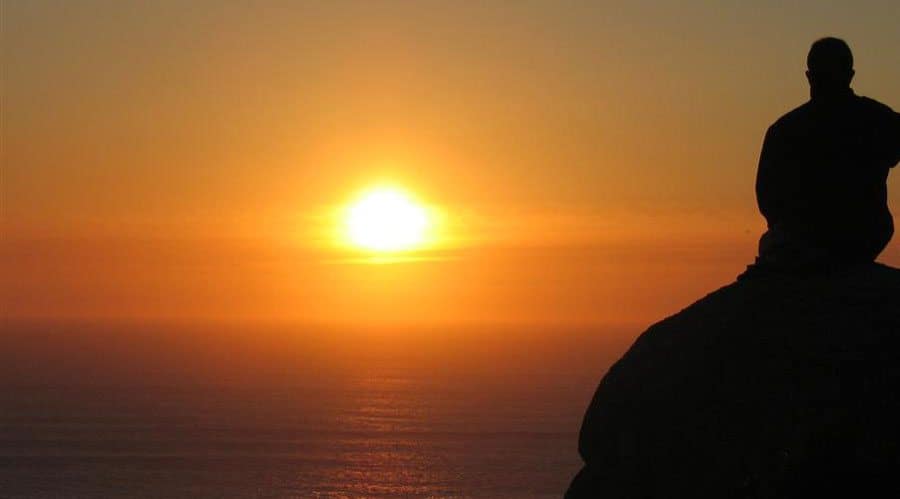
- Watching the sunset: Many pilgrims time their visit to watch the sunset from the cliff edge. On a clear evening, the sun drops into the Atlantic like a stone into water. On a foggy evening, you see nothing at all, and somehow that is equally fitting.
- Burning clothes or boots: The tradition of burning an item of clothing or worn-out boots at the cape dates back to earlier pilgrimage customs, symbolising spiritual rebirth and the shedding of the old self. However, this practice is now strongly discouraged and often prohibited due to wildfire risk on the dry, wind-exposed cliff. Local authorities have installed signs and may issue fines.
- Responsible alternatives: Many pilgrims now leave a written intention, a stone carried from home, or simply sit quietly with their thoughts. Some wade barefoot into the ocean at a beach below. The meaning is not in the fire. It is in the act of choosing to mark an ending.
What Is the Best Time of Day to Go to the Cape (Sunset, Fog, Wind)?
Sunset is the iconic time, and on a clear evening in summer, the cape will be busy with pilgrims and tourists alike. Arrive at least 30 to 45 minutes before sunset to find a spot. But here is the honest truth: the Atlantic coast does not guarantee clear skies. Fog can appear in minutes, wind can make the cliff edges genuinely uncomfortable, and visibility can drop from panoramic to about three metres of grey.
- If you have two nights in Finisterre, go once in the afternoon and once at sunset, hedging your bets against weather
- The road back to town has no lighting; bring a headlamp or arrange a taxi for the return
- Stay well back from cliff edges, especially in wind or after rain when surfaces are slippery
- Morning visits are quieter and often have beautiful light, even if less dramatic than sunset
FAQs About Finisterre After the Camino de Santiago
Do you get a pilgrim certificate for walking from Santiago to Finisterre?
Yes. The Pilgrim's Office in Santiago issues a certificate called the "Fisterrana" for pilgrims who walk from Santiago to Finisterre (or Muxía). You will need your credencial (pilgrim passport) stamped along the way, just as on the main Camino. The certificate is typically collected at the albergue or tourist office in Finisterre or Muxía, not in Santiago itself. Requirements may vary slightly, so confirm locally when you arrive.
How many days do you need to walk from Santiago to Finisterre?
Most pilgrims complete the roughly 90 km walk from Santiago to Finisterre in 4 to 5 days of walking. Adding Muxía extends this to 6 or 7 days total. Your pace will likely depend on how tired your legs are after completing the main Camino, whether you take a rest day, and whether you choose shorter or longer daily stages. After weeks on the path, shorter days of 15 to 20 km feel like a kindness rather than a compromise.
Is the Camino to Finisterre harder than the Camino into Santiago?
In terms of terrain, the Camino Finisterre is moderate, with rolling hills and mixed surfaces but nothing as steep or sustained as the Pyrenees or the final approach through Galicia on the Camino Francés. The real challenge is cumulative fatigue. Your body has already walked hundreds of kilometers. Blisters are established tenants. Muscles that felt strong in week one are negotiating terms by now. Plan manageable stages, and remember that this stretch is meant to be a gentle unwinding, not a final push.
Can you go to Finisterre if you are not walking (bus or taxi), and is it still meaningful?
Absolutely. Many pilgrims take the bus from Santiago to Finisterre, especially those dealing with injuries, limited time, or simply the desire to arrive at the coast without additional days of walking. The Monbus service runs daily and costs around 15 euros. Arriving by bus does not diminish what you experience at the cape. The ocean does not check how you got there. What matters is that you came.
Should you go to Finisterre or Muxía (or both) after Santiago?
If you have time for both, walk to Finisterre first and then continue to Muxía (or vice versa). If you must choose one, here is a simple framework:
|
Choose Finisterre If… |
Choose Muxía If… |
|
You want the iconic "end of the world" experience |
You prefer a quieter, less visited destination |
|
Sunset at the lighthouse and cape appeal to you |
The Santuario da Virxe da Barca in Muxía draws you spiritually |
|
You want more lodging and dining options |
You are seeking solitude and raw coastal atmosphere |
Both are beautiful. Both are worthwhile. Neither is wrong. If anything, the choice itself is part of the pilgrimage: deciding what ending you need.
Making Finisterre Your True Camino Finale
There is a moment, somewhere on the walk from Cee to Finisterre, when you round a bend and the Atlantic opens up before you, vast and grey-blue and endless. Your pack is lighter than it was in Saint-Jean or Lisbon or Sarria. Not because you posted anything home, but because something shifted along the way. You are carrying less, and you are not entirely sure when you set it down.
Whether you decide to walk all the way from Santiago, take a bus for the tired-legged final leg, or combine both, the extension to Finisterre gives your camino experience a closing scene that Santiago's busy square sometimes cannot. It is a chance to end their camino on their own terms, at their own pace, looking out at the place where the map simply stops.
Start by mapping your stages from Santiago to Finisterre, booking your first night's albergue in Negreira, and tucking a fresh pack of blister plasters into your bag. The yellow arrows keep going past the cathedral. Follow them.
Buen Camino. And then some.



One response to “Finisterre Spain After Walking the Camino de Santiago”
Beautiful walk–especially if you just came from walking with the BIG circus of tourists that started at Sarria!
Finistere is popular with those who believe walking to it on the same route of the Camino Frances was started by the Druids 6000 years ago. Also popular with those who believe Atlantis sunk just off of Finisterre.
Burning of things is Frowned upon but many burn something as an offering to the Sun God whose temple was destroyed by Christians.
If you walk Santiago to Muxia to Finisterre, you get TWO “Get out of Hell” certificates. One in Muxia and one in Finisterre.
If you cross the highway and go to the beach across from the town of Finisterre and kneel in the surf and let 7 waves hit you in the chest, ALL of your sins are forgiven!
If you go to Finisttere by bus and walk back to Santiago by way of Muxia, you can get a Compostella as it is more than 100 KM.
Highly recommend walking from Santiago to Finisterre!!!