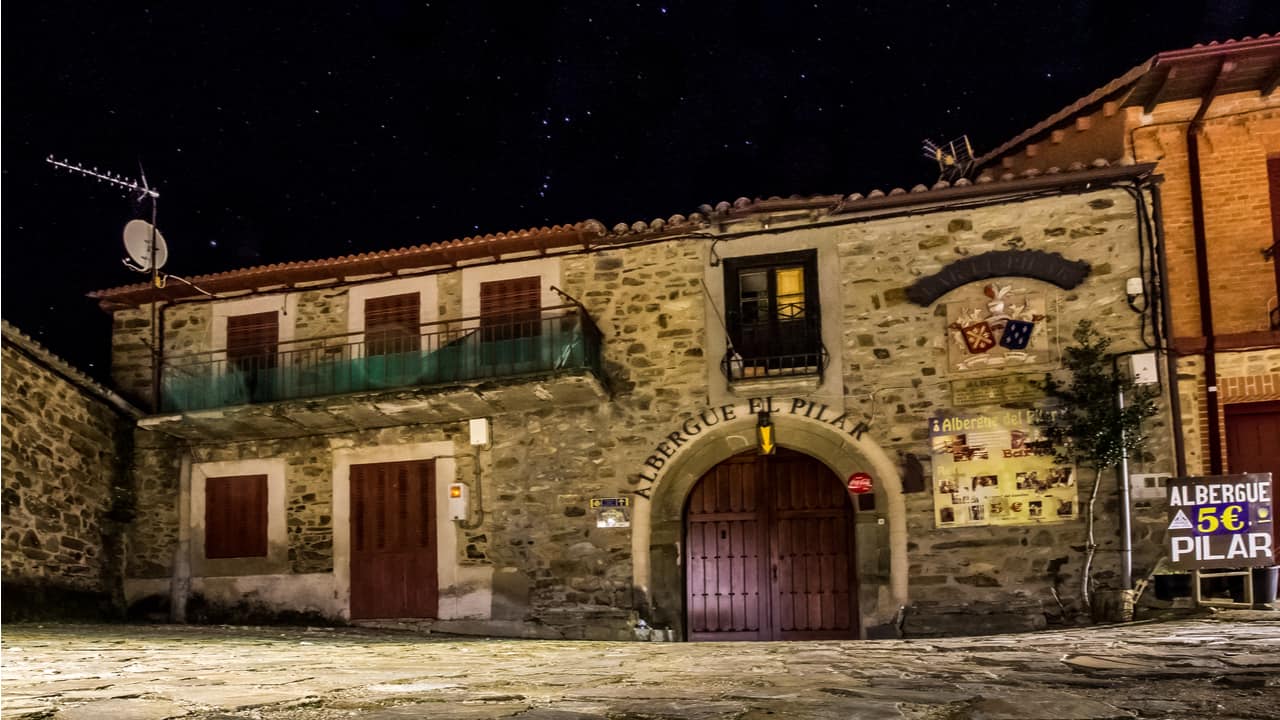
The first thing I remember about Roncesvalles is the cold. It was late May, supposedly warm, and yet the air coming off the mountains had a metal edge to it, the kind that finds the gap between your collar and your neck. I had crossed from France that day, legs aching, and walked into a clearing of grey stone buildings surrounded by beech woods. A tiny village. A vast quiet. And the sudden, slightly absurd realisation that I had just begun something I had been putting off for years.
Roncesvalles is a small village in Spain's Navarra province, set in the Pyrenees at roughly 900 metres of elevation. For many pilgrims it is the traditional starting point of the Camino Frances, the route that eventually carries you west across northern Spain to Santiago de Compostela. It is not much to look at on a map, just a name and a dot. In person it carries more weight than its size suggests.
This guide is for anyone planning their first days on the Camino de Santiago, especially travellers coming from the United States who want to understand what they are walking into before the plane even leaves the ground.
What is Roncesvalles, and why do so many pilgrims start the Camino de Santiago here?
Roncesvalles, known in Basque as Orreaga, is a settlement built almost entirely around the needs of pilgrims. There is a church, a monastery complex, a couple of places to sleep, a bar or two, and not a great deal else. The permanent population is tiny. What gives the village of Roncesvalles its identity is the path that runs through it.
People choose to begin here for practical and emotional reasons. Starting from the Spanish side of the Pyrenees means you skip the hardest single climb of the whole French Way across northern Spain, the long ascent out of Saint-Jean-Pied-de-Port in France. It also places you at the head of a clear, well-marked itinerary with steady accommodation all the way to Santiago de Compostela. Walk far enough and you reach Sarria, the small Galician town where many short-route pilgrims begin their own final hundred kilometres.
A few things to set your expectations before you arrive:
- This is a mountain village, not a town: services are limited and oriented entirely around walkers.
- The historical and religious significance is far larger than the physical footprint.
- Evenings start early and end early; by ten o'clock the place is asleep.
- Weather can change in an hour, so what you pack matters more than the calendar date.
I have met pilgrims who wished they had lingered a day here, and others who were itching to walk on within an hour of arriving. Both reactions are fair. Roncesvalles is a threshold, and thresholds are strange places to stand.
Where is Roncesvalles located in the Spanish Pyrenees, and what is it like?
Roncesvalles sits in northern Spain, close to the French border, tucked into the western Pyrenees in the Navarra province of Spain. For centuries it has worked as a gateway between France and the Iberian Peninsula, one of the few crossings through this stretch of mountains that ordinary travellers could manage on foot.
The terrain around the village is green and damp, wooded with beech that turns the light a soft, underwater colour in the morning. This is not the dry, sun-baked Spain that postcards sell. It rains here. It rains a lot. The high pass of Lepoeder above the village can hold cloud for days, and the descent into Roncesvalles from the French side runs through forest that smells of leaf-mould and wet bark.
Because of the elevation, the temperature here runs cooler than lower Navarra and the towns further along the route. That altitude has consequences for how you walk those first hours:
- Carry layers you can add and shed quickly; the gap between sun and shade is real.
- Pack a proper rain shell, not an optimistic windbreaker.
- Drink more than you think you need, even when it is cool.
- Pace the early climbs gently; altitude takes the edge off your usual fitness.
On arrival you find a compact huddle of buildings, a car park, the bulk of the church, and signs pointing west. That is more or less it. The smallness is part of the point. There is nowhere to hide from the fact that you are about to walk a very long way.
What is the history of Roncesvalles and its link to Charlemagne and the "Chanson de Roland"?
The Roncesvalles Pass has always mattered to anyone moving armies, goods, or pilgrims between France and Spain. It is a strategic crossing, and strategic crossings tend to collect history, some of it bloody.
In the year 778, the rear guard of Charlemagne's army was ambushed and destroyed somewhere in these mountains as it withdrew toward France. The historical event was, by most accounts, a relatively small military disaster involving local Basque fighters rather than the great Muslim host of later legend. Confidence on the precise details is modest; the sources are thin and the centuries are many.
What grew from that defeat is more certain in its cultural weight. The episode became the seed of the "Chanson de Roland," the medieval French epic poem in which the knight Roland, Charlemagne's loyal commander, dies heroically at the pass after refusing to sound his horn for help until it is too late. The poem turned a minor ambush into one of the founding stories of European literature. Pilgrims still hear fragments of it told in albergue kitchens, usually with embellishments.
You do not need to care about ninth-century politics to feel the resonance. Standing at Roncesvalles, you are standing on a threshold that has been a doorway into Spain for well over a thousand years. The legend of the graves of Charlemagne's soldiers, scattered through these woods, lingers whether or not a single bone is ever found. That sense of crossing into something old and consequential is, for me, the real reason to begin here.
What are the best things to see in Roncesvalles before you start walking?
Most pilgrims arrive in the afternoon, tired, and leave the next morning at first light. That gives you a narrow window to see the place, so it helps to know what is worth visiting before you collapse onto a bunk. The main sights cluster within a few minutes' walk of each other, which is the one mercy of a village this small.
A short list of what to see in Roncesvalles, in rough order of how much they reward the effort:
- The Collegiate Church, the architectural heart of the village.
- The former pilgrim hospice buildings, tied to King Sancho the Strong.
- The small chapel of Santiago, modest and easy to miss.
- The pilgrim mass, held in the evening and worth attending whatever your beliefs.
A practical word on timing: early morning light is kindest for photographs, but the evening mass is when the village feels most alive, full of the day's arrivals comparing blisters in six languages. If services are happening, keep your voice down and your camera lowered. People come here to pray as well as to walk.
What is the Collegiate Church of Roncesvalles, and why is it notable?
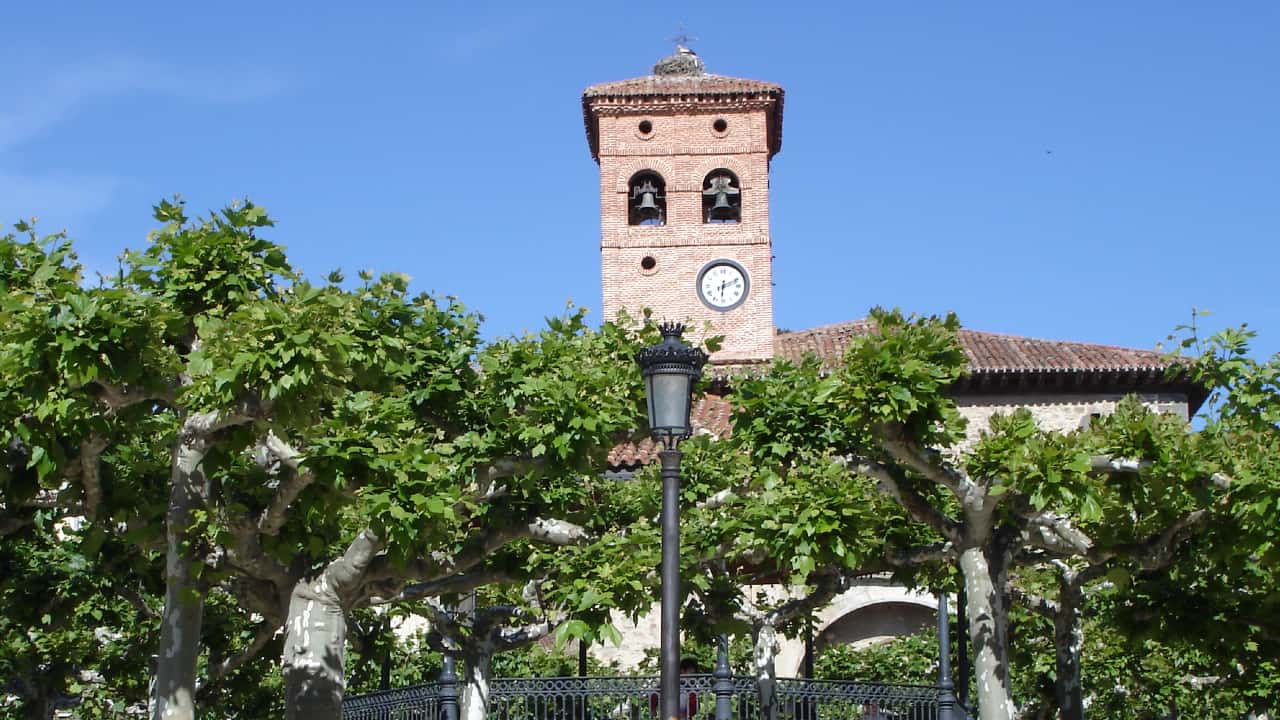
The Collegiate Church of Santa María is the building you will remember. It is built in a French gothic style that feels slightly unexpected this deep into Spain, all pointed arches and cool, vertical lines. The Real Colegiata de Santa María dates from the thirteenth century, and inside it carries the hush that old stone gathers over centuries.
Look for the silver-clad statue of the Virgin above the altar of the church of Santa María, and notice how the light falls through the high windows in thin, deliberate shafts. The gothic bones of the place make it feel taller than it is. Outside, the grey walls and steep roofs sit against the green hillside like something that grew there rather than was built.
For a pilgrim, the church is also a beginning. Many people light a candle here before walking out the next morning, a small private ritual to mark the start of the route to Santiago de Compostela.
What is the former pilgrim hospice, and how is it linked to King Sancho VII?
Roncesvalles has sheltered travellers since at least the twelfth century, when a hospice was founded here to care for those crossing the Pyrenees. The work was hard and the climate unforgiving, and many who attempted the crossing did not survive it. The hospice existed to feed, warm, and bury them.
The connection to King Sancho VII of Navarra, remembered as King Sancho the Strong, runs deep. Sancho was a patron of Roncesvalles and is buried in the complex; his tomb, and the chains said to come from his victory at the battle of Las Navas de Tolosa in 1212, are part of the village's story. The exact details of medieval patronage are the kind of thing where I would gently say "based on available records" rather than claim certainty, but the broad link between the king and this place is well established.
What strikes me most is how unbroken the thread of hospitality is. The same instinct that founded a hospice for exhausted medieval pilgrims still runs the modern albergue today. You arrive cold and footsore, and someone hands you a bed and a hot meal. Eight hundred years apart, the gesture is identical.
How do you get to Roncesvalles from the United States?
If you are flying from the US, you will not land anywhere near Roncesvalles. There is no airport in a mountain village of forty people. The journey there is a small expedition in itself, and worth planning carefully so you do not start your Camino already frazzled.
Most American pilgrims fly into Madrid or Barcelona, then connect onward, usually through the city of Pamplona. The two common approaches to reach Roncesvalles are:
|
Route in |
How it works |
Good for |
|
Via Pamplona (Spain) |
Fly to Madrid or Barcelona, train or bus to Pamplona, the Navarra capital, then a local bus or taxi up to Roncesvalles |
Pilgrims starting directly at Roncesvalles who want the simplest Spanish-side approach |
|
Via Saint-Jean-Pied-de-Port (France) |
Fly to a French hub, train to Bayonne, then the small mountain line to Saint Jean Pied de Port and walk or transfer across |
Pilgrims who want to begin the classic first stage from Saint Jean and cross the Pyrenees on foot |
Pamplona is the practical pivot point. From the city you can reach Roncesvalles by a bus that runs up the valley, though schedules thin out badly in the off season and on Sundays. A taxi for the final leg is not extravagant if you are splitting it with other pilgrims, and you will usually find a few hovering near the bus station looking for exactly that fare.
One piece of hard-won advice: build in buffer time. Jet lag and mountain weather do not negotiate. Arriving a day early in Pamplona, sleeping properly, and then heading up to your start point will do more for your first stage than any gear purchase. I have watched people stumble off a transatlantic flight and try to walk twenty-odd kilometres the same day. It rarely ends in joy.
Where can pilgrims sleep in Roncesvalles?
For a village this small, the accommodation in Roncesvalles is surprisingly well organised, because sheltering pilgrims is essentially the whole local economy. Your choices fall into two broad camps: the large pilgrim albergue or one of the small inns and guesthouses nearby.
The main albergue, run in the old monastery buildings, is a modern operation with bunk beds arranged in tidy partitioned bays. It is clean, efficient, and inexpensive, the kind of pilgrim hostel that has clearly learned from decades of tired arrivals. If you would rather have a door that closes, a couple of small hotels and guesthouses offer private rooms within the same cluster of stone buildings.
What to weigh when you decide where to sleep:
- The albergue is cheap and sociable but shared; expect snoring and a strict early lights-out.
- Private rooms cost more and book out faster in peak months.
- Dinner is usually a set pilgrim menu served early; do not assume late dining exists here.
- Breakfast and gear-drying matter more than luxury on night zero.
In high summer and around the busiest spring and autumn weeks, beds genuinely run out, so booking ahead is wise rather than optional. Outside those windows you can often turn up and find space, though I would not stake a cold night on it. Whatever you choose, the culture here is early to bed. By the time you have eaten and sorted your pack, you will probably want to sleep anyway.
Which Camino de Santiago route runs through Roncesvalles, and what are the first stages like?
The route through Roncesvalles is the Camino Frances, also called the French Way. It is the most walked of all the routes on the Camino, and for good reason: the waymarking is excellent, the accommodation is dense, and the community of fellow pilgrims is constant. You are rarely alone unless you choose to be.
From Roncesvalles the French route runs roughly southwest, dropping out of the Pyrenees into the rolling country of Navarra, then on through the wine region of La Rioja and across the wide central plateau before climbing again toward Galicia. The early days carry you from mountain to gentler terrain quite quickly, which is a relief on the legs but also a warning: foot care starts on day one, not day three.
Here is how the opening section of the Camino tends to unfold from Roncesvalles to Logroño, the gateway into La Rioja:
|
Stage |
Approximate distance |
What it is like |
|
Roncesvalles to Zubiri |
about 22 km |
Forest tracks and a steep, stony descent into Zubiri; the medieval Puente de la Rabia waits at the end |
|
Zubiri to Pamplona |
about 21 km |
River valleys and the slow approach into the city of Pamplona, your first proper town |
|
Pamplona to Puente la Reina |
about 24 km |
Over the Alto del Perdón with its iron pilgrim sculpture at the top, down to the famous bridge of Puente de la Reina |
|
Puente la Reina to Estella |
about 22 km |
Vineyards and old villages into Estella, near the wine fountain at Irache |
|
Estella to Los Arcos |
about 21 km |
Open farmland with long quiet stretches into Los Arcos |
|
Los Arcos to Logroño |
about 28 km |
Through the town of Viana and across into the region of La Rioja and the city of Logroño |
Distances vary slightly depending on which guidebook you trust, so treat these as close approximations rather than surveyed truth. The route of the Camino de Santiago has always been a little fuzzy at the edges.
What is the typical first day from Roncesvalles on the Camino Frances?
The classic first day from Roncesvalles takes you to Zubiri, roughly twenty-two kilometres through beech and pine on what is partly an old Roman road. It is not a brutal stage, but the final descent into Zubiri is steep and littered with loose stone that punishes tired knees. This is exactly the point where trekking poles earn their place in your pack.
Many pilgrims split things differently, stopping short at a village along the way or pushing on past Zubiri toward Larrasoaña, which is why the stretch between Roncesvalles and Zubiri sees such a mix of paces. There is no single correct itinerary; the route bends to fit the walker. Drink steadily, watch the descent, and do not be a hero on day one.
What should you know about difficulty, seasons, and the Pyrenees?
The honest answer to "how difficult is the Roncesvalles stage" is that the village is the easy part; the day before it, crossing the Pyrenees from the French side, is the hard part. Starting at Roncesvalles itself spares you the worst of the climbing. What it does not spare you is the weather.
The Pyrenees mountains make their own conditions. Snow can linger high into spring, summer storms roll in fast, and a clear morning can turn to driving rain by lunchtime. If you are walking across the Pyrenees rather than starting on the Spanish side, this matters enormously, and there are seasons when the high route is simply closed for safety.
A short checklist for a Pyrenees start:
- Carry layers and a genuinely waterproof shell.
- Add warmth for the high, exposed sections even in summer.
- Keep something visible or reflective for low cloud.
- Be willing to delay a day, or take transport, if the weather turns ugly.
Flexibility is the real skill here. The mountain does not care about your flight home. Plan conservatively, treat a delayed start as good judgement rather than failure, and if you have any choice in the matter, think hard about the best time of year to walk before you commit to a date.
What should you eat in Roncesvalles, and what essentials should you handle before starting?
Food in Roncesvalles is simple and hearty, the kind of mountain cooking built for people who are about to walk a long way. Most pilgrims eat the set evening menu at one of the village bars or the albergue dining room: soup, a main of meat or fish, something sweet, a glass of wine if you want it. It is served early, often from seven, because everyone here is on a walker's clock.
Before you leave the next morning, a few essentials are worth sorting the night before:
- Fill your water bottles and pack snacks; services between villages can be sparse.
- Get your pilgrim credential, the pilgrim passport, stamped before you walk out.
- Carry some cash; cards work in towns but small places and the odd bar do not always take them.
- Charge everything overnight, because the next reliable socket might be a stage away.
The pilgrim passport deserves a word. It is the small folded document that you have stamped along the way, proof that you walked the route, and eventually your ticket to the Compostela certificate in Santiago. You can usually obtain or stamp one in Roncesvalles, and you should treat it as one of the few things in your pack you genuinely cannot replace. Lose your spare socks and you survive. Lose your credential and you have a problem.
Connectivity is patchy once you leave. There is enough signal in the village for a goodnight message home, but do not count on a strong connection across the first stages. In a way that is the gift of the place. The Camino de Santiago from Roncesvalles asks you, fairly gently at first, to put the phone away and look up.
Frequently asked questions about Roncesvalles and the Camino
Is Roncesvalles a good place to start the Camino Frances for beginners?
Yes, for most beginners it is one of the better starting points. You skip the hardest single climb of the French Way, you join a clear and well-marked route, and you have steady accommodation from the very first night. The main challenges are the mountain weather and the early elevation, both manageable if you pack sensible layers and pace yourself on the descents.
Do you have to start in Roncesvalles, or can you start in Saint Jean Pied de Port instead?
Both are common starts. Beginning in Saint Jean Pied de Port in France means you walk the dramatic first stage across the Pyrenees on foot before reaching Roncesvalles, which is the classic full experience but a hard first day. Starting at Roncesvalles itself drops the country crossing and the toughest climb, giving you a gentler entry into the Camino de Santiago. Neither is more authentic than the other; they simply begin the same journey from different doorsteps.
How long do you need in Roncesvalles before starting to walk?
Most pilgrims need only one night. The usual rhythm is to arrive in the afternoon, eat, sleep, and walk out at dawn. An extra night is worth considering if you are badly jet-lagged from a US flight or if the weather over the Pyrenees is poor and you would rather wait it out than push into a storm.
What is the weather like in Roncesvalles compared to the rest of the Camino Frances?
Roncesvalles is cooler, wetter, and more changeable than most of the route that follows. Sitting high in the Pyrenees, it catches cloud and rain that the lower stretches of Navarra and La Rioja escape. Pack for the mountain conditions here even if the long-range forecast for the rest of your walk looks dry.
Can you cycle the Camino from Roncesvalles?
Yes, many cyclists begin at Roncesvalles and ride the Camino Frances all the way to Santiago de Compostela. The terrain and weather in the early stages demand preparation, and some forest descents are rough going on a loaded bike, so conservative planning for those first sections is sensible. The route is shared with walkers, so courtesy on narrow tracks matters.
Standing at the threshold
I still think about that first cold afternoon in Roncesvalles. The wet beech woods, the grey church, the strange calm of a place that exists to send people onward. It is a small village with an outsized role: the gateway where many pilgrims trade their ordinary lives for the long walk to Santiago de Compostela.
If you are planning your own start here, the work is mostly quiet and practical. Sort your route in, book a bed for night zero, get your credential stamped, and lay out your layers for a mountain morning. Then walk out the next day and let the path do what it does. The Pyrenees will test you, the route will hold you, and Roncesvalles will be the still point you measure everything else against.