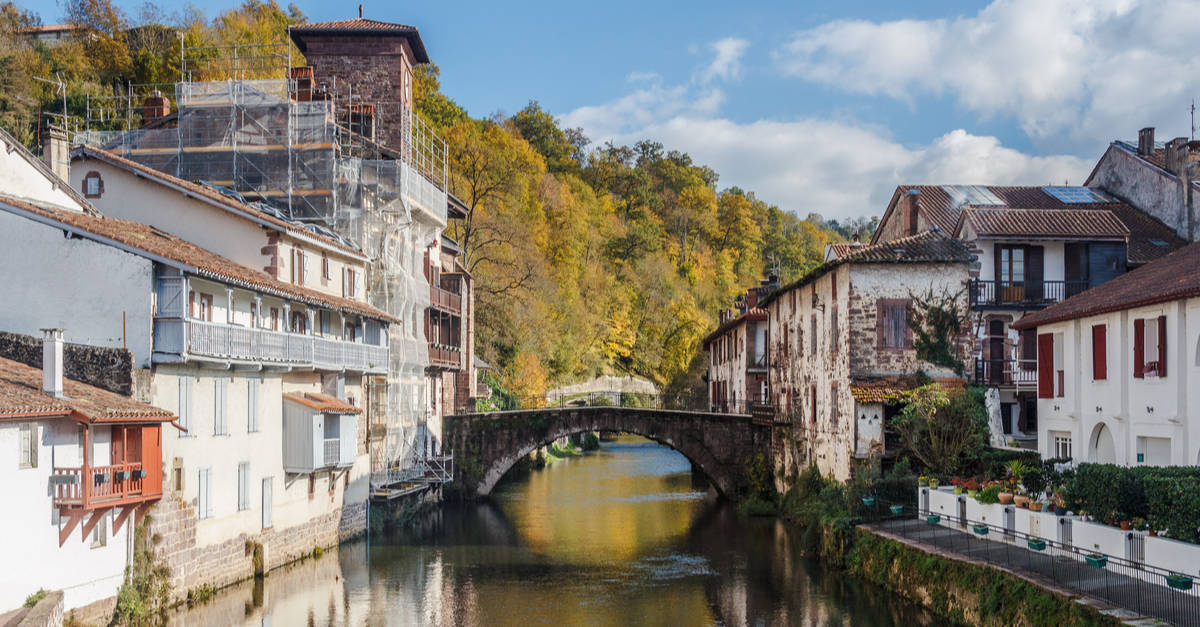
I remember standing at the bottom of Rue de la Citadelle the evening before, looking up at the hill I would climb at first light, and thinking the whole thing looked perfectly reasonable. It is not, particularly. The walk from Saint Jean Pied de Port to Roncesvalles is the first stage of the Camino Frances, and it carries you up and over the Pyrenees in a single day. Roughly 24 kilometres. Seven to nine hours, depending on your legs and how often you stop to catch your breath and pretend you are admiring the view.
It is also, by some distance, the hardest day many pilgrims will face on the entire walk to Santiago de Compostela. That is worth saying plainly before you lace your boots. What follows is everything I wish someone had told me the night before, set out so you can scan it quickly in the morning when your brain is still half asleep.
What is the Saint Jean Pied de Port to Roncesvalles stage, and why is it so hard?
This is Day 1 of the Camino Frances, the route most people picture when they imagine the Camino de Santiago. It starts in Saint-Jean-Pied-de-Port, a small French market town tucked against the mountains, and finishes at the monastery complex of Roncesvalles on the Spanish side. In between sits the long green wall of the Pyrenees.
The difficulty is not technical. You do not need ropes or scrambling skills. What makes the walk from Saint Jean to Roncesvalles demanding is the sheer, sustained ascent, most of it loaded into the first two-thirds of the day, followed by a steep descent into Roncesvalles that punishes tired knees. Add changeable mountain weather that can turn from sunshine to fog within the hour, and you have a day that asks a lot of a first camino.
It suits walkers who have done a little training and packed light. It is harder on first-time hikers, on anyone carrying a heavy pack, and on people who struggle in heat or cold. None of that means you should not attempt it. It means you should respect it.
Here is the stage at a glance:
|
Detail |
What to expect |
|
Distance |
Roughly 24 kilometres on the Napoleon Route |
|
Walking time |
7 to 9 hours, plus breaks |
|
Difficulty |
Hard; the most demanding stage on the Camino Frances |
|
Terrain |
Long climb, exposed ridge, steep beech-forest descent |
|
Highest point |
Col de Lepoeder, around 1,430 metres |
|
Best season |
Roughly Apr to Oct; the Napoleon Route is often closed in winter |
How far is it, how long does it take, and what ascent should you expect?
The distance from Saint Jean Pied de Port to Roncesvalles on the high route is about 24 kilometres. The number sounds modest until you realise how many of those kilometres point uphill. You climb roughly 1,200 metres of ascent out of the valley, reach the highest point near the Col de Lepoeder, then drop sharply through forest to reach Roncesvalles.
Most people take seven to nine hours. The descent to Roncesvalles is where the clock can betray you, because tired legs slow down and the steep, root-tangled path through the beech wood demands care. I watched more than one pilgrim who had powered up the mountain hobble down it like a newborn foal.
Several things slow people down on this stage of the Camino Frances, and it helps to know them in advance:
- Steep, unrelenting grades in the first half, where you gain most of your height
- Wind and fog along the exposed ridge, which sap energy and morale
- Mud after rain, especially on the descent through the trees
- Crowded mornings in peak season, when everyone leaves Saint Jean at once
- Pack weight, the quiet thief that makes every kilometre feel longer
My advice on pacing is unglamorous. Start early, ideally not long after dawn, so you have daylight in hand and time for breaks. Eat little and often rather than waiting for a grand lunch. Take your time on the climb; this is not a race, and the people who sprint past you at 9am are often the ones nursing cramps by mid-afternoon. The ascent rewards patience more than power.
Napoleon Route or Valcarlos: which should you take, and when?
There are two ways to walk from Saint Jean to Roncesvalles, and the choice matters more than almost any other decision you will make on Day 1 of the camino.
The Napoleon Route is the high road, named for the army that once crossed here. It climbs onto the mountain, runs along an exposed ridge with long views, passes the cluster of buildings at Orisson, and is the classic, photographed version of the first stage. It is also fully exposed, with little shelter if the weather turns.
The Valcarlos Route is the lower option, following the valley and the road for much of the way. It is less dramatic and a touch longer in places, but it stays sheltered and is the sensible choice when the mountain is wrapped in cloud. In poor weather, fog, high winds, or any threat of snow or ice, Valcarlos is not the consolation prize. It is the safe and correct decision.
|
Route |
Character |
Choose it when |
|
Napoleon Route |
High mountain crossing, exposed ridge, the classic views, passes Orisson |
Clear weather, good visibility, you are fit and want the full Pyrenees experience |
|
Valcarlos |
Lower valley route, more shelter, follows the road in parts |
Bad weather, fog, high wind, snow or ice, or you simply want a gentler day |
One firm word of caution: weather in the Pyrenees changes fast, and the authorities close the Napoleon Route in winter and during storms for good reason. People have died on this mountain in bad conditions. Decide on the morning, based on what you can see and what the pilgrim office tells you, not on what you hoped for back home.
What to do in Saint Jean Pied de Port before you walk
The night before, Saint Jean hums with quiet purpose. Pilgrims drift between the bakery, the gear shop, and the river, all of them rehearsing the morning in their heads. There are a few things worth sorting before you sleep.
Start at the Pilgrims Office on Rue de la Citadelle. The volunteers there are the single best source of same-day route advice, and they have seen every kind of weather and every kind of nervous first-timer. They will tell you whether the Napoleon Route is open and sensible, or whether you should take Valcarlos. They issue the pilgrim passport, the credential you will have stamped along the way, and they can point you toward hostel and albergue availability for the night.
What to take care of at the pilgrim office:
- Ask for a weather update and an honest read on whether to take the high route or Valcarlos
- Collect your pilgrim credential, or passport, if you do not already have one
- Check on accommodation, both in Saint Jean tonight and at Orisson or Roncesvalles tomorrow
- Confirm whether Orisson has space, because beds there are limited and book out early
Then stock up. Services on the mountain are thin, so carry enough food and water for a long day. The shops in town sell last-minute essentials, and the night before is your final easy chance to fix any gaps in your kit.
- Food and snacks for the trail, plus more water than you think you need
- Rain layers and a warm layer, even in summer; the ridge can be cold and wet
- Blister care, because Day 1 is where many pilgrims meet their first hot spot
- Trekking poles, if your knees have opinions about steep descents
If your boots are new or your pack feels heavy, this is the moment to reconsider both. A sensible packing list saves a great deal of suffering, and I have written more about that in the dedicated Camino de Santiago packing list if you want to double-check what you are carrying. Lighten where you can. The mountain will find every spare kilo.
Where to stay in Saint Jean Pied de Port
Sleeping in Saint Jean the night before makes the whole day easier. You wake where the walk begins, you can leave at first light without a scramble, and you fall into the slow, friendly company of other pilgrims doing exactly the same thing. There is something steadying about sharing a kitchen table with strangers who are all quietly terrified of the same hill.
Accommodation in Saint Jean ranges from municipal and donation-based albergues to small private hostels and guesthouses. Dormitory beds in pilgrim albergues typically cost in the region of 10 to 20 euros per night, while a private room in a small hotel or guesthouse will usually run higher. Prices, bed counts, and contact details change from season to season, so I will not pin you to a number that may be wrong by the time you read this; the pilgrim office holds the current list and can ring ahead for you.
When you choose a place to stay, the things pilgrims actually care about are simple:
- Whether it is a dorm bed or a private room, and which your sleep can tolerate
- Check-in time, and whether there is a curfew or set quiet hours
- Breakfast, or at least an early kettle, since you will leave before most cafes open
- Bag storage, if you are arriving a day early or want to wander the town unburdened
- Walking distance to the pilgrim office and the start of the route
How do you choose the right place to stay in Saint Jean?
It comes down to budget against comfort, and dorm against privacy. A donation albergue puts you shoulder to shoulder with the camino at its most communal; a private room buys you a quiet night before a hard day. In the busy months, roughly late spring through early autumn, the better beds go quickly, so it is worth booking ahead rather than trusting to a walk-in. Pick somewhere close to the centre and to Rue de la Citadelle, so the morning is a short stroll to the start rather than a stressful dash.
What is the walk from Saint Jean to Roncesvalles actually like?
You leave Saint Jean through the old gate while the town is still grey and half-asleep, the only sound the zips of rucksacks and the scuff of boots on cobbles. The climb starts almost at once, gentle for a few minutes, then in earnest. By the time you have left the last houses behind, you are already breathing hard and the valley is dropping away below you.
On the Napoleon Route the road climbs steadily past farmland, and somewhere around the first long pull you reach Orisson, a welcome cluster of buildings where you can rest, drink something hot, and look back at how far you have come. Many pilgrims who want to split the day stop overnight at Orisson, and I will come to that shortly. Beyond it, the route opens onto the high ground, exposed and wide, where the wind has nothing to push against but you.
The scenery shifts as you go. Sheep and the soft bells of grazing horses. A small statue of the Virgin off to one side. The border between France and Spain marked by little more than a cattle grid and a change in the colour of the grass. You reach the highest point near the Col de Lepoeder, and then the route continues down, dropping steeply through a beech forest toward Roncesvalles. That descent is longer and harder underfoot than most people expect, an old roman road in places, slick with leaf mould and demanding on tired knees.
A few practical things will make the day kinder:
- Carry plenty of water and refill at the few fountains you pass; services are sparse
- Eat small amounts steadily rather than one heavy meal that sits like a stone
- Deal with hot spots the moment you feel them, before they become blisters
- Watch for cramp and nausea, both signs you have pushed too hard or eaten too little
Arriving in Roncesvalles is a strange, flat sort of triumph. You will be tired in a way that is hard to describe, your legs full of the day. The monastery and its large pilgrim albergue sit waiting, the first stamp of Spain ready for your passport, and the simple gift of a bed. People say "buen camino" as they pass, and for the first time it feels earned.
Should you split this stage into two days?
Yes, for some people, and there is no shame in it. Breaking the first stage of the camino over two days, usually with a night at Orisson, turns a brutal day into two manageable ones and gives your body a gentler introduction to walking the Camino de Santiago.
Splitting makes good sense if you walk slowly, carry a heavy pack, expect bad weather, or simply want to protect yourself from injury on the very first day. It changes the whole texture of the experience. Instead of grinding toward Roncesvalles in fading light, you stop partway, sleep on the mountain, watch the sun go down over the Pyrenees, and finish fresh the next morning.
The practical considerations are straightforward. Beds at Orisson are limited and must be booked well in advance, often weeks ahead in peak season. If you cannot get a bed there, or if the high route is closed, the lower Valcarlos option is the natural alternative, a longer but gentler way to reach Roncesvalles in poor conditions. Either way, you start your pilgrimage with a little more in the tank.
Getting to Saint Jean Pied de Port
Most pilgrims reach St Jean Pied de Port by train, usually changing at Bayonne onto the small local line that winds up into the foothills. It is a lovely, slightly toy-like journey, the carriages full of rucksacks and quiet anticipation. There is also a bus and train mix that serves the town, and shuttle services that connect from nearby airports for those flying in.
If you would rather not start with the Pyrenees at all, some walkers take a bus or shuttle bus over to Roncesvalles and begin from the Spanish side, skipping the hardest day entirely. It is a perfectly valid way to walk the camino, and worth knowing about if the mountain genuinely worries you. For the bigger picture of how this stage fits into the whole French Way, the full guide to the Camino Frances lays out every stage from here to Santiago.
Safety on Day 1: getting help on the mountain
The Pyrenees are beautiful and entirely indifferent to your plans. The safety advice for this stage is not complicated, but it is the kind of thing pilgrims ignore at their peril, so here it is in plain terms.
Check the weather on the morning itself and choose your route accordingly. Do not start too late; you want a comfortable margin of daylight, not a race against dusk on a strange path. Carry layers even in warm months, because the ridge can be cold and the weather can change without much warning. Tell someone your plan, and where you can, walk within sight of other people rather than entirely alone.
Carry a small kit of sensible things in case the day goes wrong:
- A charged phone, and a backup battery, though mountain coverage is patchy at best
- A whistle, which carries far further than a tired voice in fog
- Basic first aid, including blister plasters and anything you personally rely on
- Enough food and water to wait out a problem rather than panic into one
In an emergency, the European emergency number 112 works across both France and Spain, and it is the number to call if someone is hurt or in danger. Be ready to describe where you are as best you can, even roughly, since precise locations are hard on an open mountain. And know your decision points. If a storm rolls in, if the fog closes down to a few metres, or if you pick up an injury, turning back or diverting to the lower route is not failure. It is exactly the judgement the mountain asks of you.
FAQ: Saint Jean Pied de Port to Roncesvalles
How hard is the Saint Jean Pied de Port to Roncesvalles stage for beginners?
It is hard, and honestly it is the toughest day on the Camino Frances. The difficulty comes from the long ascent and the steep descent rather than any technical skill, so beginners can absolutely do it with a little training and a light pack. If you are worried, prepare your legs in advance, consider splitting the stage at Orisson, and keep the gentler Valcarlos route in mind as an alternative.
How long does it take to walk this first stage?
Most pilgrims take between seven and nine hours to walk the roughly 24 kilometres, plus time for breaks. Your pace, the number of stops you make, and the weather all affect the total. The descent to Roncesvalles tends to take longer than people expect, so build in extra time at the end of the day.
Is the Napoleon Route always open, and how do I know if it is safe?
No. The high Napoleon Route is often closed in winter and during storms, and the authorities take those closures seriously. The reliable way to know is to ask at the Pilgrims Office on Rue de la Citadelle in Saint Jean on the morning you walk; they give same-day advice based on real conditions. When in doubt, take the lower Valcarlos route.
Can I split the stage from Saint Jean to Roncesvalles into two days?
Yes, and many pilgrims do. The usual way is to stay overnight at Orisson, partway up the mountain, then finish to Roncesvalles the next morning. Beds at Orisson are limited and book out early, so reserve well ahead, especially in the busy months.
How long does it take to walk from Saint Jean Pied de Port to Santiago?
Walking the full Camino Frances from Saint Jean to Santiago de Compostela usually takes most pilgrims around four to five weeks, covering roughly 780 kilometres at a typical pace with a rest day or two. Day 1 over the Pyrenees is the hardest single stage, but the days that follow are kinder, and your body adjusts faster than you might think.
One last thought before the climb
The first day on the camino is the one people remember most vividly, partly because it is hard and partly because everything is still new. You will not have your walking legs yet. Your pack will feel heavier than it should. You may, somewhere on that long ascent, wonder briefly what on earth you were thinking.
Then you will reach Roncesvalles, peel off your boots, and feel something settle. The hardest day is behind you, the Pyrenees crossed, and the long road to Santiago de Compostela genuinely begun. If you want to read on, the next stage from Roncesvalles to Larrasoana is gentler company, and a good way to spend the night before working out tomorrow's walk. For now, sleep well, start early, and walk your own pace. Buen camino.




Leave a Reply