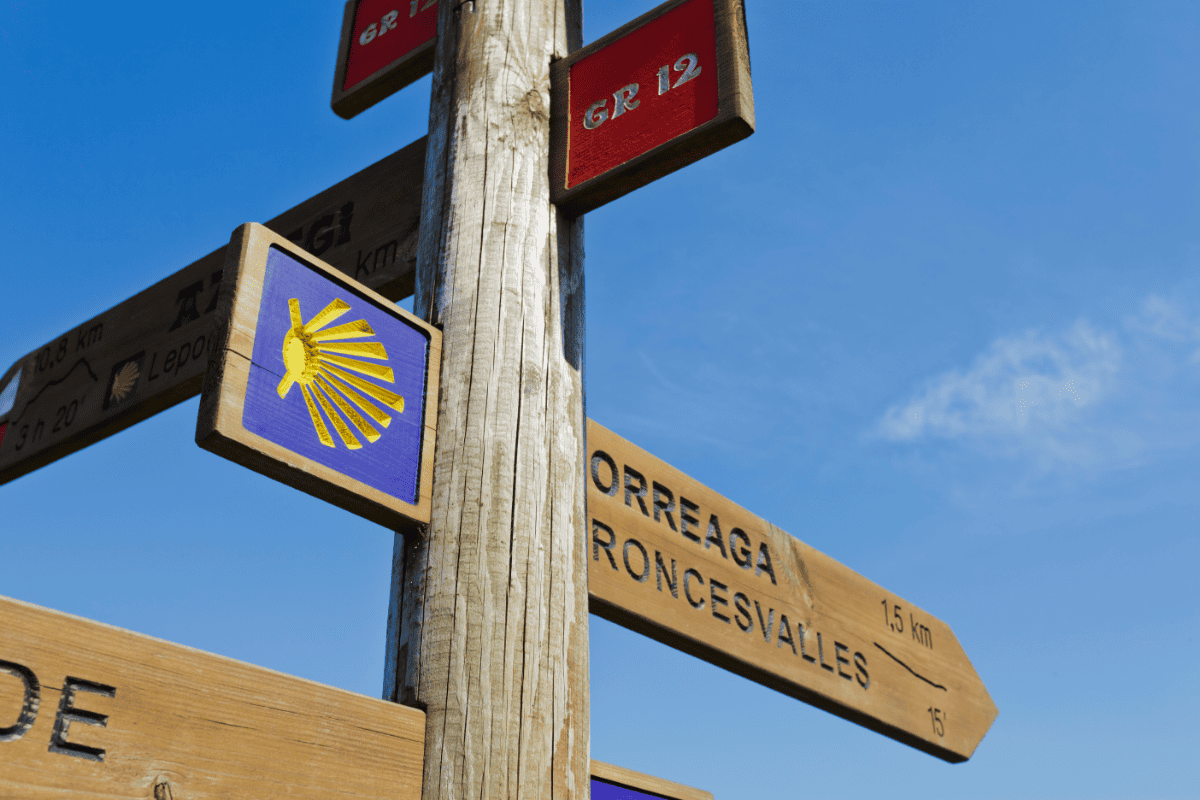
There is no best Camino de Santiago route. I know that’s not what you came here to read, but stay with me. There are many routes to choose from, different routes across Europe leading to Santiago de Compostela in northwest Spain, and the one that will feel like “the best” is the one that fits your life right now. Your available days, your knees, your appetite for solitude or company, and whether you’d rather fall asleep to the sound of Atlantic waves or the silence of the meseta.
I walked my first Camino thinking there was a correct answer to this question. I’d read forums, cross-referenced spreadsheets, and agonised over the decision like I was choosing a mortgage. In the end, what mattered was simpler than I expected: how many days I had, how my body felt, and what kind of landscape I wanted to think inside. So let’s work through those factors together, honestly, and find the Camino route that works for you.
What Does “the Best Camino Route” Mean for Your Goals and Travel Style?
When pilgrims walk the Camino de Santiago, they’re following one of several pilgrimage routes that converge on the city of Santiago de Compostela. Some routes start in France, others in Portugal or southern Spain, and a few begin on the Spanish coast. They share an endpoint, but the experience along each path is profoundly different.
Reframing “best” as “best fit” is the most useful thing you can do early in your planning. Consider these core variables:
- Time available: Do you have one week, two weeks, or a full month? This single factor eliminates some routes and opens others.
- Physical fitness: Are you a regular walker or hiker, or are you starting from a fairly sedentary baseline?
- Social preference: Do you want a busy, convivial trail with new faces every evening, or a quieter path where you might walk an hour without seeing another pilgrim?
- Scenery and vibe: Coast, mountains, rolling farmland, or a mix?
- Budget and logistics: How much support infrastructure do you need (albergues, waymarking, baggage transfer)?
If you’re travelling from the US or another long-haul origin, factor in at least one buffer day at the start for jet lag. Flying into Madrid, Lisbon, or Paris and then connecting to your route’s starting point adds a logistical layer worth planning carefully. Most route starts are accessible by train or bus, but they do require some advance booking.
What Factors Should You Compare When Choosing a Camino de Santiago Route?
Let’s break this down into the practical criteria that actually shape your experience on the ground.
|
Factor |
What to Consider |
Why It Matters |
|
Time available |
1 week, 2 weeks, 4+ weeks |
Determines which routes are realistic; shorter routes like the Camino Inglés fit one week, while the Vía de la Plata needs 5+ weeks |
|
Distance and daily stages |
15-25 km/day typical |
Beginners often average 18-22 km; experienced walkers push 25-30 km |
|
Difficulty and terrain |
Flat, rolling, or mountainous |
Steep routes like the Camino Primitivo demand more training; flatter routes suit more fitness levels |
|
Scenery |
Coastal, countryside, mountain villages |
Your daily backdrop shapes your mood and memories more than you’d expect |
|
Crowds |
Busy (Francés) to very quiet (Vía de la Plata) |
Affects lodging availability, social atmosphere, and sense of solitude |
|
Infrastructure |
Albergue density, waymarking, baggage services |
Well-serviced routes are easier for first-timers; remote routes require more self-sufficiency |
|
Season and weather |
Summer heat, winter closures, coastal rain |
The Camino del Norte is rainy year-round; southern routes like Vía de la Plata are brutally hot in July and August |
Your interests also play a role that’s easy to underestimate. If you’re drawn to Romanesque churches and medieval history, the Camino Francés passes through some of Spain’s most significant heritage sites. If food is a priority (and honestly, it should be), the Camino Portugués offers some of the best eating on any route. If you want a meditative, stripped-back experience with long stretches of solitude, the Vía de la Plata or Camino de Invierno will give you that space.
Which Camino Routes Are the Most Popular, and What Are They Known For?
According to the Oficina del Peregrino (the Pilgrim’s Office in Santiago), the Camino Francés consistently accounts for around 55-60% of all Compostela certificates issued. The Camino Portugués is the second most popular Camino route, and the Camino del Norte comes in as the third most popular Camino. But popularity doesn’t mean quality, and quieter routes often deliver experiences that feel more personal.
|
Route |
Distance |
Typical Duration |
Difficulty |
Best For |
|
Camino Francés |
~790 km |
30-35 days |
Moderate |
First-timers, social walkers, classic Camino experience |
|
Camino Portugués (Central) |
~240 km (from Porto) |
10-14 days |
Easy to moderate |
Food lovers, shorter timeframes, cultural variety |
|
Camino Portugués Coastal |
~260 km (from Porto) |
11-14 days |
Easy to moderate |
Coastal scenery, breezy walking, flexibility |
|
Camino del Norte |
~825 km |
32-35 days |
Hard |
Fit walkers, dramatic coast, fewer crowds |
|
Camino Primitivo |
~320 km |
13-16 days |
Hard |
Mountain lovers, the “original Camino” feel |
|
Vía de la Plata |
~1,000 km |
40-50 days |
Moderate to hard |
Deep immersion, solitude, experienced walkers |
|
Camino Inglés |
~110 km |
5-6 days |
Easy to moderate |
Short Camino, limited time, meeting the 100 km requirement |
|
Camino Finisterre |
~87 km |
3-4 days |
Easy to moderate |
Post-Santiago continuation, coastal finish |
Popularity affects your experience in tangible ways. On the Camino Francés during July, you may struggle to find a bed if you haven’t booked ahead. On the Vía de la Plata, you might have a twelve-bed dormitory to yourself. Neither is better. They’re just different pilgrimages.
Should You Choose the Camino Francés If You Want the Classic Camino Experience?
The Camino Francés from Saint-Jean-Pied-de-Port to Santiago de Compostela is the route most people picture when they think of walking the Camino de Santiago. There’s a reason for that. It has the strongest pilgrim infrastructure of any route: albergues in nearly every village, abundant waymarking (those yellow arrows are practically impossible to lose), and a social atmosphere that makes it hard to eat dinner alone even if you want to.
Day-to-day, the Francés feels like a long, unfolding conversation. You’ll walk through vineyards in La Rioja, cross the austere beauty of the meseta (which either bores you senseless or cracks you open; I found it did both), climb to O Cebreiro on the Camino Francés where the mist sits in the valleys below, and finally descend into Galicia’s green, dripping eucalyptus forests.
- Best for: Your first Camino, those who want camaraderie, flexible pacing with many stop options
- Watch-outs: Peak season (June through September) brings real crowds, particularly on the last 100 km of the Camino Francés from Sarria to Santiago. Some sections of the Camino Francés require booking ahead. The full route needs about five weeks, which is a significant time commitment.
If you only have two weeks but want the Francés experience, many pilgrims walk the Camino Francés from Sarria, covering the final stretch to Santiago. You’ll still earn the Compostela certificate (the minimum is 100 km on foot), though the experience is naturally more compressed.
Is the Camino Portugués the Best Option for Scenery, Food, and Flexibility?
The Camino Portugués from Porto is where I’d send anyone who wants a shorter, deeply satisfying Camino that doesn’t compromise on variety. At roughly 240 km for the Central route and 260 km for the Coastal, it fits comfortably into two weeks.
The Camino Portugués Central takes you through an inland route of vine-covered villages, granite towns, and the beautiful crossing at Ponte de Lima before entering Galicia. The Camino Portugués Coastal follows stunning wild coastal paths along the Atlantic, with salt air and wide ocean views that shift your mood entirely. Both routes finish in Santiago de Compostela and share the same final stages through Galicia.
There are variants worth knowing about:
- Start from Lisbon: Adds roughly 390 km and gives you a deeper, more gradual immersion through the Portuguese countryside. The Camino Portuguese from Lisbon is a proper long-distance pilgrimage in its own right.
- Camino Espiritual (Spiritual Variant): Leaves the main route near Pontevedra and includes a boat crossing along the Ría de Arousa from Vilanova de Arousa, arriving at Padrón. It’s a memorable, slightly unusual detour that blends land and sea.
Who is this best for? Travellers who want Portugal and Spain in one trip, excellent food (Portuguese cuisine along the Camino is genuinely outstanding), moderate difficulty, and the flexibility to choose between coast and countryside. Seasonality matters on the coast: winter brings rain and wind, but spring and early autumn are beautiful.
Should You Pick a Northern Route Like Camino del Norte or Camino Primitivo?
If the Francés is the Camino’s social heart, the northern routes are its wild, wind-battered edge. The Camino del Norte follows Spain’s northern coast from Irún to Santiago, roughly 825 km of rugged shoreline, green hills, and Basque and Cantabrian towns that feel a world apart from central Spain. The Camino Primitivo, the original Camino walked by King Alfonso II in the 9th century, cuts through the mountains of Asturias before it joins the Camino Francés near Melide for the final stages towards Santiago.
|
Aspect |
Camino del Norte |
Camino Primitivo |
|
Distance |
~825 km |
~320 km |
|
Duration |
32-35 days |
13-16 days |
|
Terrain |
Coastal with significant hills |
Mountainous, demanding ascents |
|
Crowds |
Quieter than Francés |
Quieter still, especially early stages |
|
Scenery |
Dramatic coastline, green valleys |
Mountain passes, remote villages |
|
Infrastructure |
Good but more spaced out |
Adequate but with wider gaps |
- Best for: Fit walkers, experienced hikers who want climbs and descents, people seeking a less-busy trail with dramatic natural beauty
- Tradeoffs: Weather on the Norte is unpredictable year-round (expect rain). Services on the Primitivo can be spaced further apart, meaning longer days if you misjudge your stages. Both routes reward preparation and reasonable fitness.
Camino del Norte vs Camino Primitivo: which is for you? If you want coast, choose the Norte. If you want mountains and a shorter, more intense experience, the Primitivo delivers. Some pilgrims walk the Norte and then switch to the Primitivo where it meets the Camino Francés, combining the two.
Is the Vía de la Plata Best for Deep Immersion and a Long Pilgrimage?
At roughly 1,000 km from Seville to Santiago de Compostela, the Vía de la Plata is the longest popular Camino route, and it feels like a different pilgrimage entirely. You walk through Extremadura, the Roman road from which the route takes its name, past the old stones of Mérida, and into the emptier parts of Castilla y León. Long stretches pass without another pilgrim in sight.
- Best for: Experienced walkers, repeat pilgrims, anyone with five or more weeks and a desire for solitude and deep reflection
- Key considerations: Summer heat in Andalusia and Extremadura can reach dangerous levels; spring (March to May) or autumn (September to October) are the sensible seasons. Some pilgrims walk the Vía de la Plata in stages across multiple trips, which is a perfectly valid approach.
- Connecting options: Near Astorga, the route meets the Camino Francés for the final stages. Alternatively, some walkers branch onto the Camino de Invierno via Monforte de Lemos, a quieter path to Santiago that avoids the busier Francés finish.
Can I walk a Camino route in stages? Absolutely. The Vía de la Plata is one of the routes where this approach makes most sense, given the time commitment. Your pilgrim passport (credencial) records your stamps from each section, and you can pick up where you left off on a future trip.
What Are the Best Shorter Camino Routes If You’re Limited on Time?
Not everyone has five weeks. Some people have six days and a burning need to walk somewhere with purpose. That’s perfectly legitimate, and there are Camino routes built for exactly this.
The Camino Inglés from Ferrol is roughly 110 km, walkable in five to six days, and it qualifies for the Compostela certificate (the minimum requirement is 100 km on foot to Santiago). It’s a short Camino that feels complete, passing through Galician countryside and small towns before reaching the city of Santiago. The route starts where English and Northern European pilgrims historically arrived by sea.
The Camino Finisterre is different. This route starts in Santiago de Compostela and walks west to Finisterre (Fisterra), the “end of the world” on the Atlantic coast. At about 87 km over three to four days, it’s the ideal post-Santiago add-on, a chance to process everything you’ve just experienced while walking towards the ocean rather than away from it.
- Want to arrive in Santiago as your finish? Choose the Camino Inglés.
- Want a meaningful continuation after reaching Santiago? Walk the Camino Finisterre.
- Practical notes: The Inglés is well-served by public transport from A Coruña or Ferrol. The Finisterre route starts right from the cathedral square. Both are manageable for walkers of most fitness levels.
Can I combine multiple Camino routes? Yes. Walking the last 100 km of the Camino Francés and then continuing to Finisterre is one of the most popular combinations for those with around two weeks.
How Do You Match a Camino Route to Your Schedule, Fitness, and Interests?
Here’s a quick route picker to help you choose your Camino. Think of it less as a quiz and more as a conversation you’re having with your calendar and your feet.
|
If You Want… |
Consider This Route |
Why |
|
Classic experience, social, easiest logistics |
Camino Francés |
Most walked, best infrastructure, ideal for your first Camino |
|
Coast + great food + flexibility |
Camino Portugués Coastal (or Central for inland) |
Stunning scenery, moderate difficulty, fits 2 weeks |
|
Mountains + physical challenge |
Camino Primitivo |
The original Camino, demanding terrain, strong sense of accomplishment |
|
Coastal ruggedness + quieter trail |
Camino del Norte |
Dramatic Atlantic coast, fewer pilgrims, serious hiking |
|
Long, immersive pilgrimage |
Vía de la Plata |
1,000 km of solitude, history, and deep immersion |
|
One week only |
Camino Inglés |
110 km, qualifies for Compostela, complete short experience |
|
Post-Santiago continuation |
Camino Finisterre |
Walk to the Atlantic “end of the world” in 3-4 days |
There’s also the question of “highlights vs. everything.” Some pilgrims want the full, unbroken path from day one to Santiago. Others prefer a curated segment, perhaps the last two weeks of the Francés, or the coastal sections of the Portugués. Neither approach is more valid. The Camino offers what you bring to it, and walking 110 km with full attention can be as profound as walking 1,000 km on autopilot. Possibly more so.
Are there Camino de Santiago routes outside of Spain? Yes. The Camino Portugués begins in Portugal, and routes across Europe (the Via Podiensis in France, the Via Francigena from Canterbury) all form part of the wider network of pilgrimage routes for pilgrims heading towards Santiago de Compostela. You can start your Camino from almost anywhere in Europe and walk to Santiago.
FAQ: Common Questions About Choosing the Best Camino Route
Which Camino route is best for beginners?
The Camino Francés is the most common recommendation for a first Camino, thanks to its excellent waymarking, frequent albergues (dormitory beds typically cost 8-15 euros per night), and strong social atmosphere. The Camino Portugués Central from Porto is another excellent beginner-friendly choice, particularly if you have closer to two weeks rather than five. Both routes have well-established infrastructure, making logistics straightforward. For seniors or solo female travellers, these two popular Camino de Santiago routes also offer the highest density of fellow pilgrims, which many find reassuring.
Do I have to be religious to walk the Camino?
Not at all. According to the Pilgrim’s Office statistics, while many pilgrims walk for religious or spiritual reasons, a significant and growing number cite cultural, sporting, or personal motivations. The Camino experience is shaped by your intention, not your belief system. You’ll meet atheists, Catholics, Buddhists, and people who simply needed to walk somewhere for a month. All are welcome.
Can I walk the Camino in winter or shoulder season?
You can walk the Camino in winter, but it requires more planning. Many albergues close from November through February, particularly on quieter routes. Mountain passes on the Camino Primitivo and the Pyrenees crossing on the Francés can be closed due to snow. The tradeoff is real solitude, fewer crowds, and a raw, stripped-back beauty that some pilgrims prefer. Shoulder seasons (April to May and September to October) often offer the best balance of good weather, manageable crowds, and open services.
Is walking the only way to do the Camino?
No. You can cycle the Camino (the minimum distance for a Compostela by bicycle is 200 km rather than 100 km on foot). Some pilgrims ride horseback. Supported walking options exist too, with companies offering baggage transfer between stages so you walk with a daypack only. The core experience is about the journey under your own power, but how you define that is flexible.
How much time do I need to get the Compostela credential?
To receive the Compostela certificate in Santiago, you need to walk at least the last 100 km of the Camino on foot (or cycle the last 200 km). This is why routes like the Camino Inglés (110 km from Ferrol) and the Camino Francés from Sarria (approximately 115 km) are popular with those short on time. You’ll also need a credencial (pilgrim passport) stamped at least twice daily along the route to prove you walked the distance.
What Comes Next: Choosing Your Best-Fit Camino Route
If you’re still weighing options, the most helpful thing you can do right now is answer three questions honestly: how many days do you have, what difficulty feels right for your body, and what scenery (coast, mountains, countryside) draws you most? Those three answers will narrow the field from a dozen routes to two or three.
From there, the practical planning follows naturally. A packing checklist, a basic training plan (even just walking regularly with a loaded daypack for six to eight weeks makes a real difference), and a rough stage-by-stage itinerary will give you everything you need. This guide to the Camino is meant to help you find the path that fits, not prescribe one. There are many routes to Santiago de Compostela, and the best Camino route is simply the one you’ll actually walk.
Buen Camino.



One response to “How to Choose a Camino de Santiago Route: What is the Best?”
Have you ever thought about putting your writings in a book – maybe a book for every route…
I’d buy all of them, if they were in Kindle or some e-book format, I could take them with me on the Camino! You are the most helpful resource we have!
Blessings,
Jess